
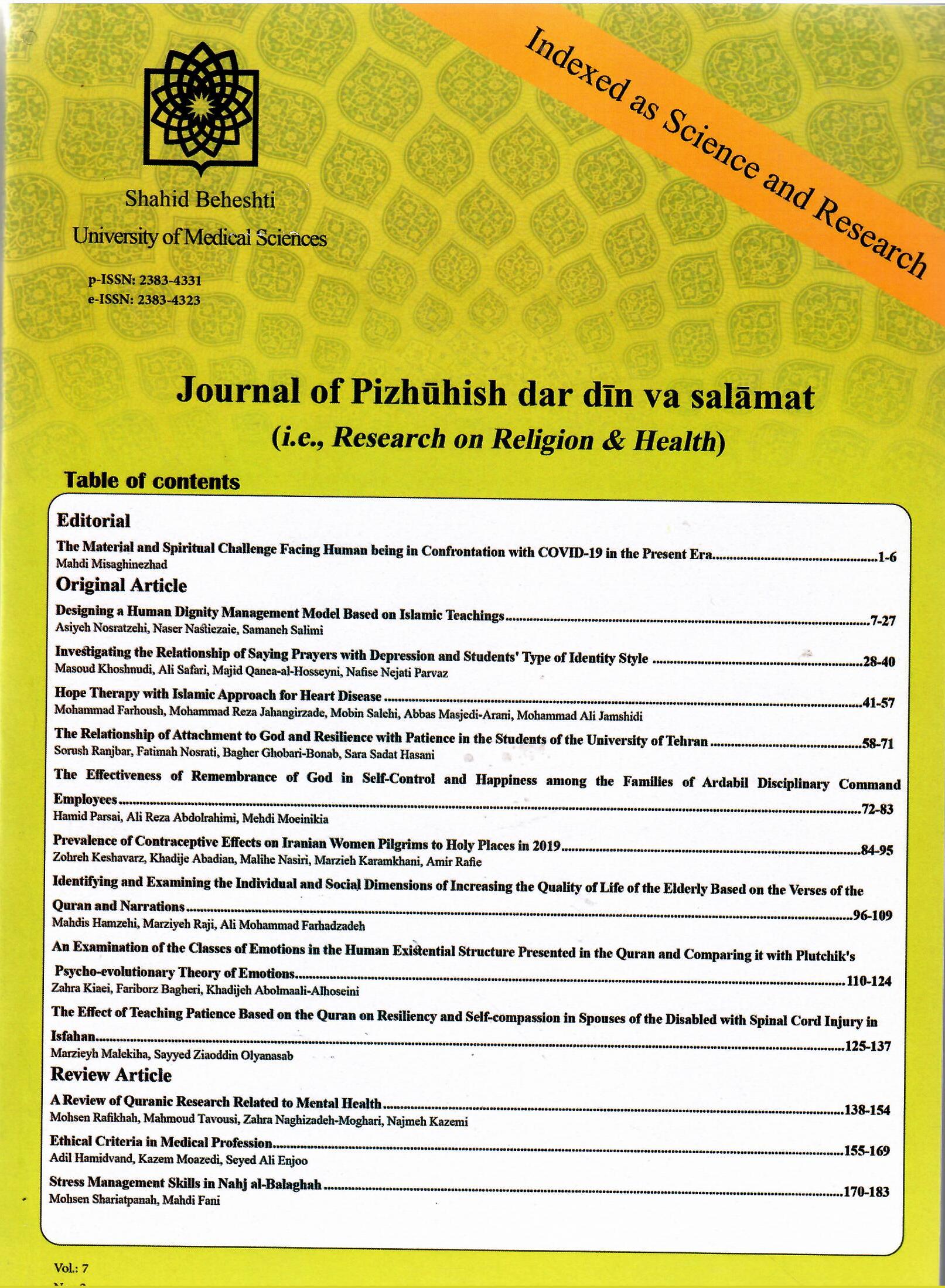
اثربخشی یاد خدا بر خودمهارگری و شادکامی در بین خانوادههای کارکنان فرماندهی انتظامی استان اردبیل یاد خدا
پژوهش در دین و سلامت ,
دوره 7 شماره 2 (2021),
21 خرداد 2021
,
صفحه 72-83
https://doi.org/10.22037/jrrh.v7i2.31896
چکیده
سابقه و هدف: معنويت يكي از ابعاد انسان است كـه ارتبـاط و يكپـارچگي او را بـا عـالم هسـتي نشـان میدهد. با توجه به اهمیت معنویت و تأثیر آن در رفتارهای خودتنظیمی و خودمهارگری، پژوهش حاضر با هدف بررسی اثربخشی یاد خدا بر خودمهارگری و شادکامی در بین خانوادههای کارکنان فرماندهی انتظامی استان اردبیل انجام گرفته است.
روش کار: این پژوهش از نوع تحقیقات شبهآزمایشی با طرح پیشآزمون و پسآزمون با گروه کنترل است. جامعۀ آماری پژوهش تمامی خانوادههای کارکنان نيروي انتظامي استان اردبيل بودند که در سال 1398 در دورههاي عقيدتي اين سازمان حضور پيدا کردند. از این جامعه تعداد 30 نفر بهصورت نمونهگیری دردسترس انتخاب و بهطور تصادفی در دو گروه آزمایش و کنترل جایگزین شدند (15N=). معنویتدرمانی بهمدت 12 جلسۀ 45 دقیقهای اجرا شد و گروه کنترل هیچ مداخلهای دریافت نکرد. ابزارهای جمعآوری اطلاعات پرسشنامۀ خودمهارگری تانجنی و مقیاس شادکامی آکسفورد بود. نتایج با استفاده از آزمون کوواریانس چندمتغیّره تجزیه و تحلیل شد. در این پژوهش همۀ موارد اخلاقی رعایت شده است و مؤلفان مقاله تضاد منافعی گزارش نکردهاند.
یافتهها: نتایج تحلیل کوواریانس نشان داد که معنویتدرمانی در نمرۀ کلی خودمهارگری و شادکامی خانوادههای کارکنان نیروی انتظامی اثربخش بود.
نتیجهگیری: بر اساس یافتههای بهدستآمده میتوان از روش معنویتدرمانی بهعنوان روشی مؤثر در بهبود خودمهارگری و شادکامی خانوادههای کارکنان نیروی انتظامی شهر اردبیل سود جست.
استناد مقاله به این صورت است:
Parsayi H, Abdolrahimi AR, Moeinikia M. The Effectiveness of Remembrance of God in Self-Control and Happiness among the Families of Ardabil Disciplinary Command Employees. Journal of Pizhūhish dar dīn va salāmat. 2021;7(2):72-83. https://doi.org/10.22037/jrrh.v7i2.31896
- اردبیل، خودمهارگری، شادکامی، کارکنان نیروی انتظامی، یاد خدا
ارجاع به مقاله
مراجع
Diamond A. Executive functions. Annual review of psychology. 2013;64:135-168.
Timpano KR, Schmidt NB. The relationship between self-control deficits and hoarding: A multimethod investigation across three samples. Journal of abnormal psychology. 2013;122(1):13.
Becker A, Mandell AR, Tangney JP, Chrosniak LD, Shaw TH. The effects of self-control on cognitive resource allocation during sustained attention: a transcranial Doppler investigation. Experimental brain research. 2015;233(7):2215-23.
Tangney JP, Baumeister RF, Boone AL. High self‐control predicts good adjustment, less pathology, better grades, and interpersonal success. Self-regulation and self-control. Journal of personality. 2004;72(2):271-324.
Wikström P-OH, Treiber K. The role of self-control in crime causation: Beyond Gottfredson and Hirschi's general theory of crime. European Journal of criminology. 2007;4(2):237-64.
Schmeichel BJ, Baumeister RF. Self-regulatory strength. Handbook of self-regulation: Research, theory, and applications. 2004:84-98.
Rafiei Honar H, Jan Bozorgi M, Pasandideh A, Rasoulzadeh Tabatabai SK. Explaining the structure of self-control based on Islamic thought. Ravanshenasi va Din. 2014;7(3):5-26. http://ravanshenasi.nashriyat.ir/ node/84. (Full Text in Persian)
McCullough ME, Willoughby BL. Religion, self-regulation, and self-control: Associations, explanations, and implications. Psychological bulletin. 2009;135(1):69.
BaBamiri M, Vatankhah M, Masumi Jahandizi H, Nemati M, Darvishi M. The Relationship between Coping Styles, Negative Automatic Thoughts, and Hope with Happiness in Addicts of Ahvaz Drug Abuse Rehabilitation Clinics in 2011. J Adv Med Biomed Res. 2013;21(84):82-91. URL: http://zums.ac.ir/journal/article-1-2075-fa.html
Choi J, Choi I. Happiness is medal-color blind: Happy people value silver and bronze medals more than unhappy people. Journal of Experimental Social Psychology. 2017;68:78-82.
Argyle M, Hills P. The Oxford Happiness Questionnaire: a compact scale for the measurement of psychological well-being. Personality and individual differences. 2002;33(7):1073-82.
Connors S, Khamitov M, Moroz S, Campbell L, Henderson C. Time, money, and happiness: Does putting a price on time affect our ability to smell the roses? Journal of Experimental Social Psychology. 2016;67:60-4.
Das S, Punnoose VP, Doval N, Nair VY. Spirituality, religiousness and coping in patients with schizophrenia: A cross sectional study in a tertiary care hospital. Psychiatry research. 2018;265:238-43.
Mohr S. Integration of spirituality and religion in the care of patients with severe mental disorders. Religions. 2011;2(4):549-65.
Boalhari J, Naziri Q, Zamanian S. Effectiveness of spiritual group therapy in reducing depression, Anxiety, and stress of women with breast cancer. Sociology of Women. (Journal of Women and Society) 2011;3(1):85-116. (Full Text in Persian)
Rickhi B, Moritz S, Reesal R, Xu TJ, Paccagnan P, Urbanska B, et al. A spirituality teaching program for depression: a randomized controlled trial. The International Journal of Psychiatry in Medicine. 2011;42(3):315-29.
Etemadi O. Faith and spirituality in counseling and psychotherapy. Psychotherapy News. 2007;35(1):131-46.https://www.noormags.ir/view/en/articlepage/6878/135/image. (Full Text in Persian)
Koenig HG. Research on religion, spirituality, and mental health: A review. The Canadian Journal of Psychiatry. 2009;54(5):283-91.
Hodge AS, Alderson CJ, Mosher DK, Davis CW, Hook JN, Van Tongeren DR, et al. Religion and spirituality, free will, and effective self-regulation. The Science of Religion, Spirituality, and Existentialism: Elsevier; 2020; 103-317.
McCullough EM, Carter EC. Religion, self-control, and self-regulation: How and why are they related? 2013.
Amirarjmandi SZS, Hashemiyan K, Niknam M. Effect of Spiritual Group Training on Decreasing Depression and Increasing Marital Satisfaction among Married Women in Tehran, Region 5. Educational Psychology. 2015;11(35):137-48. (Full Text in Persian)
Kamri S, Foladcheng M. The effectiveness of spirituality therapy based on positivity on life expectancy and life satisfaction of adolescents. Clinical Psychology Research and Counseling. 2016;6(1):5-26. (Full Text in Persian)
Khaleghipuor S, Masjidi M, Ahmadi Z. Effectiveness of Islamic spiritual therapy on the lifestyle and the percentages of the white blood cells in the aged depressed subjects. Journal of Research in Psychological Health. 2016;10(3):16-32. (Full Text in Persian)
Galanter M, Siegel C. Training manual for spirituality discussion groups for mental health with focus on cultural competency center. New York: Mc Graw-Hill. 2009.
Rafieehonar H, Janbozorgi M. The relationship between religious orientation and self control. Ravanshenasi va Din. 2010;3(1):31-42. (Full Text in Persian)
Furnham A, Ve Berwin C. Personality and happiness. Personality and Individual Differences. 1990;11:1093-6.
Alipoor A, Noorbala AA. A Preliminary Evaluation of the Validity and Reliability of the Oxford Happiness Questionnaire in Students in the Universities of Tehran. IJPCP. 1999; 5 (1 and 2):55-66
- چکیده مشاهده شده: 447 بار