
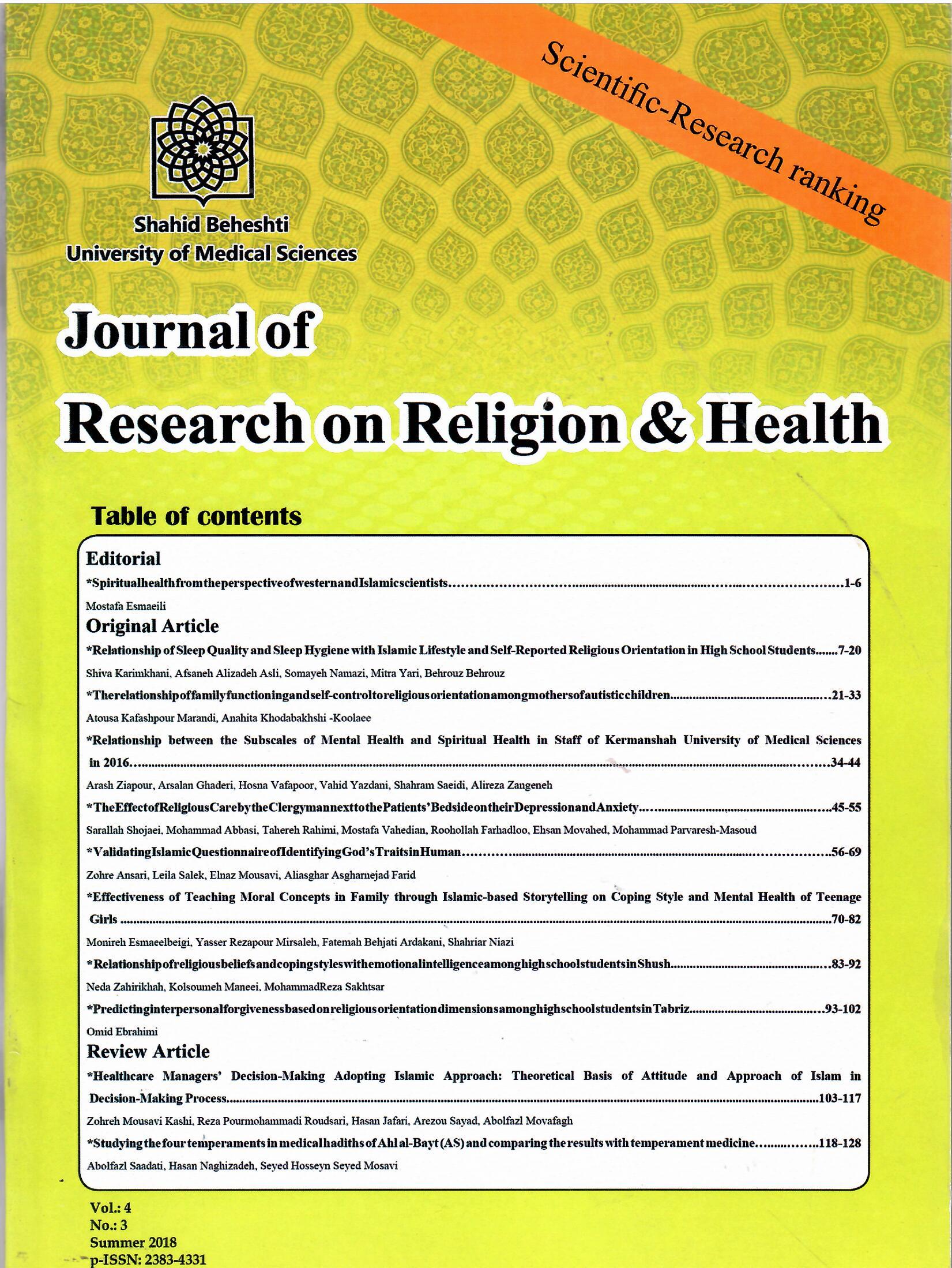
رابطهی باورهای دینی و سبکهای مقابلهیی با هوش هیجانی در دانشآموزان مقطع متوسطهی دوم شهر شوش در سال 1395
پژوهش در دین و سلامت ,
دوره 4 شماره 3 (2018),
9 خرداد 2018
,
صفحه 83-92
https://doi.org/10.22037/jrrh.v4i3.16105
چکیده
سابقه و هدف: از آنجایی که هيجانها بخش اعظمي از زندگي را در بر ميگيرد و دينباوري انگيزهيی رواني محسوب ميشود كه در فطرت و سرشت آدمي ريشه دارد و همچنین سبکهای مقابلهیی مجموعهیی از فعالیتها و فرایندهای رفتاری و شناختی برای ممانعت، مدیریت یا کاهش استرس محسوب میشود؛ ازاینرو، هدف تحقیق حاضر بررسی رابطهی بین باورهای مذهبی و سبکهای مقابلهیی با هوش هیجانی در دانشآموزان مقطع متوسطهی دوم شهر شوش بود.
روش کار: روش تحقیق در این مطالعه توصیفی از نوع همبستگی بود. جامعهی آماری (2012 نفر) این پژوهش را کلیهی دانشآموزان دختر (1254 نفر) و پسر (758 نفر) مقطع متوسطهی دوم تشکیل داد که از این میان تعداد 200 نفر نمونهی آماری در نظر گرفته شد. برای جمعآوری دادهها از پرسشنامهی هوش هیجانی بار- اون، پرسشنامهی نگرشسنج مذهبی گلریز و براهنی و همچنین پرسشنامهی راهبردهای لازاروس استفاده شد. برای تجزیه و تحلیل دادههای پژوهش نیز از روشهای آمار توصیفی و ضریب همبستگی پیرسون استفاده شد. در این پژوهش همهی موارد اخلاقی رعایت شده است. علاوهبراین، نویسندگان مقاله هیچگونه تضاد منافعی گزارش نکردهاند.
یافتهها: بر اساس یافتههای بهدستآمده، بین باورهای مذهبی با هوش هیجانی (389/0r= و 05/0>p)؛ و همچنین بین سبکهای مقابلهیی با هوش هیجانی در دانشآموزان مقطع متوسطهی دوم شهر شوش رابطهی معناداری وجود داشت (821/0r= و 05/0>p).
نتیجهگیری: با توجه به نتایج حاصل از پژوهش حاضر میتوان پیشنهاد داد که معلمان در مدارس برای دانشآموزان کارگاههای آشنایی با دین و اسلام دایر کنند تا دانشآموزان بیشتر با مذهب آشنا شوند.
استناد مقاله به این صورت است:
Zahirikhah N, Maneei K, Sakhtsar MR. Relationship of religious beliefs and coping styles with emotional intelligence among high school students in Shush. J Res Relig Health. 2018; 4(3): 83- 92.DOI: https://doi.org/10.22037/jrrh.v4i3.16105
- باورهای مذهبی؛ دانشآموزان؛ سبکهای مقابلهیی؛ شهر شوش؛ هوش هیجانی
ارجاع به مقاله
مراجع
Zahirikhah N. Assessing the relationship between the Quality of attachment, Religious beliefs, coping styles with Emotional intelligence in high school students' Susa. The thesis of Educational Psychology Master's Azad University of Ahvaz. 2016;5. (Full Text in Persian)
Hein S. Emotional intelligence for all. Tehran: Creative visualization; 2004.
Fatemi M. Emotional intelligence. Tehran: Sargl; 2006. (Full Text in Persian)
Ciarrochi J. Emotional intelligence in everyday life. second ed. Isfahan2005.
Sobhaninejad M, Usebashi AR. Emotional Intelligence and Management Organization (theoretical foundations, teaching methods and assessment tools). Tehran: Yasteroun; 2009. (Full Text in Persian)
Allport GW. The Religious Context of Prejudice.
Journal for the Scientific Study of Religion. 1966; 5: 447-57.
Durkheim E. Elementary Forms of Religious Life. Tehran: Tehran center; 2003.
Kleene. Usul al-Kafi. Tehran: Islamia School; 2009. (Full Text in Persian)
Folkman S. Folkman, S. (2013). Stress: appraisal and coping. New York: Springer; 2013. p. 1913-5.
Penley JA, Tomaka J. Associations among the Big Five, emotional responses, and coping with acute stress. Personality and individual differences. 2002;32:1215-28.
Dafeeei M. The Relationship between coping behaviors and personal characteristics and psychological health of infertile couples Yazd [Faculty of Medicine]: Tarbiat Modarres University; 1994. (Full Text in Persian)
Spangler G, Grossmann KE. Biobehavioral organization in securely and insecurely attached infants. Child development. 1993;64:1439-50.
Karimi M. The relationship between religious beliefs and emotional intelligence and academic performance of students in Eghlid: Marvdasht Islamic Azad University; 2015. (Full Text in Persian)
Abbasi RA, Roshan R. Examine the relationship between religious beliefs and emotional intelligence among high school students. Bimonthly Journal of the conduct scientific research / clinical psychology and personality. 2011(43):31-8. (Full Text in Persian)
Mohammadi D, Torabi S, Gharaei B. The relationship between coping styles and emotional intelligence among secondary school students in Tehran. Iranian Journal of Psychiatry and Clinical Psychology. 2009(2). (Full Text in Persian)
Bastian VA, Burns NR, Nettelbeck T. Emotional intelligence predicts life skills, but not as well as personality and cognitive abilities. Personality and individual differences. 2005; 39:1135-45.
Mayer JD, Perkins DM, Caruso DR, Salovey P. Emotional intelligence and giftedness. Roeper review. 2001;23:131-7.
Bar-on R. The Bar- on model of emotional- social intelligence (ESI). 1997(18):13-25.
Samoueei R. Over time seriously. Tehran: culture, science researchers; 2005. (Full Text in Persian)
Golriz G, Baraheni M. Research for preparation of religious attitude and the relationship between religious attitudes and personality characteristics with other feedback [psychology]: Tehran University Press; 1975. (Full Text in Persian)
Grancher D. The impact of religion on mans blood pressure. Journal of Religion & Health. 2000;28:285-78.
Salovey P, Bedell BT, Detweiler JB, Mayer JD. The psychology of what works. Coping intelligently. New York: Oxford University press; 1999 p. 141-164.
- چکیده مشاهده شده: 550 بار
- PDF دانلود شده: 447 بار