
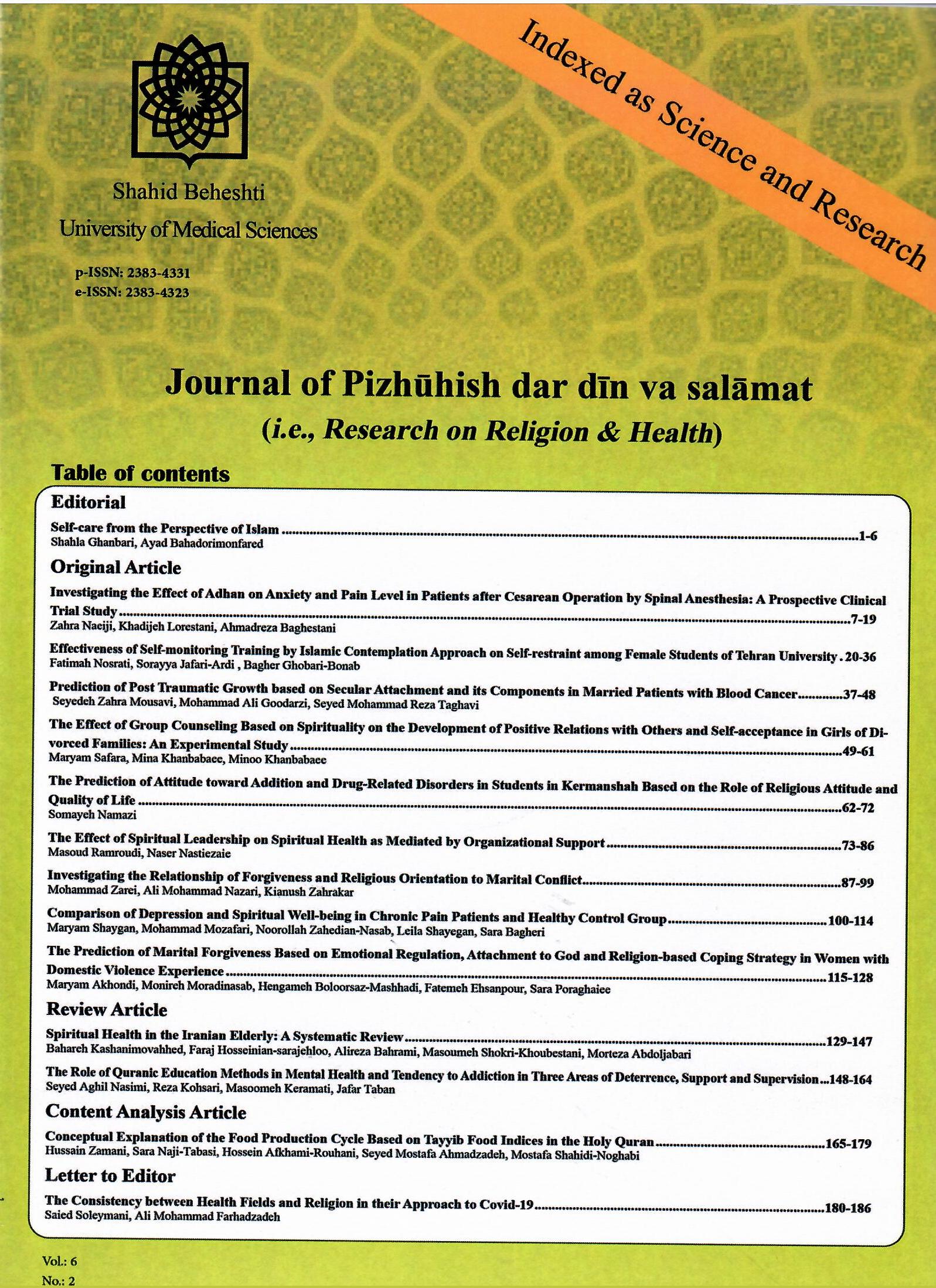
پیشبینی گرایش به اعتیاد و اختلالات مرتبط با مواد مخدر در دانشجویان شهر کرمانشاه بر اساس نگرش مذهبی و کیفیت زندگی
پژوهش در دین و سلامت ,
دوره 6 شماره 2 (2020),
13 خرداد 2020
,
صفحه 62-72
https://doi.org/10.22037/jrrh.v6i2.21264
چکیده
سابقه و هدف: اعتیاد بهدلیل ماهیت پیشروندهاش در تمام ابعاد زندگی، سلامتی افراد را به خطر میاندازد و آثار سوء آن بر سلامت روانی، جسمانی، اجتماعی، هیجانی، معنوی و شناختی فرد بهوضوح مشاهده میشود. هدف پژوهش حاضر پیشبینی گرایش به اعتیاد و اختلالات مرتبط با مواد مخدر در دانشجویان شهر کرمانشاه بر اساس نگرش مذهبی و کیفیت زندگی بود.
روش کار: پژوهش حاضر توصیفی-مقطعی و از نوع همبستگی است. جامعۀ آماری شامل تمامی دانشجویان مشغول به تحصیل در مقطع کارشناسی دانشگاه پیام نور شهر کرمانشاه در سال 1396 بود که از میان آنان با روش نمونهگیری تصادفی ساده، 300 نفر انتخاب شدند و پرسشنامههای نگرش مذهبی (RAQ)، کیفیت زندگی (26WHOQL-) و سنجش رفتارهای پُرخطر (YRBS) را تکمیل کردند. دادههای بهدستآمده با روشهای آمار توصیفی، ضریب همبستگی پیرسون و رگرسیون تحلیل شد. در این پژوهش همۀ موارد اخلاقی رعایت شده است و مؤلف مقاله هیچگونه تضاد منافعی گزارش نکرده است.
یافتهها: نتایج نشان داد که بین نمرات پایین در نگرش مذهبی و کیفیت زندگی با استعداد به اعتیاد رابطۀ معکوس و معنیدار وجود داشت (05/0>P). همچنین، رگرسیون همزمان نشان داد که این دو متغیّر با هم مقدار 59 درصد از واریانس آمادگی و استعداد به اعتیاد را در دانشجویان پیشبینی میکنند.
نتیجهگیری: دانشجویانی که کیفیت زندگی نامطلوب و نگرشهای مذهبی پایینتری دارند، نسبت به اعتیاد مستعدترند. بنابراین ضروری است که در برنامههای آموزشی و پیشگیرانۀ مسئولان دانشگاهی بر این سازههای روانی-مذهبی تأکید شود.
استناد مقاله به این صورت است:
Namazi S. The Prediction of Attitude toward Addition and Drug-Related Disorders in Students in Kermanshah Based on the Role of Religious Attitude and Quality of Life. Journal of Pizhūhish dar dīn va salāmat. 2020;6(2):62-72. https://doi.org/10.22037/jrrh.v6i2.21264
- اعتیاد؛ دانشجویان؛ کیفیت زندگی؛ نگرش مذهبی
ارجاع به مقاله
مراجع
LeNoue SR, Riggs PD. Substance abuse prevention. Child and Adolescent Psychiatric Clinics. 2016;25(2):297-305.
Van Dam R. Direct toxicity assessment (DTA) for water quality guidelines in Australia and New Zealand. Australasian Journal of Ecotoxicology. 2002;7(2):175-98.
Sarafino EP. Health psychology: Biopsychosocial interactions.Translator. Elahe Mirzaei. 8 ed. Tehran: Publication Rooshd; 2015. (Full Text in Persian)
Whitbourne SK, Halgin RP. Abnormal psychology: Clinical perspectives on psychological disorders: McGraw-Hill New York, NY; 2013.
Matošić A, Marušić S, Vidrih B, Kovak-Mufić A, Čičin-Šain L. Neurobiological bases of alcohol addiction. Acta Clinica Croatica. 2016;55(1):134-50.
Dermatis H, Galanter M. The role of twelve-step-related spirituality in addiction recovery. Journal of religion and health. 2016;55(2):510-21.
Fernandez VR, Fernandez AS, Lopez JC. Quality of life from the perspective of addiction. Revista de calidad asistencial: organo de la Sociedad Espanola de Calidad Asistencial. 2016;31(1):3-9.
Koenig HG, Pearce MJ, Nelson B, Daher N. Effects of religious versus standard cognitive behavioral therapy on optimism in persons with major depression and chronic medical illness. Depression and anxiety. 2015;32(11):835-42.
Mandhouj O, Perroud N, Hasler R, Younes N, Huguelet P. Characteristics of spirituality and religion among suicide attempters. The Journal of nervous and mental disease. 2016;204(11):861-7.
Salehi I, Mosalman M. Evaluation of the relationship between religious attitude and depression, anxiety and stress in students of Guilan University. Religion & Health. 2015;3(1):57-64. (Full Text in
Persian)
Tsai T-J, Chung U-L, Chang C-J, Wang H-H. Influence of religious beliefs on the health of cancer patients. Asian Pac J Cancer Prev. 2016;17(4):2315-20.
Allport GW, Ross JM. Personal religious orientation and prejudice. Journal of personality and social psychology. 1967;5(4):432-3.
Ferreira FAP, de Almeida-Neto C, Teixeira MCD, Strauss E. Health-related quality of life among blood donors with hepatitis B and hepatitis C: longitudinal study before and after diagnosis. Revista brasileira de hematologia e hemoterapia. 2015;37(6):381-7.
Hsiao H-W, Wu C-C, Lin M-C, Wang C-C, Chen VC-H, Hsiao H-P, et al., editors. Comprehensive risk factors, asthma control, and life quality pathways in adults with asthma: A structural equation modeling analysis. Allergy & Asthma Proceedings.2016; 37(3):31-40.
Moazen B, Shokoohi M, Noori A, Rahimzadeh S, Saeedi Moghaddam S, Rezaei F, et al. Burden of drug and alcohol use disorders in Iran: findings from the Global Burden of Disease Study 2010. Archives of Iranian medicine. 2015;18(8):480-5.
Mousavi Moghadam SR, Valadbeigi R, Valadbeigi M, Rostami E. Simple and multiple relationships between religious attitudes and spiritual intelligence with tendency to addiction in students. Pensee Journal. 2014;76(6):1-17.
Ebrahimi A, Neshatdoost H, Kalantari M, Molaui H, Asadollahi G, Neshatdoost H, et al. Factor structure, reliability and validity of Religious Attitude Scale. Journal of Fundamentals of Mental Health.2008;10 (38): 107-16. (Full Text in Persian)
Thorpe CT, Fahey LE, Johnson H, Deshpande M, Thorpe JM, Fisher EB. Facilitating healthy coping in patients with diabetes: a systematic review. The Diabetes Educator. 2013;39(1):33-52.
Behrouz B, Bavali F, Heidarizadeh N, Farhadi M. The effectiveness of acceptance and commitment therapy on psychological symptoms, coping styles, and quality of life in patients with type-2 diabetes. Journal of Health. 2016;7(2):236-53. (Full Text in Persian)
Brener ND, Kann L, McManus TR. eliability of the Youth Risk Behavior Survey. Journal of Healthand Social Behavior. 2002;32(1):80-99.
Bakhshani N, Lashkaripour K, Bakhshani S, Hoseinbore M. Prevalence of risk behaviors related to intentional and unintentional injuries among adolescent high school students of Sistan and Balouchestan, southeast of Iran. Journal of Zahedan University of Medical Sciences and Health Services. 2007;9(3):199-208. (Full Text in Persian)
Allamani A. The relationship between addiction and religion and its possible implication for care.Subst Use Misuse. 2010; 45(14):2357-410.
Allamani A, Godlaski TM, Einstein S-S. Spirituality, religion, and addiction: A possible epilogue. Substance use & misuse. 2013;48(12):1262-6.
Morjaria-Keval A, Keval H. Reconstructing Sikh spirituality in recovery from alcohol addiction. Religions. 2015;6(1):122-38.
Porche MV, Fortuna LR, Wachholtz A, Stone RT. Distal and proximal religiosity as protective factors for adolescent and emerging adult alcohol use. Religions. 2015;6(2):365-84.
Ramsawh HJ, Chavira DA. Association of childhood anxiety disorders and quality of life in a primary care sample. Journal of Developmental & Behavioral Pediatrics. 2016;37(4):269-76.
Aspis I, Feingold D, Weiser M, Rehm J, Shoval G, Lev-Ran S. Cannabis use and mental health-related quality of life among individuals with depressive disorders. Psychiatry research. 2015;230(2):341-9.
Hojjati H, Nia SHS, Faghani M, Hojjati H, Salmasi E. Study of social acceptance and relationship with quality of addict’s life referred to addiction centers in Golestan province in 1388. Jundishapur Journal of Health Sciences. 2012;4(3):57-64. (Full Text in Persian)
Movahedi Y, Karazi Notash H, Biglu MH. The Comparison of physical and mental dimensions of health-related quality of life in addicts and healthy people. Iranian Journal of Rehabilitation Research in Nursing (IJRN). 2015;1(2):63-74. (Full Text in Persian)
- چکیده مشاهده شده: 676 بار
- PDF دانلود شده: 311 بار