
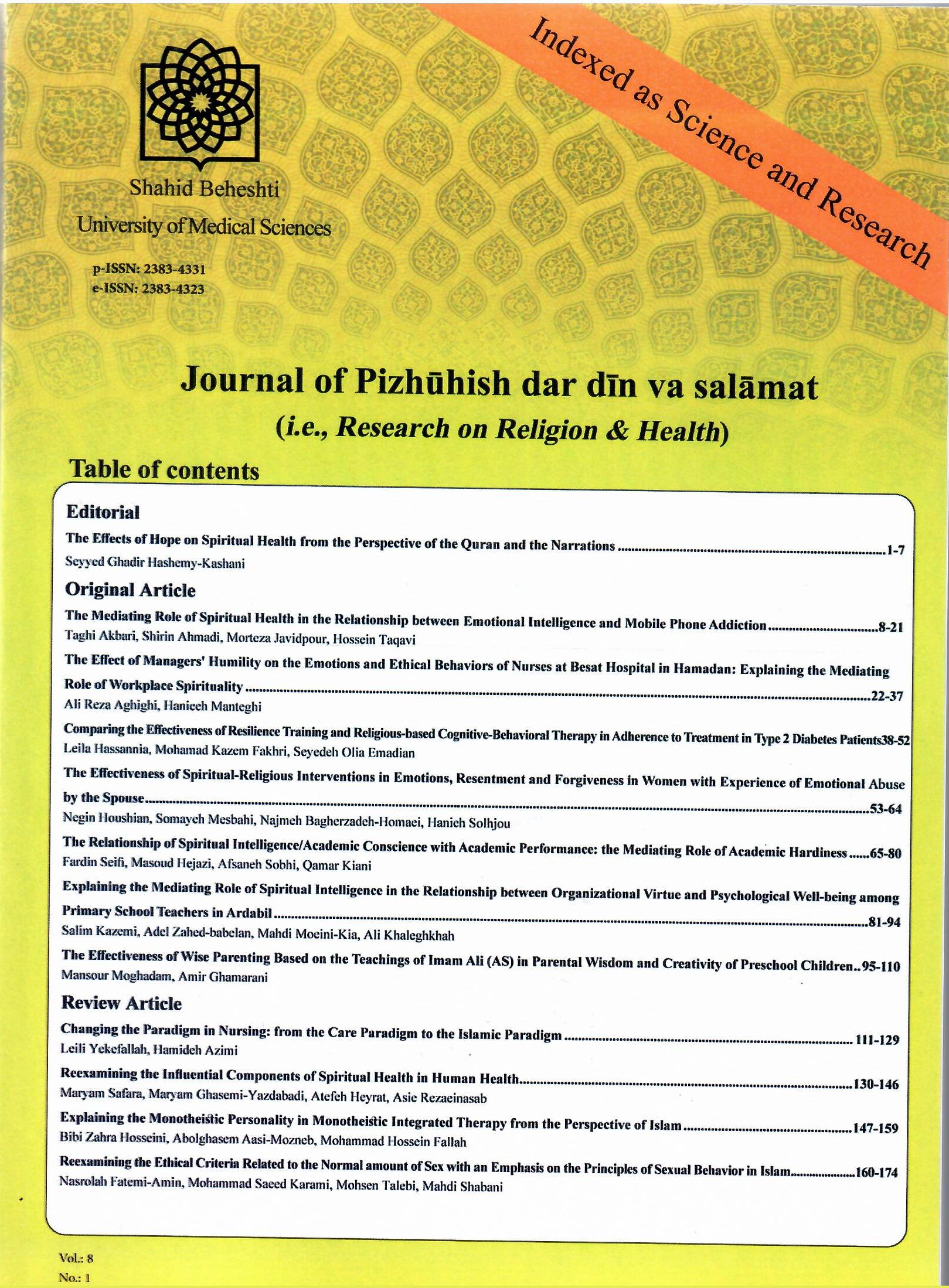
ارزیابی اثربخشی والدگری خردمندانه بر اساس آموزههای امام علی (ع) بر خردمندی والدین و خلاقیت کودکان پیشدبستانی
پژوهش در دین و سلامت ,
دوره 8 شماره 1 (2022),
19 اسفند 2022
,
صفحه 95-110
https://doi.org/10.22037/jrrh.v8i1.34177
چکیده
سابقه و هدف: مفهوم خردمندی در متون دینی و فلسفی قدمتی دیرینه دارد. از سوی دیگر، امروزه اهمیت والدگری و سبکهای فرزندپروری و تأثیر آن بر تربیت و آیندۀ فرزندان بر کسی پوشیده نیست. با توجه به اینکه امام علی (ع) نماد خردورزی به شمار میآیند و تاریخ خود گواه بر والدگری شایستۀ ایشان است، بیشک بررسی آثار ارزشمند ایشان میتواند رهیافتهای عمیقی در حوزۀ خردمندی و خلاقیت به دست دهد. این پژوهش با هدف ارزیابی اثربخشی بستۀ والدگری خردمندانه بر اساس آموزههای امام علی (ع) بر خردمندی والدین و خلاقیت کودکان پیشدبستانی صورت گرفته است.
روش کار: این پژوهش ازنوع نیمهآزمایشی با طرح پیشآزمون-پسآزمون با گروه کنترل است. جامعۀ پژوهش شامل والدین دانشآموزان دختر پیشدبستانی شهر اصفهان در سال تحصیلی 98-1397 بود که با توجه به ملاکهای ورود، 30 نفر بهطور تصادفی در دو گروه آزمایش (بستۀ والدگری خردمندانه را در طی 12 جلسه آموزش دیدند) و گروه کنترل (بدون دریافت مداخله) جایگزین شدند. در این پژوهش از آزمون تصویری تفکر خلاق تورنس و پرسشنامۀ سهبُعدی خرد آردلت استفاده شد. نتایج دادههای مرحلۀ پسآزمون نیز با آزمون مانکوا تجزیهوتحلیل شد. در این پژوهش همۀ موارد اخلاقی رعایت شده است و مؤلفان مقاله تضاد منافعی گزارش نکردهاند.
یافتهها: نتایج نشان میدهد که خردمندی والدین به همراه هر سه زیرمقیاس (شناختی، تأملی و عاطفی) و همچنین نمرات خلاقیت در زیرمقیاسهای (بسط، سیالی و انعطافپذیری) با گروه کنترل تفاوت معناداری داشت اما زیرمقیاس ابتکار با گروه کنترل تفاوت معناداری نشان نداد.
نتیجهگیری: بر اساس یافتههای بهدستآمده میتوان گفت آموزش بستۀ والدگری خردمندانه بر اساس آموزههای امام علی (ع) بر خردمندی والدین و خلاقیت کودکان دختر پیشدبستانی اثربخش است.
- آموزههای امام علی (ع)؛ خلاقیت؛ خردمندی؛ والدگری؛ والدگری خردمندانه
ارجاع به مقاله
مراجع
Glück J, König S, Naschenweng K, Redzanowski U, Dorner-Hörig L, Straßer I, et al. How to measure wisdom: Content, reliability, and validity of five measures. Frontiers in psychology. 2013;4:405.
Grossmann I, Sahdra BK, Ciarrochi J. A heart and a mind: Self-distancing facilitates the association between heart rate variability, and wise reasoning. Frontiers in behavioral neuroscience. 2016;10:68.
Owens JE, Menard M, Plews-Ogan M, Calhoun LG, Ardelt M. Stories of growth and wisdom: a mixed-methods study of people living well with pain. Global Advances in Health and Medicine. 2016;5(1):16-28.
Ardelt M. Disentangling the relations between wisdom and different types of well-being in old age: Findings from a short-term longitudinal study. Journal of Happiness Studies. 2016;17(5):1963-84.
Sternberg RJ. The assessment of creativity: An investment-based approach. Creativity research journal. 2012;24(1):3-12.
Staudinger UM, Glück J. Psychological wisdom research: Commonalities and differences in a growing field. Annual review of psychology. 2011;62:215-41.
Yang S-y. Wisdom and learning from important and meaningful life experiences. Journal of Adult Development. 2014;21(3):129-46.
Baltes PB, Smith J. The fascination of wisdom: Its nature, ontogeny, and function. Perspectives on psychological science. 2008;3(1):56-64.
Płóciennik E. Children’s creativity as a manifestation and predictor of their wisdom. Thinking Skills and Creativity. 2018;28:14-20.
Soh K. Fostering student creativity through teacher behaviors. Thinking skills and creativity. 2017;23:58-66.
Peng J, Chen Y, Xia Y, Ran Y. Workplace loneliness, leader-member exchange and creativity: The cross-level moderating role of leader compassion. Personality and Individual Differences. 2017;104:510-5.
Matei CS. Critical thinking and creativity. Euromentor Journal-Studies about education. 2018;9(02):41-7.
Jafarloo G, Sharifi N, Sharifi HP. Providing a model for predicting creativity based on resilience, self-efficacy, perfectionism, parental education, family backgrounds and close relatives' work with the mediator of progress motive in students. Journal of Innovation and Creativity in the Humanities. 2019;9(1):153-84. (Full Text in Persian)
Yildirim A. Creativity in early childhood education program. Procedia-Social and Behavioral Sciences. 2010;9:1561-5.
Doron E. Fostering creativity in school aged children through perspective taking and visual media based short term intervention program. Thinking skills and creativity. 2017;23:150-60.
Runco MA, Millar G, Acar S, Cramond B. Torrance tests of creative thinking as predictors of personal and public achievement: A fifty-year follow-up. Creativity Research Journal. 2010;22(4):361-8.
Abraham A. Gender and creativity: An overview of psychological and neuroscientific literature. Brain imaging and behavior. 2016;10(2):609-18.
Moghadam M, Ghamarani A, Ebadi A. Developing a wise parenting package based on the approaches of Imam Ali (as) and assessing its effectiveness on the wisdom of parents, parent- child relationship, creativity and symptoms preschool girl with internalized behavioral problems 2019. (Full Text in Persian)
ReyShahri M. Mizanalhekmat. 2017. Qom: Computer Research Center for Humanities; 2017. (Full Text in Persian)
Amadi M. Ghorar al-Hikam va Dorar al-Kalim. .Translated by Rasouli Mahalati, H. 2 ed. Qom: Dar al -Ketab al-Islami; 2002. (Full Text in Persian)
Dashti M. NahjolBalghe. 1 ed. Qom: Amir al-Mo'menin Research Institute; 2002. (Full Text in Persian)
Ibn Abi Al-Hadid. Explanation of the Nahjolbalaghe. Qom: Library of Ayatollah Al-Marashi Al-Najafi; 1980. (Full Text in Persian)
Qomi A. Safinatalbahar & Madinatalhekam. Tehran: Farahani; 1980. (Full Text in Persian)
Ardelt M. Empirical assessment of a three-dimensional wisdom scale. Research on aging. 2003;25(3):275-324.
Zabihi Hesari N, Chaji MR, Zare Moghadam A. Relationship between wisdom and psychological well-being and academic buoyancy of students. Educational Research Journal. 2017;4(35):20-35. (Full Text in Persian)
- چکیده مشاهده شده: 482 بار
- PDF دانلود شده: 304 بار