
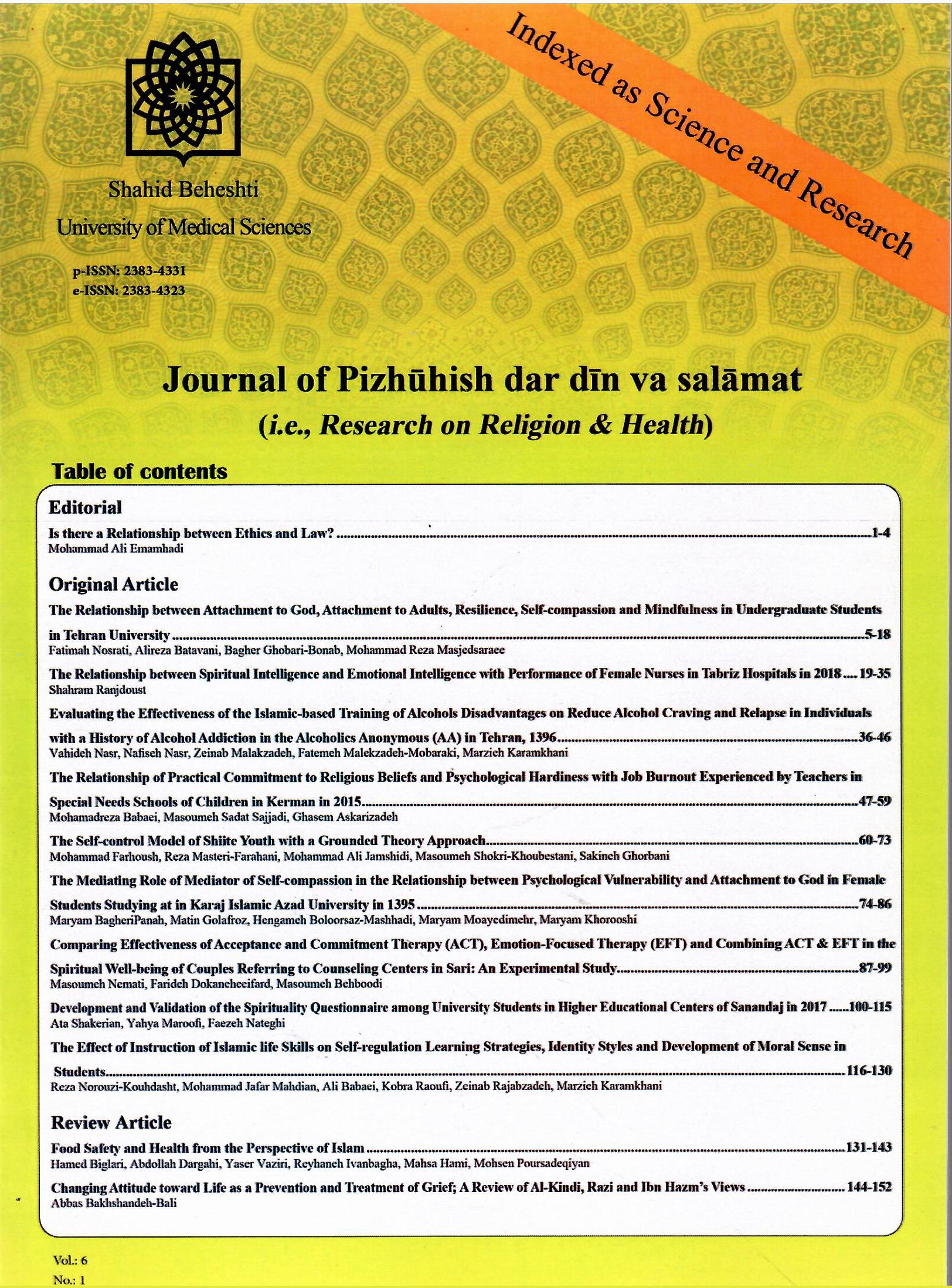
مقایسة اثربخشی سه روش درمان مبتنی بر پذیرش و تعهد، درمان هیجانمدار و درمان تلفیقی بر بهزیستی معنوی خانوادههای مراجعهکننده به مراکز مشاورة شهرستان ساری: مطالعة نیمهآزمایشی
پژوهش در دین و سلامت ,
دوره 6 شماره 1 (2020),
22 فروردین 2020
,
صفحه 87-99
https://doi.org/10.22037/jrrh.v6i1.21369
چکیده
سابقه و هدف: یافتن روشهای درمانی مؤثر بر ارتقای معنویت افراد بهویژه همسران، در سازگاری و افزایش روابط صمیمانة آنان و جلوگیری از طلاق و مسائل خانواده بسیار سودمند و منطقی است. هدف این پژوهش مقایسة اثربخشی درمان مبتنی بر پذیرش و تعهد (ACT)، درمان هیجانمدار (EFT) و درمان تلفیقی بر معنویت خانوادههای متقاضی طلاق مراجعهکننده به مراکز مشاورة شهرستان ساری بود.
روش کار: پژوهش حاضر نیمهتجربی از نوع کارآزمایی بالینی با طرح پیشآزمون-پسآزمون با گروه کنترل بود. جامعة آماری پژوهش خانوادههای مراجعهکننده به مراکز مشاورة شهرستان ساری بودند. شرایط ورود به مطالعه نداشتن اعتیاد همسران و هوشبهر بالاتر از ۸۵ بود. ابتدا افراد به پرسشنامة ﻣﻌﻨﻮﯾﺖ ﻓﺮاﮔﯿﺮ پاسخ دادند و از میان آنان ۵۶ زوج که نمرهشان پایینتر از متوسط بود، به روش نمونهگیری دردسترس و تصادفی ساده انتخاب؛ و بهطور تصادفی در چهار گروه قرار گرفتند. سپس گروه آزمایشی یک، 10 جلسة درمانی ACT؛ گروه دو، 10 جلسة درمانی EFT و گروه سه، ۱۶ جلسة آموزش تلفیقی دریافت کردند و به گروه گواه هیچ آموزشی داده نشد. در پایان، همسران با ﻣﻘﯿﺎس ﻣﻌﻨﻮﯾﺖ ﻓﺮاﮔﯿﺮ آزمون مجدد شدند و آزمون پیگیری بعد از گذشت یک ماه اجرا شد. دادهها به دلیل طبیعی بودن با آزمون تحلیل کوواریانس و کرویت ماچلی تحلیل شد. در این پژوهش همة موارد اخلاقی رعایت شده است و مؤلفان مقاله هیچگونه تضاد منافعی گزارش نکردهاند.
یافتهها: تحلیلهای آماری نشان داد که سه روش درمان ACT، EFT و تلفیق این دو روش درمانی موجب افزایش معنیدار بهزیستی معنوی همسران متقاضی طلاق در مقایسه با گروه گواه شد، اما تفاوت معناداری بین سه روش درمان مشاهده نشد. ماندگاری اثر درمان هر سه روش نیز در پیگیری یک ماهه نشان داده شد.
نتیجهگیری: نتایج نشان میدهد که معنویت تغییرپذیر است و با آموزش و درمان بهزیستی معنوی افزایش مییابد. از سوی دیگر، یافتهها گویای اصالت ACT و EFT در افزایش بهزیستی معنوی همسران متقاضی طلاق و کاهش میزان طلاق بود. بنابراین، میتوان هر سه روش مذکور را برای ارتقای بهزیستی معنوی به کار برد.
استناد مقاله به این صورت است:
Nemati M, Dokaneheeifard F, Behboodi M. Comparing Effectiveness of Acceptance and Commitment Therapy (ACT), Emotion-Focused Therapy (EFT) and Combining ACT & EFT in the Spiritual Well-being of Couples Referring to Counseling Centers in Sari: An Semi-experimental Study. Journal of Pizhūhish dar dīn va salāmat. 2020;6(1):87-99. https://doi.org/10.22037/jrrh.v6i1.21369
- بهزیستی معنوی؛ درمان مبتنی بر پذیرش و تعهد؛ درمان هیجانمدار؛ درمان تلفیقی
ارجاع به مقاله
مراجع
Miller IW, Ryan CE, Keitner GI, Bishop DS, Epstein NB. The McMaster approach to families: Theory, assessment, treatment and research. Journal of Family Therapy. 2000;22(2):168-89.
Fredrickson BL. The value of positive emotions: The emerging science of positive psychology is coming to understand why it's good to feel good. American scientist. 2003;91(4):330-5.
Muse-Burke JL. Development and validation of the Inclusive Spirituality Index: Lehigh University; 2004.
Piedmont RL. Does spirituality represent the sixth factor of personality? Spiritual transcendence and the five‐factor model. Journal of personality. 1999;67(6):985-1013.
Captari D. Investigating the Correlation between Burnout and Spirituality among Resident Assitants at Liberty University. Senior Honors Papers. 2010:119.
Mahoney A, Pargament KI, Murray-Swank A, Murray-Swank N. Religion and the sanctification of family relationships. Review of religious research. 2003:220-36.
Rhoades CJ. Objective and Perceived Spiritual and Religious Compatibility as Predictors of Marital Functioning: Loyola University Maryland; 2011.
Samadi H, Dostkam M. Investigating the effectiveness of Acceptance and Commitment Therapy (ACT) on marital compatibility in infertile women. Thoughts and Behavior in Clinical Psychology. 2017;12(43):67-769. (Full Text in Persian)
Tajvar Rostami S, Rahimi F, Kazemi M. Effectiveness of Acceptance and Commitment Treatment in Depression and Spiritual Well-being of Blind Girls in Shahrekord. Journal of Modern Psychological Researches. 2017;11(44):75-88. (Full Text in Persian)
Berrett ME, Hardman RK, O'Grady KA, Richards PS. The role of spirituality in the treatment of trauma and eating disorders: Recommendations for clinical practice. Eating Disorders. 2007;15(4):373-89.
Abedi MR, Izadi R. Darman Mobtani bar Paziresh va Taahod. Tehran: Jangal; 2013. (Full Text in Persian)
Harris R. ACT made simple: An easy-to-read primer on acceptance and commitment therapy: New Harbinger Publications; 2019.
Johnson SM. The practice of emotionally focused couple therapy: Creating connection: Routledge; 2012.
McKinnon JM, Greenberg LS. Revealing underlying vulnerable emotion in couple therapy: Impact on session and final outcome. Journal of Family Therapy. 2013;35(3):303-19.
Goldman RN, Greenberg LS. Integrating love and power in emotion-focused couple therapy. European psychotherapy. 2007;7(1):117-35.
Jokar b, Kamali f. Relation between Spirituality and the Feeling of Shame and Sin. Scientific Journal Management System. 2015;5(14):3-20. (Full Text in Persian)
Sadegh PoorMoradi Z, Nasirian M, Chboki NeJad Z. Asarbakhshi-ye Darman-e Mobtani bar Paziresh va Taahod ACT bar Mizan-e Manaviat-e Hamsaran-e Mardan-e Mobtala be MS Shahrestan-e Yaz. Avalin Conferance Beinolmellali Pajuheshhaye Novin dar Howzeh Oloom Tarbiati va Ravanshenasi va Motaleat EjTemaee Iran; Qom.2016. (Full Text in Persian)
Emamian A, Latifi Z. Asarbakhshi-ye Darman-e Mobtani bar Taahod va Paziresh ba Darman-e Mobtani bar Manviat bar Mizan-e Behzisti-ye Ravanshenakhti-ye Zanan-e Mobtala be Ekhtelale Vasvase Ejbari. Avalin Conferance Beinolmellali Ravanshenasi va Oloom Tarbiati; Shiraz.2015. (Full Text in Persian)
Javanmard Q, Gharehghozlo RM, Porakbaran E,
Mohammadi H, Mousavi MR. The Prediction of Coherence and Family Functioning in Couples based on Practical Commitment to Religious Beliefs. Journal of Reaserch on Religion & Health. 2016;2(1):34-41. (Full Text in Persian)
Baer RA, Smith GT, Lykins E, Button D, Krietemeyer J, Sauer S, et al. Construct validity of the five facet mindfulness questionnaire in meditating and nonmeditating samples. Assessment. 2008;15(3):329-42.
Hayes S. Acceptance and Commitment Therapy and the New Behavior Therapies: Mindfulness. Acceptance, and Relationship. 2004.
Zanganeh Motlag F, Bani- Jamali S-S, Ahadi H, Hatami HR. The effectiveness of couples therapy based on acceptance and commitment and emotionally focused couples therapy on improvement of intimacy and reduction of Alexithymia among Couples. Thoughts and Behavior in Clinical Psychology. 2017;12(44):47-56.
Johnson SM, Whiffen VE. Attachment processes in couple and family therapy: Guilford Press; 2003. (Full Text in Persian)
Group WS. A cross-cultural study of spirituality, religion, and personal beliefs as components of quality of life. Social science & medicine. 2006;62(6):1486-97.
- چکیده مشاهده شده: 1184 بار
- PDF دانلود شده: 957 بار