
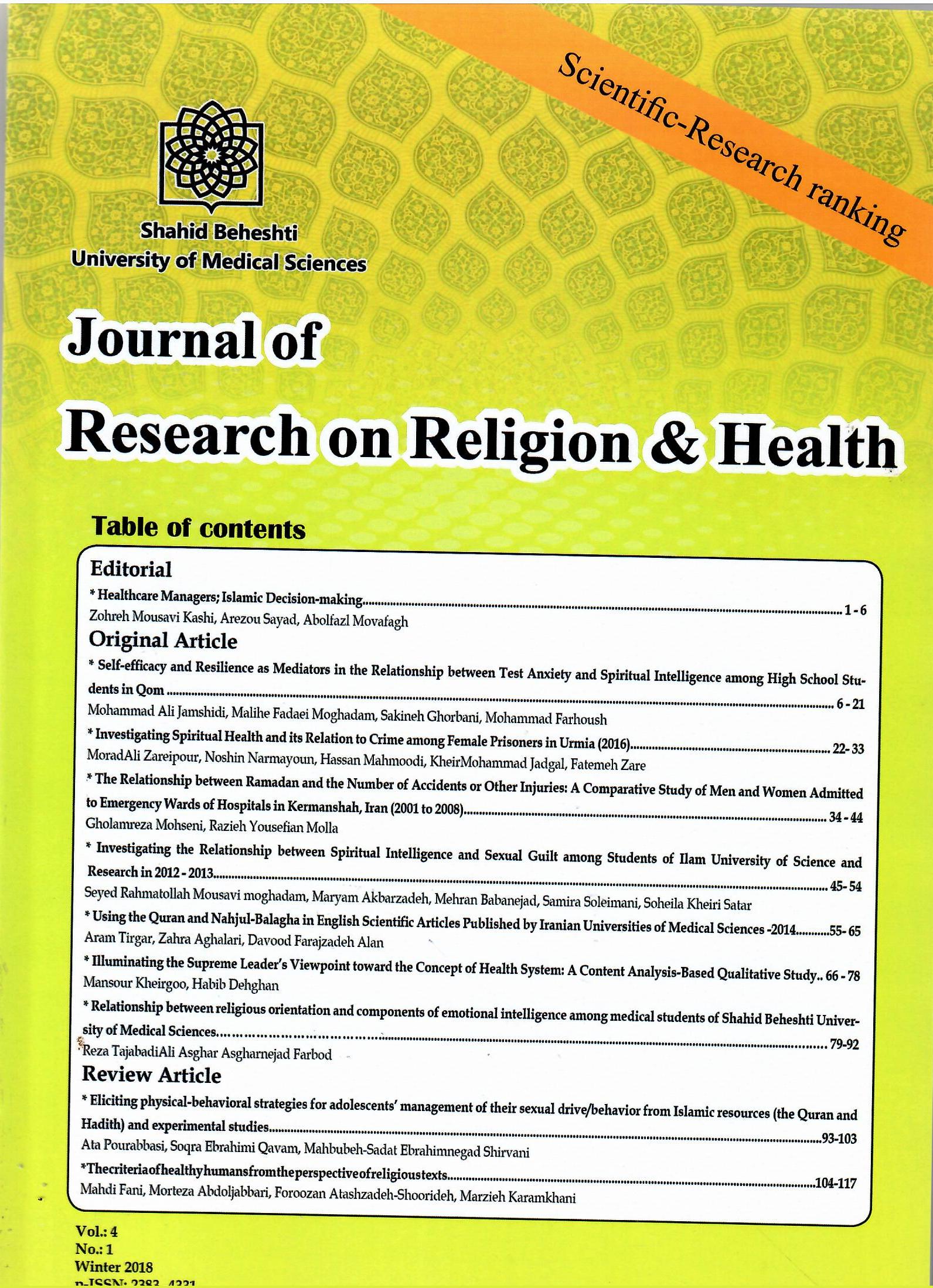
بررسی رابطهی هوش معنوی با احساس گناه جنسی در دانشجویان دانشگاه علوم و تحقیقات شهرستان ایلام در سال تحصیلی 91 - 92
پژوهش در دین و سلامت ,
دوره 4 شماره 1 (2018),
30 دسامبر 2017
,
صفحه 45-54
https://doi.org/10.22037/jrrh.v4i1.16104
چکیده
سابقه و هدف: بهکارگیري منابع معنوي میتواند در حل مسائل زندگی ازجمله احساس گناه، مؤثر واقع شود. ازاینرو، هدف این پژوهش بررسی رابطهی بین هوش معنوی با احساس گناه جنسی در دانشجویان دانشگاه علوم و تحقیقات شهرستان ایلام است.
روش کار: این پژوهش ازنوع توصیفی - همبستگی است که جامعهی آماری آن را همهی دانشجویان مشغول به تحصیل دانشگاه علوم و تحقیقات شهرستان ایلام در سال تحصیلی 91 - 92 تشکیل میدهد. برای این منظور، با روش نمونهگیری در دسترس، نمونهیی به حجم 100 نفر، بر اساس جدول مورگان، انتخاب شد. برای جمعآوری دادهها از پرسشنامههای احساس گناه جنسی موشر و هوش معنوی کینگ استفاده شده است. تحلیل دادههای پژوهش نیز با روشهای آمار توصیفی، ضریب همبستگی پیرسون و رگرسیون خطی صورت گرفته است. در این پژوهش همهی موارد اخلاقی رعایت شده است. علاوهبراین، نویسندگان مقاله هیچگونه تضاد منافعی گزارش نکردهاند.
یافتهها: بر اساس نتایج بهدست آمده، بین هوش معنوی کل و احساس گناه جنسی رابطه وجود نداشت (192/0r=، 05/0<p)، اما زیرمقیاس آن (گسترش حالت هوشیاری) قدرت پیشبینیکنندگی برای احساس گناه جنسی بود (401/0= r، 01/0>p). علاوهبراین، بین احساس گناه جنسی با سن دانشجویان رابطه وجود داشت؛ اما ارتباط آن با جنسیت دانشجویان معنادار نبود (204/0 = r، 05/0>p).
نتیجهگیری: اگرچه هوش معنوی بهطور کل نقش مشخصی در میزان احساس گناه جنسی دانشجویان مورد مطالعه بهدست نداد، پارهیی از اجزای تشکیلدهندهی آن بهویژه با افزایش سن، میتواند نقش برجستهیی در درک و ابراز احساس گناه جنسی داشته باشد.
استناد مقاله به این صورت است:
Mousavi moghadamSR, AkbarzadehM, BabanejadM, SoleimaniS, Kheiri SatarS. Investigating the Relationship between Spiritual Intelligence and Sexual Guilt among Students of Ilam University of Science and Research in 2012 – 2013. J Res Relig Health. 2018; 4(1) : 45- 54.DOI: https://doi.org/10.22037/jrrh.v4i1.16104
- احساس گناه جنسی؛ ایلام ؛دانشجویان؛ هوش معنوی
ارجاع به مقاله
مراجع
Zhanda L. Personality tests.Translated by: MA Besharat and M Habibnejad. 1 ed. Tehran: Ayeez Publication; 2005. (Full Text in Persian)
Tangney J, Dearing RL. Shame and Guilt. New York: Guilford Publications; 2002.
Ghazimoradi H. In Praise of shame (shame sociology in Iran). Tehran: Publication Akhtar; 2007. (Full Text in Persian)
Pelachick R. Emotions, translator Ramadan Born,M. Mashhad: Razavi publication; 1987. (Full Text in Persian)
Moran D. Introduction to Phenomenology. 16 ed. London: Rutledge; 2000.
Long EC, Cate RM, Fehsenfeld DA, Williams KM. A longitudinal assessment of a measure of premarital sexual conflict. Family Relations. 1996:302-8.
Emmons RA. Is spirituality an intelligence? Motivation, cognition, and the psychology of ultimate concern. The International Journal for the psychology of Religion. 2000;10(1):3-26.
Emmons RA. Spirituality and intelligence: Problems and prospects. The international journal for the psychology of religion. 2000;10(1):57-64.
Payne IR, Bergin AE, Bielema KA, Jenkins PH. Review of religion and mental health: Prevention and the enhancement of psychosocial functioning. Prevention in Human Services. 1991;9(2):11-40.
Starks SH, Hughey AW. African American women at midlife: The relationship between spirituality and life satisfaction. Affilia. 2003;18(2):133-47.
TEYMOURPOUR N, MOSHTAGH BN, POUR SA. THE RELATIONSHIP BETWEEN ATTACHMENT STYLES AND AGE WITH SEXUAL GUILT IN WOMEN. 2012. (Full Text in Persian)
Nan LM. Moral guilt and shame: An investigation of their associations with personality, values, spirituality and religiosity: University of Illinois at Urbana-Champaign; 2007.
Jokar B, Kamali F. Explore the relationship between spirituality and sense of shame and guilt. Culture in the Islamic University 2015;5(1):3-21. (Full Text in Persian)
Moallemi S, Bakhshani NM, Raghibi M. On the relationship between mental health, spiritual intelligence and dysfunctional attitudes in students of Systan and Baluchestan University, Southeast of Iran. Fundamentals of Mental Health. 2011;12(48):702-9. (Full Text in Persian)
Dein S, Cook CC, Powell A, Eagger S. Religion, spirituality and mental health. The Psychiatrist. 2010;34(2):63-4.
TEIMOURPOUR N, MOSHTAGH BN, POURSHANBAZ A. The relationship of attachment styles, marital satisfaction and feeling of sex guilt with sexual desire in women. 2010. (Full Text in Persian)
Gunderson MP, McCary JL. Sexual guilt and religion. Family Coordinator. 1979:353-7.
Larson D, Milano MG, Lu MF. Religion and Mental Health. Clinical methods in transcultural psychiatry. 1998:191.
Brophy M. Gender differences in the attribution of shame and guilt. 2009.
Benetti-McQuoid J, Bursik K. Individual differences in experiences of and responses to guilt and shame: Examining the lenses of gender and gender role. Sex roles. 2005;53(1):133-42.
Kubany ES, Watson SB. Guilt: Elaboration of a multidimensional model. The Psychological Record. 2003;53(1):51.
Silfver M. Gender differences in value priorities, guilt, and shame among Finnish and Peruvian adolescents. Sex Roles. 2007;56(9-10):601-9.
DiVasto PV, Pathak D, Fishburn WR. The interrelationship of sex guilt, sex behavior, and age in an adult sample. Archives of sexual behavior. 1981;10(2):119-22.
- چکیده مشاهده شده: 786 بار
- PDF دانلود شده: 406 بار