
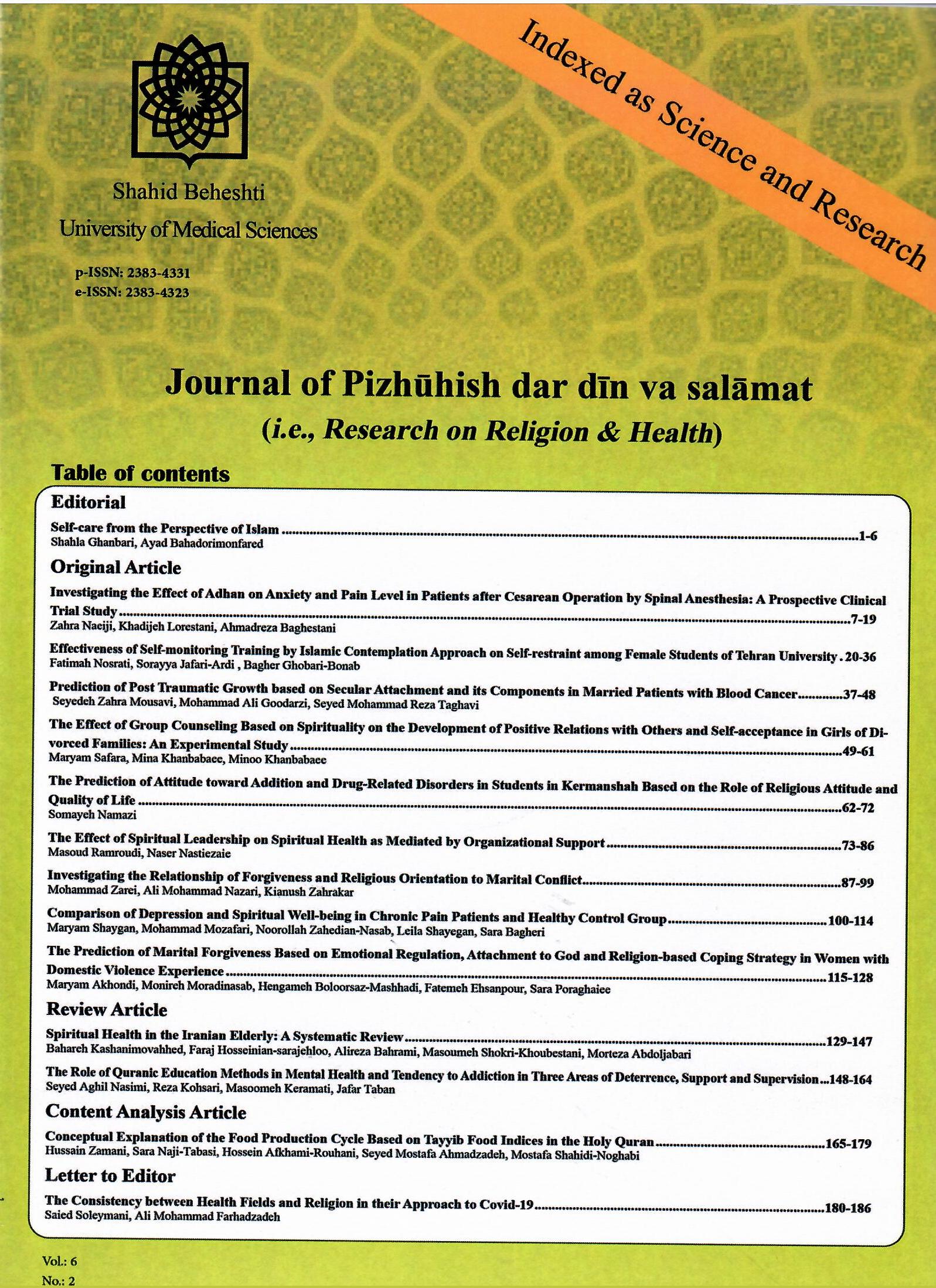
اثربخشی مشاورۀ گروهی مبتنی بر معنویت بر روابط مثبت با دیگران و پذیرش خود در دختران بعد از طلاق والدین: مطالعۀ آزمایشی
پژوهش در دین و سلامت ,
دوره 6 شماره 2 (2020),
13 خرداد 2020
,
صفحه 49-61
https://doi.org/10.22037/jrrh.v6i2.23051
چکیده
سابقه و هدف: طلاق والدین یکی از رویدادهای تنشزا و استرسآور برای فرزندان است و آنان را در معرض مشکلات روانشناختي متعددي قرار میدهد و در این میان مداخلۀ معنوی میتواند به سازگاری، بهبود روابط میانفردی و در نهایت توانمندسازی این قشر از دختران منجر گردد. ازاینرو پژوهش حاضر با هدف تعیین اثربخشی مشاورۀ گروهی مبتنی بر معنویت بر روابط مثبت با دیگران و پذیرش خود در دختران، بعد از طلاق والدین انجام شده است.
روش کار: پژوهش حاضر از نوع نیمهتجربیِ دو گروهی بود. جامعۀ آماری همۀ دختران 12 تا 16 سالهای بودند که والدینشان از هم جدا شدند و در سال تحصیلی 97-1396 در مدارس شهر کرج مشغول به تحصیل بودند؛ از میان این افراد، تعداد 20 نفر به شیوۀ نمونهگیری دردسترس انتخاب شدند و در دو گروه آزمایش و کنترل (هر کدام 10 نفر) بهطور تصادفی جایگزین شدند. آزمودنیهای گروه آزمایش در هشت جلسۀ دو ساعته بهصورت گروهی مداخلات را دریافت کردند، درصورتیکه گروه کنترل مداخلهای دریافت نکرد. بلافاصله بعد از اتمام جلسات درمانی، پسآزمون از نمونهها گرفته شد. برای گردآوری دادهها از پرسشنامۀ بهزیستی روانشناختی ریف استفاده شد. اطلاعات بهدستآمده نیز با روشهای آمار توصیفی و تحلیل کوواریانس چندمتغیّری (MANCOVA) تحلیل شد. در این پژوهش همۀ موارد اخلاقی رعایت شده است و مؤلفان مقاله هیچگونه تضاد منافعی گزارش نکردهاند.
یافتهها: بر اساس نتایج بهدستآمده، مشاورۀ گروهی مبتنی بر معنویت در افزایش روابط مثبت با دیگران و پذیرش خودِ دختران، بعد از طلاق والدین تأثیر معناداری داشت (05/0P<).
نتیجهگیری: با توجه به یافتههای موجود، به نظر میرسد که مداخلۀ معنوی بر افزایش روابط مثبت با دیگران و پذیرش خودِ دختران بعد از طلاق تأثیر دارد. ازاینرو، میتوان با برنامۀ مشاورۀ گروهی مبتنی بر معنویت برای بهبود و ارتقای بهزیستی روانشناختی آنان اقدام عملی نمود.
استناد مقاله به این صورت است:
Safara M, Khanbabaee M, Khanbabaee M. The Effect of Group Counseling Based on Spirituality on the Development of Positive Relations with Others and Self-acceptance in Girls of Divorced Families: An Experimental Study. Journal of Pizhūhish dar dīn va salāmat. 2020;6(2):49-61. https://doi.org/10.22037/jrrh.v6i2.23051
- روابط میانفردی؛ طلاق؛ مشاورۀ گروهی؛ معنویت
ارجاع به مقاله
مراجع
Sayadi G, Golmohammadian M, Rashidi A. Effectiveness of Schema Therapy on the Feeling of Inferiority among the Adolescent Girls of Divorced Families. Research in Clinical Psychology and Counseling. 2017;7(1):89-100. (Full Text in Persian)
Wallerstein JS, Blakeslee S. Second chances: Men, women, and children a decade after divorce: Houghton Mifflin Harcourt; 2004.
Arkes J. The temporal effects of divorces and separations on children’s academic achievement and problem behavior. Journal of divorce & remarriage. 2015;56(1):25-42.
Weaver JM, Schofield TJ. Mediation and moderation of divorce effects on children’s behavior problems. Journal of Family Psychology. 2015;29(1):39.
Wallerstein J, Lewis J, Packer Rosenthal S. Mothers and their children after divorce: Report from a 25-year longitudinal study. Psychoanalytic Psychology. 2013;30(2):167.
Yaghoobi K, Sohrabi F, Mofidi F. A Comparative study of the degree of aggression among divorced and not divorced children. Psychology Studies. 2011;7(1):97-110. (Full Text in Persian)
Bakhshizadeh M. The Effectiveness of Forgiveness Education on the Psychological Well-being and Happiness of Mothers of Students with Special Learning Disabilities in Tabas. Birjand: Islamic Azad University, Birjand Branch: Faculty of Education & Psychology; 2017. (Full Text in Persian)
Hetherington EM, Stanley-Hagan M. The adjustment of children with divorced parents: A risk and resiliency perspective. The Journal of Child Psychology and Psychiatry and Allied Disciplines. 1999;40(1):129-40.
Iman MT, Yadali Jamaloei Z. The Relation Between Mental Well-Being and Marital Satisfaciton. Applied Sociology. 2013;23(4):1-24. (Full Text in Persian)
Hushyari J, Mahdi Safooraii Parizi M, Newsha B. Comparing Spiritual Well-Being, Psychological Well-Being and Family Efficiency among University and Seminary Students. Ravanshenasi va Din. 2016;8(3):71-91. (Full Text in Persian)
Iman MT, Aghamiri F. A Survey of Cultural and Psychological Factors affecting Mothers’ Psychological well-being: A Case Study of “Empty Nest” in Sari. Quarterly Journal of Women and Society. 2012;3(9):1-20. (Full Text in Persian)
Kamari S, Fooladchang M. Effectiveness of spirituality therapy training based on positivity on life expectancy and life satisfaction in adolescents. J Research in Clinical Psychology and Counselings. 2016;6(1):5-23. (Full Text in Persian)
Asefi R, Alipur A, Saffariniya M. Moghayeseh-ye Asarbakhshi-ye Ma'naviat-darmani va Tarhvareh-darmani bar Afsordegi-ye Daneshjooyan-e Afsordeh. Ravanshenasi va Din. 2014;2(34):27-42. (Full Text in Persian)
Sotoodeh H, Shakerinia I, Jobaneh RG, Kheyrati M, Seddigh MH. Role of Family Health and Spiritual health on Nurses Psychological Wellbeing. Medical History Journal. 2016;7(25):161-84. (Full Text in Persian)
Taghizade ME, Miralaie MS. Study of spiritual group therapy on increase of resiliency in female multiple sclerosis patients in Esfahan. Health psychology. 2013;2(7):82-102. (Full Text in Persian)
Mirzai Far F. Study of the Effectiveness of ComplementaryTherapies Using Group Counseling on Mental Health of MS Patients. Tehran: Alzahra University; 2015. (Full Text in Persian)
Albemuth RF. A spiritual strategy for counseling and psychotherapy. 2005.
Fagan PF, Churchill A. The effects of divorce on children. Marri Research. 2012;1:1-48.
Ottaway A. The impact of parental divorce on the intimate relationships of adult offspring: a review of the literature. Graduate journal of counseling psychology. 2010;2(1):5.
Yonker JE, Schnabelrauch CA, DeHaan LG. The relationship between spirituality and religiosity on psychological outcomes in adolescents and emerging adults: A meta-analytic review. Journal of adolescence. 2012;35(2):299-314.
Karami S, Dehghani Y, Saadatizade M. The Relationship between Self-esteem and Mental Health with Psychological Well-being of Divorced and Normal Children in Year 1393 in Kohgilouyeh. National Conference on Science and Technology of Iran, Association for the Promotion of Basic Sciences and Technology. 2014. (Full Text in Persian)
Goeke-Morey MC, Taylor LK, Merrilees CE, Shirlow P, Cummings EM. Adolescents’ relationship with God and internalizing adjustment over time: The moderating role of maternal religious coping. Journal of Family Psychology. 2014;28(6):749.
Barzegarbafrooei K. The Effectiveness of spiritual treatment education on psychological well -being and study performance of girl students from Islam point of view. Akhlagh Religious Extension Quarterly. 2014;10(38):126-52. (Full Text in Persian)
Revheim N, Greenberg WM. Spirituality matters: Creating a time and place for hope. Psychiatric rehabilitation journal. 2007;30(4):307-10. (Full Text in Persian)
Azhdarifard P, Ghazi G, Nooranipoor R. The Impact of Teaching Gnosticism and Spirituality on Students’ Mental Health. Modern Thoughts in Education. 2010;5(2):105-27. (Full Text in Persian)
Ebrahimi Barmi B, Hosseini M, Abdi K, Bakhshi E. The Relationship of Spiritual Intelligence and Rehabilitation Staff’s Perceived Stress in Welfare Organizations Centers in Tehran and Shemiranat: 2017. Archives of Rehabilitation. 2018;19(3):228-37.
Bayani AA, Mohammad Koochekya A, Bayani A. Reliability and validity of Ryff’s psychological well-being scales. Iranian journal of psychiatry and clinical psychology. 2008;14(2):146-51. (Full Text in Persian)
Bolhari J, Ghobaribonab B, Ghahari S, Mirzaei M, Raghebian R, Doosalivand H. Spiritual skills training. Tehran: Tehran University; 2013. (Full Text in Persian)
Akbarzadeh D, Akbarzadeh H, Ahmadi E. Correlation between Assertiveness, Psychological Well-being, and Aggression with Social Anxiety. Qom University of Medical Sciences Journal. 2015;9(1):22-9. (Full Text in Persian)
Rahmani M, Amini N, Siratisabet Foumani Z. Investigate the relationship between cognitive distortions and psychological well-being with marital disenchantment in couples applicant divorce. Journal of Educational Psychology. 2015;5(2):29-39. (Full Text in Persian)
Mokhtari M, Mirfardi A, Mahmoudi E. A study of social factors influencing tendency towards divorce in Yasouj. Journal of Applied Sociology the University of Isfahan. 2014;25(1):141-57. (Full Text in Persian)
Ghamari Givi H, Khoshnoodniay Chomachaei B. Comparison of social skills, mental health and academic performance in children with divorced, divorcing and intact parents. Family Research. 2016;12(1):69-92. (Full Text in Persian)
Esmaeili M, Basiri N. Efficacy Spirituality Therapy and Meta-Cognitive Therapy on the Psychological Well-being of Veterans and Martyrs’ Daughter. Journal of Psychology. 2017;21(3):269-83. (Full Text in Persian)
Asadi M, Sohrabi F, Borjali A. The effect of forgiveness therapy on aggression and empathy of delinquent youth boys. Rooyesh-e-Ravanshenasi Journal (RRJ). 2016;5(2):187-208. (Full Text in Persian)
TamanaiFar MR, Salami Mohamad Abadi F, Dashtban Zadeh S. Psychologhical Welfare and Its Relationship to Support and Happine. Journal of Behavioral Sciences. 2014;5(18):53-74. (Full Text in Persian)
Asad-Pur I, Burqai SS, Zadeh FB. Predicting the Quality of Life, Hope and Psychological Well-being in Divorced Women Based Religious Commitment. Majaleh Eslam va Pajuheshhaye Ravanshenakhti. 2016;2(5):79-94. (Full Text in Persian)
Asadollahi F, Neshatdoost Hamid T, Kalantary M, Mehrabi HA, Afshar H, Daghaghzadeh H. Effectiveness of spiritual therapy on somatic symptoms in female patients with irritable bowel syndrome. Research in Behavioural Sciences. 2014;12(3):317-27. (Full Text in Persian)
- چکیده مشاهده شده: 704 بار
- PDF دانلود شده: 441 بار