
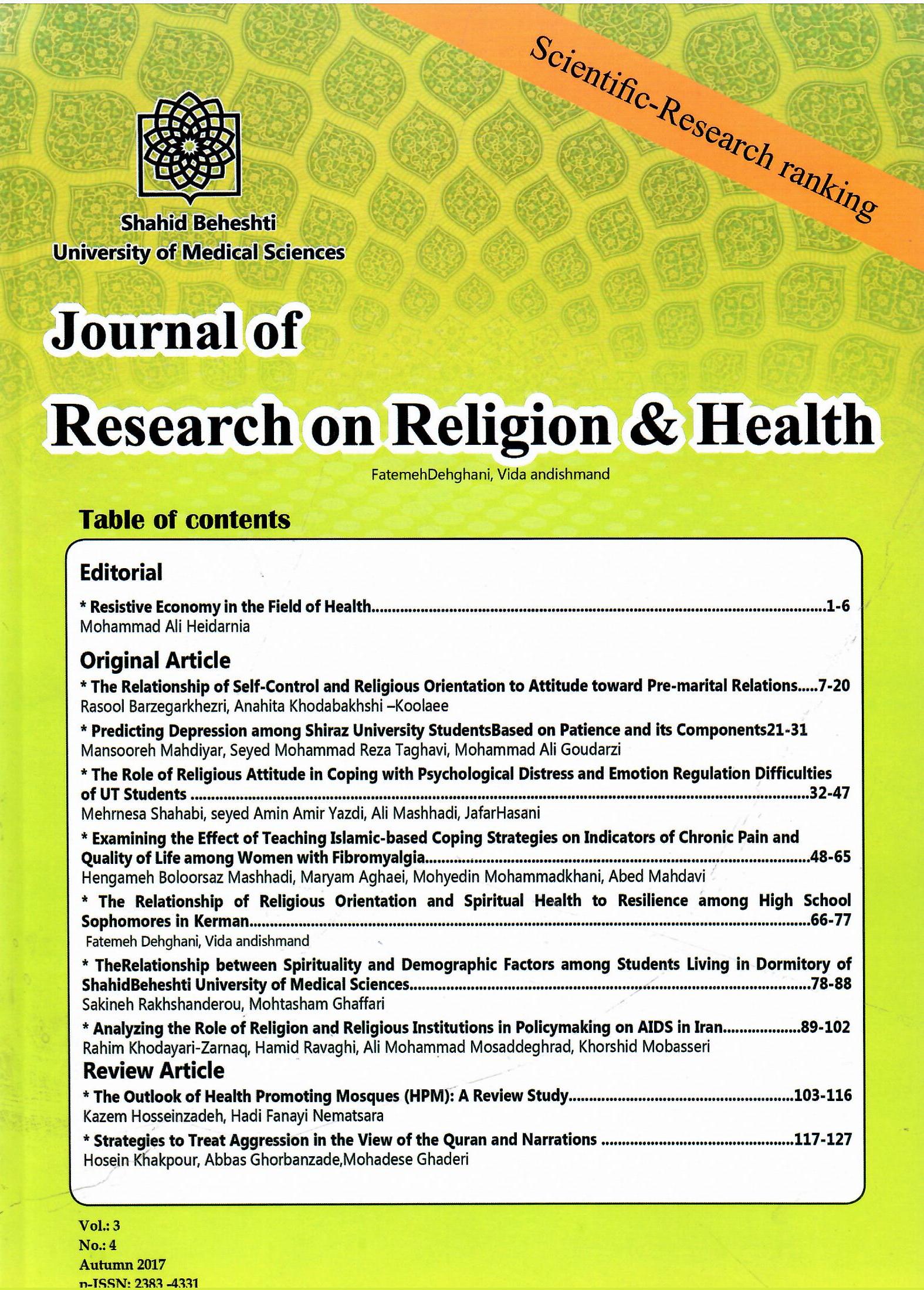
ارتباط بین معنویت و عوامل جمعیتشناختی در دانشجویان ساکن خوابگاه دانشگاه علوم پزشکی شهید بهشتی
پژوهش در دین و سلامت ,
دوره 3 شماره 4 (2017),
18 شهریور 2017
,
صفحه 78-88
https://doi.org/10.22037/jrrh.v3i4.15882
چکیده
چکیده
سابقه و هدف: معنویت نوعی پدیدهی جهانی بشری است که کل وجود انسان و اتصالش را به وجودی برتر شناسایی میکند و عامل ادامهی زندگی و یافتن معنا و هدف آن است. دانشجویان رشتههای علوم پزشکی بخش اعظمی از گروههای خدماترسانی سلامت در همهی کشورها هستند و کیفیت خدمات آنان بهطور مستقیم با اثربخشی نظام بهداشتی درمانی در ارتباط است. بنابراین، پژوهش حاضر با هدف تعیین میزان معنویت و عوامل مرتبط با آن در دانشجویان ساکن خوابگاه دانشگاه علوم پزشکی شهید بهشتی انجام شده است.
روش کار: این پژوهش ازنوع توصیفی - تحلیلی است که بر روی 540 دانشجوی دختر و پسر ساکن خوابگاههای دانشگاه علوم پزشکی شهید بهشتی انجام شده است. روش نمونهگیری بهصورت چندمرحلهیی؛ و معیار ورود به پژوهش داشتن رضایت برای شرکت در مطالعه است. ابزار گردآوری دادهها نیز شامل دو قسمت پرسشنامهی اطلاعات دموگرافیک و پرسشنامهی سنجش معنویت است. تجزیه و تحلیل دادههای پژوهش با استفاده از آزمونهای آماری تی و تحلیل واریانس یکطرفه صورت گرفته است. در این پژوهش همهی موارد اخلاقی رعایت شده است. علاوهبراین، نویسندگان مقاله هیچگونه تضاد منافعی گزارش نکردهاند.
یافتهها: یافتههای پژوهش نشان میدهد که از بین عوامل جمعیتشناختی؛ وضعیت اقتصادی دانشجویان و سنوات تحصیلی با معنویت و نگرش معنوی؛ و همچنین وضعیت تأهل، دانشکدهی محل تحصیل، وضعیت اقتصادی دانشجویان و سنوات تحصیلی با توانایی معنوی ارتباط معنیداری دارد.
نتیجهگیری: برای ارتقای سطح معنویت دانشجویان، علاوهبراینکه امور فرهنگی باید برنامهریزی و مداخلههای مؤثری برای این گروه طراحی و اجرا کند، جذب اعضای هیئت علمی برای تدریس در دانشگاه نیز باید با دقت نظر بیشتری انجام شود؛ چراکه این استادان معنوي هستند که دانشجویان را متحول میکنند.
استناد مقاله به این صورت است:
RakhshanderouS, GhaffariM. The Relationship between Spirituality and Demographic Factors among Students Living in Dormitory of Shahid Beheshti University of Medical Sciences. J Res Relig Health. 2017; 3(4): 78- 88. https://doi.org/10.22037/jrrh.v3i4.15882
- دانشجویان، عوامل جمعیتشناختی، معنویت
ارجاع به مقاله
مراجع
YAGHOOBI A. The study of relation between spiritual intelligence and rate of happiness in booali university students. 2010.
WHO. International statistical classification of diseases and health related problems, 10th revision 2005.
Cavendish R, Konecny L, Mitzeliotis C, Russo D, Luise BK, Medeíindt J, et al. Spiritual care activities of nurses using nursing interventions classification (NIC) labels. International Journal of Nursing Knowledge. 2003; 14(4): 113-24.
LotfiKashani F, Mofid B, SarafrazMehr S. Effectiveness of spirituality therapy in decreasing anxiety, depression and distress of women suffering from breast cancer Journal of Thought & Behavior in Clinical Psychology. 2013; 7(27): 27-42.
SalariFar MR. Theoretical Foundations of Religious Scales. Tehran: Sobhan; 2005. (Full Text in Persian)
Khomeini R. The forty hadiths. Qom: Institute for compilation and publication of Imam Khomeini works; 1994. (Full Text in Persian)
Farahaninia M, Abbasi M, Givari A, Haghani H. Nursing students’ spiritual well-being and their perspectives towards spirituality and spiritual care perspectives. Iran Journal of Nursing. 2006; 18(44): 7-14.
Seligman ME, Csikszentmihalyi M. Positive psychology: An introduction. Flow and the foundations of positive psychology: Springer; 2014. p. 279-98.
Feldman DB, Snyder CR. Hope and the meaningful life: Theoretical and empirical associations between goal–directed thinking and life meaning. Journal of Social and Clinical Psychology. 2005; 24(3): 401-21.
Sorajjakool S, Aja V, Chilson B, Ramírez-Johnson J, Earll A. Disconnection, depression, and spirituality: A study of the role of spirituality and meaning in the lives of individuals with severe depression. Pastoral psychology. 2008; 56(5): 521-32.
GHOBARI BB, Motavalipoor A, HAKIMIRAD E, HABIBI AM. Relationship between anxiety and depression and magnitude of spirituality in students of the University of Tehran. 2009.
Kleftaras G, Psarra E. Meaning in life, psychological well-being and depressive symptomatology: A comparative study. Psychology. 2012; 3(04): 337.
Rathi N, Rastogi R. Meaning in life and psychological well-being in pre-adolescents and adolescents. Journal of the Indian Academy of Applied Psychology. 2007; 33(1): 31-8.
Shahidi S, Farajinia S. Making and validating Spiritual Attitude Measurement Questionnaire. Journal of Psychology and Religion. 2012; 5(3): 97-115. (Full Text in Persian)
Garcini LM, Short M, Norwood WD. Affective and motivational predictors of perceived meaning in life among college students. The Journal of Happiness & Well-Being. 2013; 1(2): 47-60.
Talebzadeh Shooshtari L, Pourshafei H. The relation between meaning in life and general health among staff of Birjand University (2009-2010). Journal of Birjand University of Medical Sciences. 2011; 18(1): 55-61. (Full Text in Persian)
Taghdisi MH. The Relationship between Meaning in Life and Depression, Anxiety and Stress Status among College Students of Iran University of Medical Sciences In 2013. Iranian Journal of Health Education and Health Promotion. 2013; 1(3): 83-92. (Full Text in Persian)
Murray S. Man's Search for Meaning: An Introduction to Logotherapy. Therapeutic Recreation Journal. 1999; 33(1):61. (Full Text in Persian)
Shakrinia E. The relationship between social capital and meaning in life with general health in women victim of violence. J Women Health. 2010; 2:47-67. (Full Text in Persian)
Rathi N, Rastogi R. Meaning in life and psychological well-Being in pre-adolescents and adolescents. J Indian Acad Appl Psychol. 2007; 33(1): 31-8.
Sukhwal M, Suman L. Spirituality, religiosity and alcohol related beliefs among college students. Asian journal of psychiatry. 2013; 6(1): 66-70.
Woo CR, Brown EJ. Role of meaning in the prediction of depressive symptoms among trauma‐exposed and nontrauma‐exposed emerging adults. Journal of clinical psychology. 2013; 69(12): 1269-83.
- چکیده مشاهده شده: 1072 بار
- PDF دانلود شده: 408 بار