
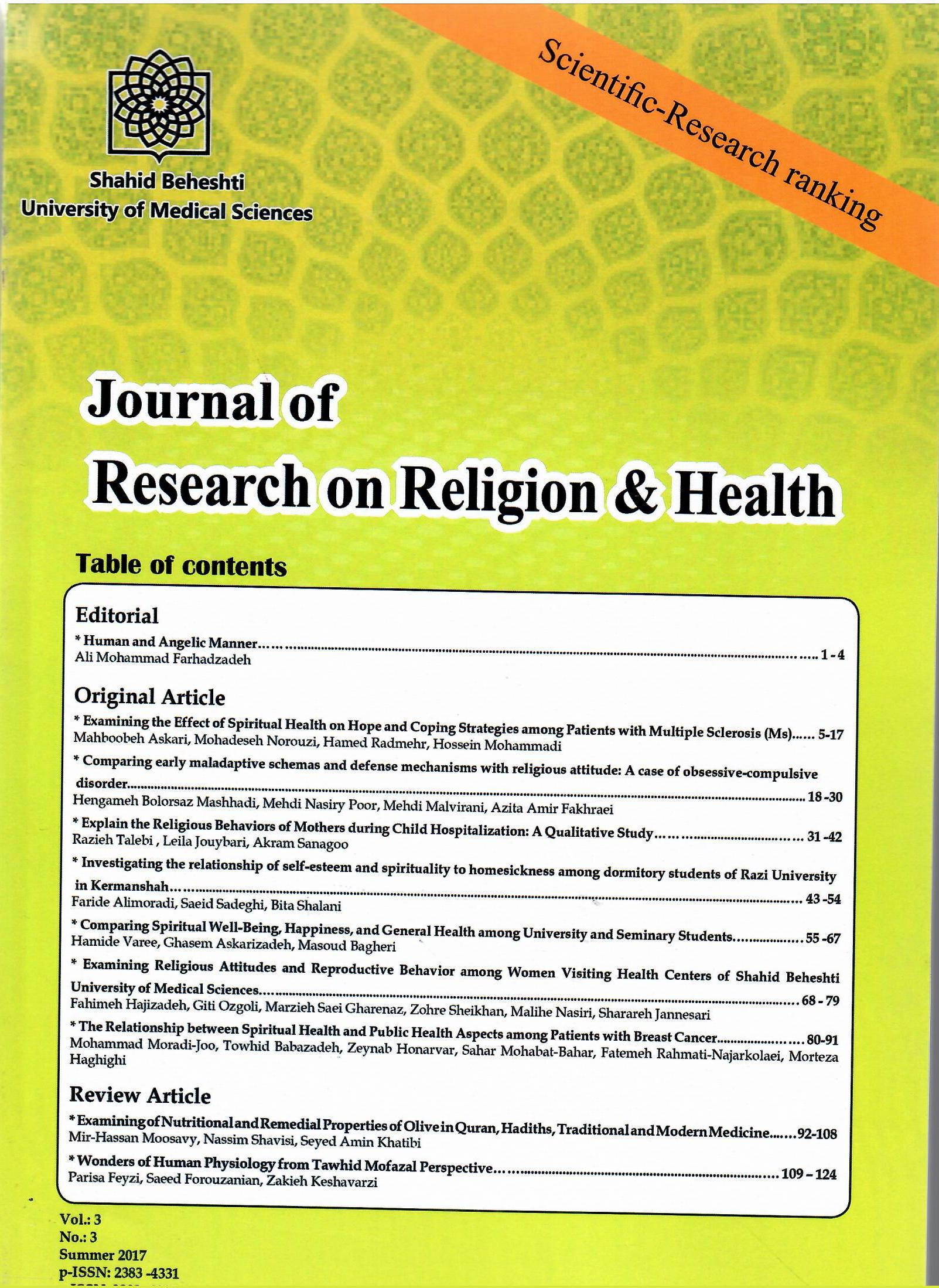
بررسی رابطهی عزت نفس و معنویتگرایی با احساس غربت در دانشجویان خوابگاهی دانشگاه رازی کرمانشاه در سال 1395
پژوهش در دین و سلامت ,
دوره 3 شماره 3 (2017),
14 خرداد 2017
,
صفحه 43-54
https://doi.org/10.22037/jrrh.v3i3.14895
چکیده
چکیده
سابقه و هدف: دانشگاه فرصتی مناسب برای رشد فردی بهحساب میآید؛ باوجوداین، دانشجویان اغلب با معضلهایی روبهرو هستند که احساس غربت جزء بیشترین معضلهای بیان شده در بین دانشجویان خوابگاهی است. این پژوهش با هدف بررسی رابطهی عزت نفس و معنویتگرایی با احساس غربت در دانشجویان خوابگاهی دانشگاه رازی کرمانشاه در سال 1395 انجام شده است.
روش کار: این پژوهش، توصیفی از نوع همبستگی و جامعهی آماری آن شامل همهی دانشجویان دختر و پسر خوابگاهی دانشگاه رازی کرمانشاه در سال تحصیلی 94 - 95 است؛ که از میان آنان 322 نفر بر اساس جدول مورگان و با استفاده از روش نمونهگیری خوشهیی چندمرحلهیی انتخاب شدند. ابزار گردآوری اطلاعات شامل پرسشنامهی عزت نفس کوپر اسمیت، پرسشنامهی معنویت پارسیان و دونینگ و پرسشنامهی احساس غربت آرچر است. دادههای پژوهش نیز با استفاده از روشهای آمار توصیفی، ضریب همبستگی و رگرسیون تحلیل شد. در این پژوهش همهی موارد اخلاقی رعایت شده است. علاوهبراین، نویسندگان مقاله هیچگونه تضاد منافعی گزارش نکردهاند.
یافتهها: نتایج تجزیه و تحلیل دادهها نشان داده که بین عزت نفس و احساس غربت (10/0>p) و همچنین بین معنویتگرایی و احساس غربت (001/0>p)، رابطهی منفی معنادار وجود دارد و معنویتگرایی میتواند میزان احساس غربت دانشجویان خوابگاهی را پیشبینی کند (100/0>p).
نتیجهگیری: با توجه به نتایج پژوهش میتوان معنویتگرایی و عزت نفس را ابزاری مکمل برای کاهش احساس غربت در نظر گرفت و برای کاهش احساس غربت در دانشجویان خوابگاهی به این متغیّرها توجه داشت.
- احساس غربت، دانشجویان خوابگاهی، عزت نفس، معنویت گرایی
ارجاع به مقاله
مراجع
Terry ML, Leary MR, Mehta S. Self-compassion as a buffer against homesickness, depression, and dissatisfaction in the transition to college. Self Identity. 2013;12(3):278–90.
Thurber CA, Walton EA. Homesickness and adjustment in university students. J Am Coll Heal. 2012;60(5):415–9.
Sun J, Hagedorn LS, Zhang YL. Homesickness at College: Its Impact on Academic Performance and Retention. J Coll Stud Dev. 2016;57(8):943–57.
Stroebe M, Schut H, Nauta MH. Is Homesickness a Mini-Grief? Development of a Dual Process Model. Clin Psychol Sci. 2016;4(2):344–58.
Willis H, Stroebe M, Hewstone M. Homesick blues. Psychologist. 2003;16(10):526–8.
Hoffert B. Homesick for Another World. REED BUSINESS INFORMATION 360 PARK AVENUE SOUTH, NEW YORK, NY 10010 USA; 2016.
Azizi S. Relationship between Homesickness and
Test Anxiety in Non-Native Students of Shiraz University of Medical Sciences International Branch in the Clinical and Physiopathology Course In 2013. Glob J Health Sci. 2016;8(7):293.
Sloan R. Homesick for the unheimlich: Back to the uncanny future in Alien: Isolation. J Gaming Virtual Worlds. 2016;8(3):211–30.
Stroebe M, Schut H, Nauta M. Homesickness: A systematic review of the scientific literature. Rev Gen Psychol. 2015;19(2):157.
Agharodbardeh F, Kafi SM Rezai S. Its homesickness and perceived social support and mental health in new students. In clinical psychology and personality Shahed University, 2011; 19 (6): 27-36.(Full Text in Persian)
Sadeghian F, Abedi MR, Baghban I. The relationship between self-organization and organizational feedback and job adjustment and a variety of personality types. New approaches to education. 2009; 4 (2): 65-91.(Full Text in Persian)
Yildirim N, Karaca A, Cangur S, Acikgoz F, Akkus D. The relationship between educational stress, stress coping, self-esteem, social support, and health status among nursing students in Turkey: A structural equation modeling approach. Nurse Educ Today. 2017;48:33–9.
Salmalian Z, Kazem Nezhad Leili E. Self-esteem in students’ academic success. Holistic Nursing and Midwifery.2014; 24 (71):40-47.(Full Text in Persian)
Hassanzadeh R.Imanifar P. The relationship between creativity and self-esteem with academic Zhyshrft adolescents and young people. Sociology Youth Studies, 2010; 1 (3):55-65.(Full Text in Persian)
Orth U, Robins RW, Roberts BW. Low self-esteem prospectively predicts depression in adolescence and young adulthood. J Pers Soc Psychol. 2008;95(3):695.
Saadat M, Ghasemazadeh AR, Soleimani M. Self-esteem in Iranian university students and its relationship with academic achievements. Procedia-social and behavioral sciences, 2012; 31: 10-14.
Zhao J, Wang Y, Kong F. Exploring the mediation effect of social support and self-esteem on the relationship between humor style and life satisfaction in Chinese college students. Pers Individ Dif. 2014;64:126–30.
Garofalo C, Holden CJ, Zeigler-Hill V, Velotti P. Understanding the connection between self-esteem and aggression: The mediating role of emotion dysregulation. Aggress Behav. 2016;42(1):3–15.
Diseth Å, Meland E, Breidablik HJ. Self-beliefs among students: Grade level and gender differences in self-esteem, self-efficacy and implicit theories of intelligence. Learn Individ Differ. 2014;35:1–8.
Weber SR, Pargament KI. The role of religion and spirituality in mental health. Curr Opin Psychiatry. 2014;27(5):358–63.
Ganocy SJ, Goto T, Chan PK, Cohen GH, Sampson L, Galea S, et al. Association of Spirituality With Mental Health Conditions in Ohio National Guard Soldiers. J Nerv Ment Dis. 2016;204(7):524–9.
Sanders PW, Allen GEK, Fischer L, Richards PS, Morgan DT, Potts RW. Intrinsic religiousness and spirituality as predictors of mental health and positive psychological functioning in Latter-day Saint adolescents and young adults. J Relig Health. 2015;54(3):871–87.
Ganga NS, Kutty VR. Influence of religion, religiosity and spirituality on positive mental health of young people. Ment Health Relig Cult. 2013;16(4):435–43.
Nash S, Nash P, Darby K. Spiritual Care with Sick Children and Young People: A handbook for chaplains, paediatric health professionals, arts therapists and youth workers. Jessica Kingsley Publishers; 2015.
Ali Bakhshi SZ, Mamghanieh M, Alipoor A. Relation between Trust in God and mental health PNU. Knowledge at the Islamic University.2011; 15(1):48-65.(Full Text in Persian)
Krejcie R V, Morgan DW. Determining sample size for research activities. Educ Psychol Meas. 1970;30(3):607–10.
Nisei AK, Najarian B, Porfaraji SF. Compare academic performance, mental and physical health and male students have parents without considering the moderating role of social protection in the first grade of high school in the city of Ahvaz. Journal of Education and Psychology, 2001; 3(3, 4): 67-86.
Ezhehi J, Dehghani M. Ganjavi A, Khodapanahi, MK. Validating homesickness scale in students. Journal of Behavioral Sciences.1999; 2 (1): 1-12.(Full Text in Persian)
Parsian N. Developing and validating a questionnaire to measure spirituality: A psychometric process. Global journal of health science. 2009; 1(1): 2.
HosseiniAlmadani SA, Karimi Y, Bahrami H, Moazedian A. Predicting Membership in Addict & Non-Addict Groups According to Spirituality, Personality Traits, Identity Styles, and Resiliency. J Rafsanjan Univ Med Sci. 2013;12(1):57–70.
Birashk B, Bakhshani NM, Byabanzadeh A, Ardykhany T. The role of religion in experience and rank the stresses of life. First International Conference on the role of religion in mental health.2001.(Full Text in Persian)
- چکیده مشاهده شده: 1114 بار
- PDF دانلود شده: 756 بار