Qualitative article


Study of Obstacles and Restrictions of Pedestrians for Commuting on Foot in the City of Tehran: A Qualitative Study

Taraneh Yousefinezhadi, Hamied Soori

Irtiqa Imini Pishgiri Masdumiyat (Safety Promotion and Injury Prevention), Vol. 5 No. 4 (2017), 13 March 2018, Page 192 - 185
https://doi.org/10.22037/meipm.v5i4.20719

 Backgrounds and Objectives:Today, providing a safe and secure environment for the passage of pedestrian is a special consideration in urban transport planning. Walking is the most simple and natural form of commuting and is recommended for health and reducing air pollution and traffic. However, there are many challenges in this area. The aim of this study was to investigate obstacles and problems of pedestrians in providing strategies for the promotion walking in different parts of the Tehran.

Materials and Methods: This study was carried out through a qualitative method using semi-structured interviews with 30 residents in different regions of Tehran. The interviews were analyzed by content analysis method after implementation. The sampling method was purposive and individuals were selected from pedestrians and drivers in different age groups. To validate data, credibility, transferability, conformability and dependability parameters were considered.Data were analyzed using the MAXQDA-10 software.

Results: In this study, the average age of participants was 38 years. Half of the participants were female. Seven main themes were extracted. The main themes extracted in this study were space-related issues, safety issues, security issues, cultural issues, management weaknesses and pedestrian's rights supportive laws, physiological and behavioural issues, and weather factors.

Conclusion: The accurate segregation of pedestrian pathway from the vehicles, making it more safe with appropriate pavements, removal of obstacles in the sidewalks, creating urban furniture, increasing the urban attractions, environmental improvements and creating a clean and desirable space, creating standard bridges passageways and underpasses for pedestrians can have a positive impact on safe commuting on foot.

How to cite this article: Yousefinezhadi T, Soori H. Study of Obstacles and Restrictions of Pedestrians for Commuting on Foot in the City of Tehran: A Qualitative Study. Irtiqa Imini Pishgiri Masdumiyat (Safety Promotion and Injury Prevention). 2017; 5(4):185-92.

Original article


The Role of long-term Relationship of Economic Development with Road Incidents in Iran

Parisa Bazdar Ardebili, Peyman Pejmanzad

Irtiqa Imini Pishgiri Masdumiyat (Safety Promotion and Injury Prevention), Vol. 5 No. 4 (2017), 13 March 2018, Page 200 - 193
https://doi.org/10.22037/meipm.v5i4.20718

Background and Objectives: Road incidents and its fatalities are one of the challenges of human societies that which have imposed a high  burden on the economies of some countries. The objective of this study was to investigate the impact of the long-term relationship between economic development and road incidences of Iran during the years 1394-1369.

Materials and Methods: The impact of the long-term relationship between economic development and road incidences of the transport sector is modelled using a vector autoregressive (VAR) model through the Microfit and Eviews softwares. To examine the reliability and accumulation of variables, the optimal lags, is determined. In the next step, the number of co-integration vectors of the model is determined; consequently, the optimal model is deduced. Variance decomposition of the forecast error method is used to study the explanatory power of the variations of the number of road incidences on the economic development of transportation.

Results: The positive logarithm of the ratio of GDP per capita was 29.10 in the estimation of the model which suggests that economic growth (increase per capita income) has been accompanied by higher accidents in the road segment and also according to the negative coefficient of variation of the logarithm of the gross domestic product per capita, indicates that in the next stages of economic growth, the rate of road accidents decreases. the results also show that there is a significant and positive relationship (0.66) between the Gini coefficient variable which indicates income distribution inequality in the country and road traffic accidents. considering the positive coefficient of the length of roads in the country (0.53), it can be seen that this variable has a positive relationship with road fatalities toll. also, from the results of model estimation, it is concluded that there is a direct correlation between population variable (POP) and road accident rate (4.21), indicating that along with population growth, the number of road accidents has increased.

Conclusion: The results of the research indicate that Kuznets's hypothesis could be confirmed in case of Iran. This means that in the early stages of economic growth, the rate of road accidents increases and finally Due to technical advances, increased investment in related sectors and appropriate training, this rate reduces at the high level of per capita income.

How to cite this article: Bazdar Ardebili P, Pejmanzad P. The role of long-term relationship of economic development with road incidents in Iran. Irtiqa Imini Pishgiri Masdumiyat (Safety Promotion and Injury Prevention). 2017; 5(4):193-200.

Dynamic Process Accident Analysis: Comparison of Bow tie and Bayesian Network Models

Esmaeel Zarei, Iraj Mohammadfam, Mohamadali Azadeh, Mostafa Mirzaei-Aliabadi

Irtiqa Imini Pishgiri Masdumiyat (Safety Promotion and Injury Prevention), Vol. 5 No. 4 (2017), 13 March 2018, Page 212 - 201
https://doi.org/10.22037/meipm.v5i4.20727

  Background and Objectives: Accidents of the industrial processes have caused irreparable economic, social, environmental and even political loses in the country. To prevent such accidents, identifying, evaluating and analyzing the causes of these incidents with new approaches are required for designing preventive strategies is a necessity. Therefore, the objective of the present study was directed toward the identifying and dynamic analyzing of the root causes of the process accidents. The Bowtie (BT) model and Bayesian Network (BN) were implemented for analyzing the accidents.

Materials and Methods: First, the accidents' scenarios were modelled quantitatively and quantitatively using the BT model, and then, the cause-consequence model of the accident scenarios was modelled in the BN using the proposed algorithm. Capabilities of the BN including, deductive, abductive reasoning and updated probability was used for dynamic analysis of the accident scenarios.

Results: The results showed that deductive reasoning for estimating the occurrence probabilities of a scenario and its consequences is more accurate by BN than BT. BN model is capable of doing probability updating of root events using the precursor accident data through abductive reasoning, taking into account conditional dependency among root events, safety barriers and modelling of common cause’s failures. However, BT model does not have such capabilities.

Conclusion: In the present study, a novel, dynamic and quantitative model was introduced that allows the continuous identification and monitoring of the safety risks in the process industries. Implementing the proposed model in the process industries can significantly reduce the risk of the industrial accidents and improve the level of safety.

How to cite this article: Zarei E, Mohammadfam I, Azadeh A, Mirzaei-Aliabadi M. Dynamic Process Accident Analysis: Comparison of Bow tie and Bayesian Network Models. Irtiqa Imini Pishgiri Masdumiyat (Safety Promotion and Injury Prevention). 2017; 5(4):201-212 .

Prediction of Resilience and Emotional Management Based on Cognitive Emotional Regulation in Crisis Management of the Iranian Ministry of Roads and City Planning

Kourosh Ghanbari, Mina Nazari Kamal, Nafiseh Ghaebi, Rahele Samouei

Irtiqa Imini Pishgiri Masdumiyat (Safety Promotion and Injury Prevention), Vol. 5 No. 4 (2017), 13 March 2018, Page 218 - 213
https://doi.org/10.22037/meipm.v5i4.20731

 Background and Objectives: Crisis management requires abilities for controlling and managing stressful crisis situations. Resilience and emotional management are among abilities required for managers in disaster situations. Therefore, the objective of this was to investigate the effect of cognitive-emotional regulation on the resilience of crisis managers in the ministry of roads and city planning.

Materials and Methods: This is a descriptive, correlation study carried out on 136 crisis managers in the ministry of roads and city planning using convenient sampling in the year 1395 (2016). After acquiring consent for participation in the study, Connor – Davison Resilience Indication Scale (CD-RIS) and Garnfesky’s Cognitive Emotional Regulation Questionnaire (CERQ, 2001) were applied to the participants. Step by step data analysis was carried out using Pearson and Spearman correlation coefficients and multiple linear regression.

Results: Data analysis showed that cognitive emotional regulation parameters are predictors of resilience in crisis management. Crisis managers with regulated cognitive emotional parameters had higher resilience compared to those with unregulated cognitive emotional parameters (R2=0342).

Conclusion: This study can be useful in understanding the necessity of emotional regulation for crisis management and disastrous and unpredictable situations. Organizations related to crisis management can use these results in their organizational management.

How to cite this article: Ghanbari K, Nazari Kamal M, Ghaebi N, Samouei R. Prediction of Resilience and Emotional Management Based on Cognitive Emotional Regulation in Crisis Management of the Iranian Ministry of Roads and City Planning.Irtiqa Imini Pishgiri Masdumiyat (Safety Promotion and Injury Prevention). 2017; 5(4): 213-218.

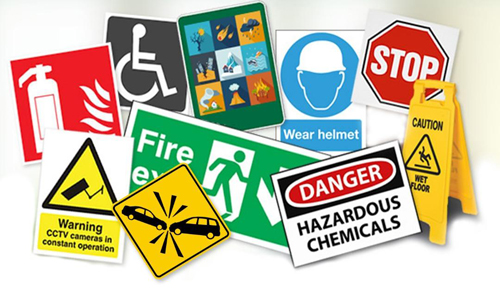
The Occupational health Student’s Awareness towards the Globally Harmonized System for the Chemical Safety Signs

Davoud Mahmoudi, Saeed Nazari, Mikaeil Derakhshani, Ali Dalili, Sadegh Hazrati, Jalil Nazari

Irtiqa Imini Pishgiri Masdumiyat (Safety Promotion and Injury Prevention), Vol. 5 No. 4 (2017), 13 March 2018, Page 226 - 219
https://doi.org/10.22037/meipm.v5i4.20733

Background and Objectives: The chemical hazards, such as corrosive, explosion, etc. Use of safety signs are essential in reducing unsafe acts. It is very important for the students to have a proper awareness of the common and valid safety signs in dealing with chemicals. Therefore, the present study aimed to investigate the students' awareness majoring occupational health,  towards globally harmonized system designed chemical safety signs.

Materials and Methods: This study is a descriptive-analytic of cross-sectional types in the year 1395. The occupational health students were selected through random sampling from the Tabriz and Ardabil University of Medical Sciences (n = 160). Data collection conducted through the two different questionnaires of relevant to Globally Harmonized System. Then the obtained data were analyzed using the SPSS17 software.

Results: The results of the study showed the Mean and SD of occupational health student’s awareness of the Tabriz and Ardabil University for chemical safety signs obtained by questionnaire, without directive were respectively 58.3±31.7 and 46.4±32.9 percent, while these values for the questionnaire with the directive, were respectively 82.8.3±12.3 and 77.8±11.6 percent. Also according to the results of this study, the difference of student's awareness in the two universities acquired from either questionnaire was statistically significant different (p<0.05).

Conclusion: The results of the study showed that training could increase the percentage of student’s awareness of safety signs at both universities. The results also indicated that there is the dilemma in distinguishing some of the signs. A better understanding of signs and even possible safety design changes of some are recommended.

How to cite this article: Mahmoudi D, Nazari S, Derakhshani M, Dalili A, Hazrati S, Nazari J. The Occupational health Student’s Awareness towards the Globally Harmonized System for the Chemical Safety Signs. Irtiqa Imini Pishgiri Masdumiyat (Safety Promotion and Injury Prevention). 2017; 5(4):219 -226. 

The Study of Correlation between Safety Attitudes and Occupational Stress among Telecom Tower Climbers

Javad Malakuoti, Vahid Gharibi, Mohammad Hossein Ebrahimi, Farideh Khosravi

Irtiqa Imini Pishgiri Masdumiyat (Safety Promotion and Injury Prevention), Vol. 5 No. 4 (2017), 13 March 2018, Page 236 - 227
https://doi.org/10.22037/meipm.v5i4.20734

Background and Objectives:Working at telecommunication towers is considered as one of the dangerous occupations which involve terrible accidents such as falling. The attitudes of climber's safety and occupational stress level could have extensive effects on company safety performance. This study has been conducted to study the correlation between safety attitude and occupational stress.

Materials and Methods: This cross-sectional analytical-descriptive study was conducted among tower climbers as a branch of the telecom company in 2016. 60 out 93 climbers participated voluntarily in this study. The demographics and safety attitude was collected through  HSE  Indicator and work-related stress questioners. Statistical tests such as χ^2, one way ANOVA, t-test,  independent analysis of variation, linear regression were applied. SPSS 21.0 were used for the analysis of the data.

Results: 53.7 % of tower climbers had a negative safety attitude. There was a statistically significant correlation between occupation, age, education, work experience and regular exercise workout with the mean score of safety attitude (p>0.05). There was also a statistically significant correlation between qualitative levels of job stress and qualitative levels of safety attitude (p=0.03, =3.407, df=2). The workers' job performance (as a variable of occupational stress) was statistically significantly correlated to their safety attitude (p< 0.05 ،β = 0.624)

Conclusion: The tower climbers in telecommunication installation are involved with hazardous operations and they suffer from stress due to their occupation and organizational dissatisfaction, which have a negative effect on their work attitude.The ambiguities in their job descriptions and existing company problems are the most prominent reasons for the climbers' low attitude toward the safety matters.

How to cite this article: Malakuoti J, GHaribi V ، Ebrahimi M، Khosravi F. The Study of Correlation between Safety Attitudes and Occupational Stress among Telecom Tower Climbers. Irtiqa Imini Pishgiri Masdumiyat (Safety Promotion and Injury Prevention). 2017; 5(4):227-236.

Letters to the Editor


Fatalisma at the Arbaeen Ceremony

Arezou Karampourian, Davoud Khorasani-Zavareh, Zohreh Ghomiyan

Irtiqa Imini Pishgiri Masdumiyat (Safety Promotion and Injury Prevention), Vol. 5 No. 4 (2017), 13 March 2018, Page 184 - 181
https://doi.org/10.22037/meipm.v5i4.20725

Among societies, it is believed that if God wants to punish people, He would send them natural disasters and illnesses. However, in the current situation, the occurrence of all natural hazards and diseases is only events and these incidents are not an agony. It is important to note that since these are natural events, there is a possibility of occurrence of natural phenomena and the occurrence of diseases in any place, then even in Holy Places. It seems that fatalism belief about the risk of accidents and illnesses in the pilgrims of Arbaeen can reduce vulnerability to accidents. Relying on religious beliefs about the necessity of promoting health and safety and the training of preventive measures and preparation personal and social, in religious gatherings, especially Arbaeen, it is possible to increase awareness and reduce the burden of diseases and accidents.

 How to cite this article: Karampourian A, Khorasani-Zavareh D, Ghomiyan Z. Fatalisma at the Arbaeen Ceremony. Irtiqa Imini Pishgiri Masdumiyat (Safety Promotion and Injury Prevention). 2017; 5(4):181-184.

Case-Control article


Physical Hazards of Residences and Elderly Fall

Manijeh Iranfar

Irtiqa Imini Pishgiri Masdumiyat (Safety Promotion and Injury Prevention), Vol. 5 No. 4 (2017), 13 March 2018, Page 242 - 237
https://doi.org/10.22037/meipm.v5i4.20720

Background and Objectives: The fall is the second cause of death due to unintentional injuries worldwide and one of the most common and serious causes of injury is the disability, hospitalization, mortality and morbidity of the elderly. All homes had at least one fall risk factor. The objective of this study was to identify the environmental hazards of the elderly residents along with their respective odds ratio of fall incidents.

Materials and Methods:  In order to observe ethical considerations, informed consent was obtained from participants and the confidentiality of the data was observed. Analytical, case-control study was conducted on 120 elderly injured patients referred to emergency departments of the educational centers. Data was collected using a physical checklist of the inside home and the yard of the elderly's residences. Data were analyzed using SPSS software version 17 and odds ratios.

Results: The mean age of the elderly was 78.88 ± 9.69 years. The maximum number of fall incidents in the age group with of range of 80-89 years was 26 cases. Generally the fall incidences due to insufficiencies of elderly’s residents were: lack of railing in both of stairs (OR = 2.14), stairs without railing inside home and yard (OR = 1.93), lack of toilet seat use (OR = 1.72), no installation of handles and bars in the bathroom and toilets (1.48 OR =) and non-slippery flooring in bath and toilet (OR = 1.41).

Conclusion: In overall, by identifying the risk factors such as lack of railing and handles in various parts of their residences, it is possible to plan and implement appropriate interventions in order to prevent and reduce the fall cases in the of elderly population which are considered as a social capital.

How to cite this article: Iranfar M. Physical Hazards of Residences and Elderly Fall. Irtiqa Imini Pishgiri Masdumiyat (Safety Promotion and Injury Prevention). 2017; 5(4):237-242 .