Production of a Probiotic-based Immuno-booster Nutraceutical Drink for Immunocompromised Individuals and in vitro Analysis of the Drink
Applied Food Biotechnology ,
Vol. 13 Núm. 1 (2026),
7 diciembre 2025
,
Página 1-16 (e22)
https://doi.org/10.22037/afb.v13i1.52330
Resumen
Background and Aim: Immunocompromised individuals suffer from a disrupted immune system that leads to inflammation, infection, delayed recovery and other physiological diseases. Thus, this study aimed to develop an immune-booster nutraceutical drink from plant-based materials, supplement it with probiotics and analyze its nutritional efficacy and potential health benefits.
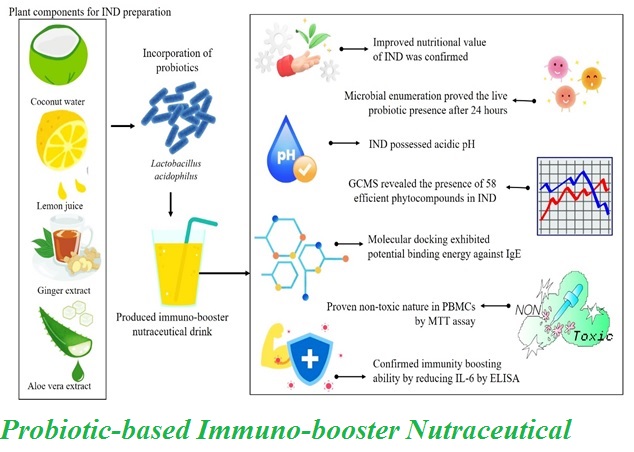
Materials and Methods: Immune-booster nutraceutical drink was produced by combining the plant components tender coconut water, ginger, lemon and Aloe vera as well as other materials. Further, the probiotic Lactobacillus acidophilus was added to the drink and its nutritional value, including glucose, protein, carbohydrate, lipid and iron, was calculated. The shelf life and pH were analyzed to verify its quality. This was analyzed using gas chromatography mass spectroscopy to identify the phytocomponents. Molecular docking of the compounds reported using gas chromatography mass spectroscopy was carried out against IgE to identify the best compound with immunity. Cytotoxicity of immune-booster nutraceutical drink to human leukemia monocytic cell line (THP-1) cells was identified using 3-4,5-dimethylthiazol-2yl-2,5-diphenyl tetrazolium bromide assay and the interleukin 6 levels were quantified using enzyme-linked immunosorbent assay.
Results and Conclusion: Immune-booster nutraceutical drink, an immune-booster nutraceutical drink supplemented with Lactobacillus acidophilus (probiotic), was prepared and the nutritional value of it was detected to possess decreased glucose (0.07 mg ml-1) and increased carbohydrate (8.96 mg ml-1), protein (0.62 mg ml-1), lipid (5.60 mg ml-1) and iron (2.22 mg ml-1). The acidic pH of 3.9 and the decreased microbial load (5.9 × 10⁹ CFU ml-1) simultaneously verified the active probiotic and increased shelf life. Gas chromatography mass spectroscopy detected 58 phytocompounds in immune-booster nutraceutical drink and their molecular docking verified the immunity-increasing characteristics of nicotinamide against IgE, with a binding energy of -3.9 kcal mole-1. Cytotoxicity showed non-toxic nature with IC50 (508.1 µg ml-1) and decreased interleukin 6 with IC50 (544.5 µg ml-1). The developed immune-booster nutraceutical drink, supplemented with probiotics, possessed increased nutritional values, without toxicity or side effect and could be studied further to boost immunity in immunocompromised individuals.
- INTRODUCTION
The current urbanized world increases the exposure to multiple microbes and toxic compounds present in the environment. Hence, the immune system fights against the foreign invaders and protects the human body from bacterial, fungal and other infections [1-3]. The immune system plays a vital role in preserving the health of individuals [4,5]. This needs supplementation of the human body with recommended nutritional components such as vitamins and minerals, which boost immunity [6,7]. Several plants such as ginger, garlic, alma, Tulsa, drumstick and neem contain phytochemicals that enhance immunity, without side effects [8,9]. In addition to increasing immunity, these possess increased antimicrobial and antioxidant characteristics [10,11]. Compared to healthy foods, beverages and drinks are further preferred due to their accessibility, storage and transportation facilities. Additionally, these are enriched with high nutritional values and favor sensory qualities such as flavor, taste and feel appealing [12,13].
Nutraceutical drinks are preferably used by common people as alternatives to medicine to prevent diseases and minimize side effects [14-16]. An immune-booster drink prepared with a combination of honey, lime juice and red ginger showed increased vitamin C and antioxidant levels [17,18] Citrus fruits, ginger, garlic, spinach, bell pepper, pomegranate and kiwi are well known to increase immunity [19,20]. Lemon possesses increased poly-phenols, tannins, terpenes and other phytochemicals [21,22] Tender coconut water is addressed as a nutritional drink, as it is rich in vitamins, minerals, sugars and amino acids and as a low-calorie electrolyte-rich hydrating drink [23]. The use of tender coconut water in producing tender coconut lassi, coconut water kefir and souffle has been implemented to increase nutritional values [25,26]. Aloe vera consists of increased water and minerals, especially magnesium, potassium and calcium that facilitate hydration and preserve electrolyte balance [27,28]. Aloe vera is known for its variable health benefits and its incorporation with the pulp of pineapple in beverage preparation showed improved sensory and physiochemical qualities [29,30]. Although all these plant components are assessed for their values as a nutritional drink, their appropriate combinations in drinks are not widely reported.
Probiotics are bacteria derived from foods that secrete active compounds such as short-chain fatty acids, vitamins and antioxidants for their metabolism. These compounds show a direct effect on the consumer’s health [31,33]. Within multiple probiotics, including Enterococcus, Bifidobacterium, Lactobacillus and Lactococcus, Lacto-bacillus inhabits the gastrointestinal tract (GIT) pre-dominantly, decreases adhesion of pathogens, increases immunity and preserves functioning of the intestinal barrier [34,35]. Especially, L. acidophilus decreased the fat content in ice creams [36,37]. Although multiple studies have been reported to incorporate probiotics in nutraceutical drinks, the combination of coconut water, lemon, ginger and Aloe vera is still unique and the supplementation of L. acidophilus is reported in the present study. Hence, this study aimed to produce an immune-booster nutraceutical drink (IND) by combining tender coconut water, ginger, lemon juice and Aloe vera at appropriate concentrations and the supplementation of probiotics (L. acidophilus) to produce a nutraceutical drink [38,39]. Its nutritional characteristics such as total energy value, glucose, carbohydrate, protein, lipid and iron were estimated and physical characteristics such as shelf life and pH were calculated. Compounds present in IND were analyzed using gas chromatography mass spectroscopy (GCMS) and their efficacy to increase immunity was assessed using docking technique [40,41]. Furthermore, the drink cytotoxicity to normal blood cells was analyzed using 3-4,5-dimethylthiazol-2yl-2,5- diphenyl tetrazolium bro-mide (MTT) assay. Interleukin 6 (IL-6) was quantified to identify the decrease of inflammatory cytokines [42,43]. Thus, the present study facilitated producing an efficient immunity boosting nutraceutical drink that improved nutritional values, shelf life and pH, decreased toxicity and potentially decreased IL-6 as an inflammatory cytokine.
- MATERIALS AND METHODS
2.1. Materials and Cell lines
Glucose, 1 M ammonium thiocyanate, 1 M HCl, sulfuric acid and iron sulfate were purchased from HiMedia, India. Anthrone reagent, Bradford’s reagent, bovine serum albumin (BSA), sulfophosphoric-vanillin acid and cholesterol were purchased from Sigma Aldrich, USA. Chloroform and methanol were purchased from SRL, India. The 96-well plate was purchased from Tarsons, India. Beakers and tubes were purchased from Borosil, India. The enzyme-linked immunosorbent assay (ELISA) plate reader, vortex mixer, mantle heater and crucible were used as well.
The human leukemia monocytic cell line (THP-1) cell lines were purchased from the National Centre for Cell Science (NCCS), Pune, India. Roswell Park Memorial Institute (RPMI) media, antibiotic solution and fetal bovine serum (FBS) were purchased from Gibco, USA. The MTT (5 mg ml-1) and dimethyl sulfoxide (DMSO) were purchased from Sigma, USA. Moreover, 1× PBS was purchased from SRL, India. The 96-well tissue culture plate and wash beakers were purchased from Tarsons, India.
2.2. Methodology
2.2.1.Immune-Booster Nutraceutical Drink Preparation
Plant components were ground using mortar and pestle to collect the extract and the raw materials were purchased from a local store, Tiruchirappalli, India [21, 49, 50]. The extracts of the plant components, including tender coconut water (60 ml), ginger (2 ml), lemon juice (3 ml) and Aloe vera (6 ml), and other raw materials, including L-glutamine (3 g), marine collagen (4 g), zinc citrate (5-10 mg), B-complex vitamins (1/10 of the capsule) and sodium benzoate (0.05 mg), were mixed and made up to 100 ml to produce the immune-booster nutraceutical drink.
2.2.2 Supplementation of an Immune-Booster Drink With Probiotic Culture
The L. acidophilus, a probiotic culture, was purchased from MTCC, India [22,51]. The organism was subcultured and preserved in a nutrient media until reaching 0.5 OD of McFarland concentration. The culture was then centrifuged and 0.1 g of the culture pellet was added to 100 ml of the immune-booster nutraceutical drink.
2.2.3 Glucose Assessment
Standard glucose solution (5 mg ml-1) was serially diluted using eight tubes and 500 µl of stock solution and 500 µl of distilled water (DW). The IND (100 µl) with 400 µl of DW was transferred into a fresh tube. To all the tubes, 200 µl of Benedict’s reagent were added. The tubes were heated for 10 min and the contents were transferred to a 96-well plate triplicate. The absorbance was measured at 595 nm. A standard graph was plotted using GraphPad Prism for the values of the standard solution; based on which, the accurate quantity of glucose in the sample was estimated [23].
2.2.4 Lipid Assessment
Standard cholesterol solution (10 mg ml-1) was prepared by serial diluting of chloroform:methanol (2:1 ratio) using eight tubes. The IND (100 µl) was dissolved in 400 µl of water and assessed for its lipid concentration in a fresh tube. To the tubes, 100 µl of concentrated sulfuric acid were added and incubated at 90 ˚C for 10 min. After incubation, the tubes were cooled and 50 µl of sulfo-phosphoric-vanillin acid was added. The absorbance of the tubes was measured at 540 nm after the development of purple color. A standard graph was plotted using Graph-Pad Prism for the values of standard solution; based on which, the accurate quantity of lipid in the sample was estimated [25].
2.2.5 Carbohydrate Assessment
Glucose stock solution (5 mg ml-1) was prepared and serially diluted using 500 µl of each stock solution and DW. The IND (100 µl mixed with 400 µl of DW) was transferred into a fresh tube. To the contents, 200 µl of 75% sulfuric acid were added. Then 400 µl of anthrone reagent were added to the mixture, vortexed well and boiled at 100 ˚C for 15 min. The absorbance was measured at 578 nm using microtiter plate. A standard graph was plotted using GraphPad Prism for the values of the standard solution; based on which, the accurate quantity of carbohydrate in the sample was estimated [34].
2.2.6 Protein Assessment
The BSA standard (5 mg ml-1) was prepared and serially diluted (500 µl) with DW (500 µl). The IND (500 µl) was added to a fresh tube and 1500 µl of Bradford’s reagent were added to all the tubes and incubated for 10 min. After the observation of the blue color change, the spectrometric reading was carried out at 595 nm. A standard graph was plotted using GraphPad Prism for the values of standard solution; based on which, the accurate quantity of protein in the sample was estimated [14].
2.2.7 Iron Assessment
Iron assessment was carried out using calorimetric ammonium thiocyanate assay. For the assessment, the IND sample was transferred into a crucible and heated to 400 ˚C. The resulting ash was mixed with 1 M HCl (10 ml) and DW (5 ml). The mixture was filtered and used for the assessment. Moreover, 10 ml of the iron sulfate standard solution (50 mg ml-1) were serially diluted using eight tubes. The IND sample (10 ml) was transferred into a fresh tube. To all the tubes, 1 M ammonium thiocyanate (10 ml) was added and incubated [15 min, room temperature (RT)]. After development of red color, absorbance was measured at 510 nm using UV-vis spectrophotometer. GraphPad Prism was used to plot the standard curve and the total iron was expressed as mg of iron equivalents per 100 g of dry mass [18].
2.2.8 Assessment of Total Energy Value
Total energy of the IND was calculated using Eq. 1:
Energy (kcal) = 4 × (proteins + carbohydrates in grams) + 9 (mass of fat in grams). Eq.1
2.2.9 Shelf Life
Shelf life of the IND was calculated by enumerating the microbes in the sample. The IND was serially diluted and 100 µl of 102 dilutions were plated onto LBS (Lactobacillus selective agar) media. The media were prepared by dissolving 1 g of peptone, 0.5 g of yeast extract, 2.0 g of dextrose, 1.5 g of sodium acetate, 0.6 g of potassium dihydrogen phosphate, 0.2 g of ammonium citrate, 0.1 g of polysorbate 80, 0.05 g of magnesium sulfate, 0.012 g of manganese sulfate, 0.003 g of ferrous sulfate and 1.5 g of agar in 100 ml of DW. The pH decreased to 5.5 by adding glacial acetic acid (AA). The dissolved contents were autoclaved (118 ˚C, 15 min, 12 lbs), mixed well and poured onto 100 mm Petri plates, while the media was in a molten state. The diluted drink (102) was plated over the media using spread plate method. The plates were then incubated at 37 ˚C for 24 h and the colonies were counted [27]. The colony-forming units (CFU) were calculated using Eq. 2;
Energy (kcal) = 4 × (proteins + carbohydrates in grams) + 9 (mass of fat in grams). Eq. 2
2.2.10 Assessment of pH
The pH of the IND was analyzed using portable electronic pH meter (manufacturer, country). A known pH buffer was used to calibrate the pH meter and change in pH of the sample at constant temperature was reported [23,52].
2.2.11 Gas Chromatography Mass Spectroscopy Analysis
The GCMS included GCMS-QP2010SE (Shimadzu gas chromatograph coupled to a mass detector). The IND sample (1 ml) was injected and the parameters of the instrument were set as follows. Capillary column [24,53], 250 µm; oven temperature, 250 ˚C; injection port temperature, 280 ˚C; helium flow rate, 1 ml/min; ionization voltage, 70 Ev; sample injection in split mode, 1:10 ratio; mass spectral range, 40–450 MHz; and source temperature, 350 ºC. The detected compounds were used for molecular docking.
2.2.12. Molecular Docking
Nicotinamide (a phytocompound) structure was downloaded from the PubChem website (PubChem CID: 936) in 3D SDF format. The downloaded structure was visualized using BIOVIA Discovery Studio software and converted to PDB format. The ligand (nicotinamide) was prepared using Autodock v.4.2.6 software. The compound merged four non-polar hydrogens and detected two rotatable bonds. The PDB format was converted to PDBQT using AutoDock v.4.2.6 software. Moreover, IgE (PDB ID 1F6A) was selected based on the X-ray diffraction (XRD) method. The PDB format of the protein was retrieved from Research Collaboratory for Structural Bioinformatics (RCSB) Protein Data Bank (PDB) and visualized and optimized using BIOVIA Discovery Studio software. The target protein was then optimized by deleting the heteroatoms and water molecules. The polar hydrogen was added and the active sites were reported. The attributes of xyz were identified as 1F6A 49.140539, 104.809286 and 175.210177, respectively. The protein format was converted from PDB to PDBQT [Protein Data Bank, Partial Charge (Q) and Atom Type (T)] using Auto Dock v.4.2.6 software. The optimized ligand and protein were used in docking after preparing conf. file. Figure 1 shows 3D structure of the ligand, protein and optimize assessment. Auto Dock Vina software was used by adding information to the command prompt. Topmost confi-guration of the complex was interpreted using BIOVIA Discovery Studio [25,54].
- INTRODUCTION
The current urbanized world increases the exposure to multiple microbes and toxic compounds present in the environment. Hence, the immune system fights against the foreign invaders and protects the human body from bacterial, fungal and other infections [1-3]. The immune system plays a vital role in preserving the health of individuals [4,5]. This needs supplementation of the human body with recommended nutritional components such as vitamins and minerals, which boost immunity [6,7]. Several plants such as ginger, garlic, alma, Tulsa, drumstick and neem contain phytochemicals that enhance immunity, without side effects [8,9]. In addition to increasing immunity, these possess increased antimicrobial and antioxidant characteristics [10,11]. Compared to healthy foods, beverages and drinks are further preferred due to their accessibility, storage and transportation facilities. Additionally, these are enriched with high nutritional values and favor sensory qualities such as flavor, taste and feel appealing [12,13].
Nutraceutical drinks are preferably used by common people as alternatives to medicine to prevent diseases and minimize side effects [14-16]. An immune-booster drink prepared with a combination of honey, lime juice and red ginger showed increased vitamin C and antioxidant levels [17,18] Citrus fruits, ginger, garlic, spinach, bell pepper, pomegranate and kiwi are well known to increase immunity [19,20]. Lemon possesses increased poly-phenols, tannins, terpenes and other phytochemicals [21,22] Tender coconut water is addressed as a nutritional drink, as it is rich in vitamins, minerals, sugars and amino acids and as a low-calorie electrolyte-rich hydrating drink [23]. The use of tender coconut water in producing tender coconut lassi, coconut water kefir and souffle has been implemented to increase nutritional values [25,26]. Aloe vera consists of increased water and minerals, especially magnesium, potassium and calcium that facilitate hydration and preserve electrolyte balance [27,28]. Aloe vera is known for its variable health benefits and its incorporation with the pulp of pineapple in beverage preparation showed improved sensory and physiochemical qualities [29,30]. Although all these plant components are assessed for their values as a nutritional drink, their appropriate combinations in drinks are not widely reported.
Probiotics are bacteria derived from foods that secrete active compounds such as short-chain fatty acids, vitamins and antioxidants for their metabolism. These compounds show a direct effect on the consumer’s health [31,33]. Within multiple probiotics, including Enterococcus, Bifidobacterium, Lactobacillus and Lactococcus, Lacto-bacillus inhabits the gastrointestinal tract (GIT) pre-dominantly, decreases adhesion of pathogens, increases immunity and preserves functioning of the intestinal barrier [34,35]. Especially, L. acidophilus decreased the fat content in ice creams [36,37]. Although multiple studies have been reported to incorporate probiotics in nutraceutical drinks, the combination of coconut water, lemon, ginger and Aloe vera is still unique and the supplementation of L. acidophilus is reported in the present study. Hence, this study aimed to produce an immune-booster nutraceutical drink (IND) by combining tender coconut water, ginger, lemon juice and Aloe vera at appropriate concentrations and the supplementation of probiotics (L. acidophilus) to produce a nutraceutical drink [38,39]. Its nutritional characteristics such as total energy value, glucose, carbohydrate, protein, lipid and iron were estimated and physical characteristics such as shelf life and pH were calculated. Compounds present in IND were analyzed using gas chromatography mass spectroscopy (GCMS) and their efficacy to increase immunity was assessed using docking technique [40,41]. Furthermore, the drink cytotoxicity to normal blood cells was analyzed using 3-4,5-dimethylthiazol-2yl-2,5- diphenyl tetrazolium bro-mide (MTT) assay. Interleukin 6 (IL-6) was quantified to identify the decrease of inflammatory cytokines [42,43]. Thus, the present study facilitated producing an efficient immunity boosting nutraceutical drink that improved nutritional values, shelf life and pH, decreased toxicity and potentially decreased IL-6 as an inflammatory cytokine.
- MATERIALS AND METHODS
2.1. Materials and Cell lines
Glucose, 1 M ammonium thiocyanate, 1 M HCl, sulfuric acid and iron sulfate were purchased from HiMedia, India. Anthrone reagent, Bradford’s reagent, bovine serum albumin (BSA), sulfophosphoric-vanillin acid and cholesterol were purchased from Sigma Aldrich, USA. Chloroform and methanol were purchased from SRL, India. The 96-well plate was purchased from Tarsons, India. Beakers and tubes were purchased from Borosil, India. The enzyme-linked immunosorbent assay (ELISA) plate reader, vortex mixer, mantle heater and crucible were used as well.
The human leukemia monocytic cell line (THP-1) cell lines were purchased from the National Centre for Cell Science (NCCS), Pune, India. Roswell Park Memorial Institute (RPMI) media, antibiotic solution and fetal bovine serum (FBS) were purchased from Gibco, USA. The MTT (5 mg ml-1) and dimethyl sulfoxide (DMSO) were purchased from Sigma, USA. Moreover, 1× PBS was purchased from SRL, India. The 96-well tissue culture plate and wash beakers were purchased from Tarsons, India.
2.2. Methodology
2.2.1.Immune-Booster Nutraceutical Drink Preparation
Plant components were ground using mortar and pestle to collect the extract and the raw materials were purchased from a local store, Tiruchirappalli, India [21, 49, 50]. The extracts of the plant components, including tender coconut water (60 ml), ginger (2 ml), lemon juice (3 ml) and Aloe vera (6 ml), and other raw materials, including L-glutamine (3 g), marine collagen (4 g), zinc citrate (5-10 mg), B-complex vitamins (1/10 of the capsule) and sodium benzoate (0.05 mg), were mixed and made up to 100 ml to produce the immune-booster nutraceutical drink.
2.2.2 Supplementation of an Immune-Booster Drink With Probiotic Culture
The L. acidophilus, a probiotic culture, was purchased from MTCC, India [22,51]. The organism was subcultured and preserved in a nutrient media until reaching 0.5 OD of McFarland concentration. The culture was then centrifuged and 0.1 g of the culture pellet was added to 100 ml of the immune-booster nutraceutical drink.
2.2.3 Glucose Assessment
Standard glucose solution (5 mg ml-1) was serially diluted using eight tubes and 500 µl of stock solution and 500 µl of distilled water (DW). The IND (100 µl) with 400 µl of DW was transferred into a fresh tube. To all the tubes, 200 µl of Benedict’s reagent were added. The tubes were heated for 10 min and the contents were transferred to a 96-well plate triplicate. The absorbance was measured at 595 nm. A standard graph was plotted using GraphPad Prism for the values of the standard solution; based on which, the accurate quantity of glucose in the sample was estimated [23].
2.2.4 Lipid Assessment
Standard cholesterol solution (10 mg ml-1) was prepared by serial diluting of chloroform:methanol (2:1 ratio) using eight tubes. The IND (100 µl) was dissolved in 400 µl of water and assessed for its lipid concentration in a fresh tube. To the tubes, 100 µl of concentrated sulfuric acid were added and incubated at 90 ˚C for 10 min. After incubation, the tubes were cooled and 50 µl of sulfo-phosphoric-vanillin acid was added. The absorbance of the tubes was measured at 540 nm after the development of purple color. A standard graph was plotted using Graph-Pad Prism for the values of standard solution; based on which, the accurate quantity of lipid in the sample was estimated [25].
2.2.5 Carbohydrate Assessment
Glucose stock solution (5 mg ml-1) was prepared and serially diluted using 500 µl of each stock solution and DW. The IND (100 µl mixed with 400 µl of DW) was transferred into a fresh tube. To the contents, 200 µl of 75% sulfuric acid were added. Then 400 µl of anthrone reagent were added to the mixture, vortexed well and boiled at 100 ˚C for 15 min. The absorbance was measured at 578 nm using microtiter plate. A standard graph was plotted using GraphPad Prism for the values of the standard solution; based on which, the accurate quantity of carbohydrate in the sample was estimated [34].
2.2.6 Protein Assessment
The BSA standard (5 mg ml-1) was prepared and serially diluted (500 µl) with DW (500 µl). The IND (500 µl) was added to a fresh tube and 1500 µl of Bradford’s reagent were added to all the tubes and incubated for 10 min. After the observation of the blue color change, the spectrometric reading was carried out at 595 nm. A standard graph was plotted using GraphPad Prism for the values of standard solution; based on which, the accurate quantity of protein in the sample was estimated [14].
2.2.7 Iron Assessment
Iron assessment was carried out using calorimetric ammonium thiocyanate assay. For the assessment, the IND sample was transferred into a crucible and heated to 400 ˚C. The resulting ash was mixed with 1 M HCl (10 ml) and DW (5 ml). The mixture was filtered and used for the assessment. Moreover, 10 ml of the iron sulfate standard solution (50 mg ml-1) were serially diluted using eight tubes. The IND sample (10 ml) was transferred into a fresh tube. To all the tubes, 1 M ammonium thiocyanate (10 ml) was added and incubated [15 min, room temperature (RT)]. After development of red color, absorbance was measured at 510 nm using UV-vis spectrophotometer. GraphPad Prism was used to plot the standard curve and the total iron was expressed as mg of iron equivalents per 100 g of dry mass [18].
2.2.8 Assessment of Total Energy Value
Total energy of the IND was calculated using Eq. 1:
Energy (kcal) = 4 × (proteins + carbohydrates in grams) + 9 (mass of fat in grams). Eq.1
2.2.9 Shelf Life
Shelf life of the IND was calculated by enumerating the microbes in the sample. The IND was serially diluted and 100 µl of 102 dilutions were plated onto LBS (Lactobacillus selective agar) media. The media were prepared by dissolving 1 g of peptone, 0.5 g of yeast extract, 2.0 g of dextrose, 1.5 g of sodium acetate, 0.6 g of potassium dihydrogen phosphate, 0.2 g of ammonium citrate, 0.1 g of polysorbate 80, 0.05 g of magnesium sulfate, 0.012 g of manganese sulfate, 0.003 g of ferrous sulfate and 1.5 g of agar in 100 ml of DW. The pH decreased to 5.5 by adding glacial acetic acid (AA). The dissolved contents were autoclaved (118 ˚C, 15 min, 12 lbs), mixed well and poured onto 100 mm Petri plates, while the media was in a molten state. The diluted drink (102) was plated over the media using spread plate method. The plates were then incubated at 37 ˚C for 24 h and the colonies were counted [27]. The colony-forming units (CFU) were calculated using Eq. 2;
Energy (kcal) = 4 × (proteins + carbohydrates in grams) + 9 (mass of fat in grams). Eq. 2
2.2.10 Assessment of pH
The pH of the IND was analyzed using portable electronic pH meter (manufacturer, country). A known pH buffer was used to calibrate the pH meter and change in pH of the sample at constant temperature was reported [23,52].
2.2.11 Gas Chromatography Mass Spectroscopy Analysis
The GCMS included GCMS-QP2010SE (Shimadzu gas chromatograph coupled to a mass detector). The IND sample (1 ml) was injected and the parameters of the instrument were set as follows. Capillary column [24,53], 250 µm; oven temperature, 250 ˚C; injection port temperature, 280 ˚C; helium flow rate, 1 ml/min; ionization voltage, 70 Ev; sample injection in split mode, 1:10 ratio; mass spectral range, 40–450 MHz; and source temperature, 350 ºC. The detected compounds were used for molecular docking.
2.2.12. Molecular Docking
Nicotinamide (a phytocompound) structure was downloaded from the PubChem website (PubChem CID: 936) in 3D SDF format. The downloaded structure was visualized using BIOVIA Discovery Studio software and converted to PDB format. The ligand (nicotinamide) was prepared using Autodock v.4.2.6 software. The compound merged four non-polar hydrogens and detected two rotatable bonds. The PDB format was converted to PDBQT using AutoDock v.4.2.6 software. Moreover, IgE (PDB ID 1F6A) was selected based on the X-ray diffraction (XRD) method. The PDB format of the protein was retrieved from Research Collaboratory for Structural Bioinformatics (RCSB) Protein Data Bank (PDB) and visualized and optimized using BIOVIA Discovery Studio software. The target protein was then optimized by deleting the heteroatoms and water molecules. The polar hydrogen was added and the active sites were reported. The attributes of xyz were identified as 1F6A 49.140539, 104.809286 and 175.210177, respectively. The protein format was converted from PDB to PDBQT [Protein Data Bank, Partial Charge (Q) and Atom Type (T)] using Auto Dock v.4.2.6 software. The optimized ligand and protein were used in docking after preparing conf. file. Figure 1 shows 3D structure of the ligand, protein and optimize assessment. Auto Dock Vina software was used by adding information to the command prompt. Topmost confi-guration of the complex was interpreted using BIOVIA Discovery Studio [25,54].
2.2.13 Cytotoxicity Analysis Using MTT Assay
Cytotoxicity of the IND to THP-1 cell lines was assessed using MTT assay [26,55]. The cells were cultured in liquid RPMI media, supplemented with 10% serum FBS and 100 µg/ml of penicillin/streptomycin and set under 5% CO2 atmosphere at 37 ˚C. The cultured cells were collected in a 15-ml tube by trypsinization [27,56]. The cells of 200 µl were plated in 96 well plates, at a density of 1 × 10⁵ cells/ml/well. The plates consisted of RPMI media were supplemented with 10% FBS and antibiotic solution. The plates were then incubated at 37 ˚C for 24–48 h. Wells were washed with sterile PBS, treated with various concen-
trations of IND sample and reincubated (37 ˚C, 5% CO2, 24 h). Moreover, 10 µl of MTT (5 mg ml-1) were added to the tubes and incubated for 2–4 h to visualize purple precipitates using inverted microscope. After incubation, the media and MTT were aspirated off and washed with 1× PBS. The DMSO (100 µl) was added to the plates and the plates were agitated for 5 min to dissolve formazan crystals. The absorbance of the wells was measured using microplate reader (Thermo Fisher Scientific, USA) at 570 nm. The cell viability proportion and IC50 were calculated using GraphPad Prism and Eq. 2:
Formula cell viability %=test OD / control OD × 100Eq. 2
2.2.14 Enzyme-Linked Immunosorbent Assay-interleukin 6
Similar to the MTT assay, THP-1 cells were cultured and harvested to identify the effect of IND on IL-6 release [28,57]. The cells were plated in RPMI media using 96-well plate, PBS washed, treated with the IND sample and incubated, following a similar procedure in the MTT assay. After incubation, the cells were washed with PBS, stimulated with 50 ng/ml of LPS and incubated (37 ˚C, 24 h, 5% CO2). Cell-free supernatant was collected by centrifugation (1500 rpm, 5 min) and IL-6 was estimated using ELISA method based on a protocol by Invitrogen, USA. The absorbance was measured at 450 nm using microplate reader (Thermofisher Scientific, USA).
2.2.15 Statistical Analysis
The statistical analysis and the calculation of IC50 values were carried out using GraphPad Prism software v.8.0, USA.
- RESULTS AND DISCUSSION
The IND was prepared of plant extracts and other raw materials. The plant components, including tender coconut water, ginger, lemon juice and Aloe vera, have been known for their health benefits for centuries [29, 44, 58]. Thus, an IND from these combinations has been produced. The incorporation of probiotics in nutritional drinks is known to provide bioactive compounds. Thus, combining nutritional components with probiotics increases the health benefits by providing health attributes from the two sources [30,59], Figure 2A shows the prepared nutraceutical drink, supplemented with probiotics. Other studies have reported the use of these plant components in the preparation of drinks; however, a combination of all these components and the incorporation of probiotics, has not been reported. Increased concentration of limejuice with 4% showed the highest antioxidant activity (IC50 of 11.21 ppm) and vitamin C content (9103.88 µg ml-1), compared to the decreased limejuice concentration [15, 31, 45]. Another beverage with coconut water (80%) and orange juice (20%) showed increased antioxidant activity due to higher levels of flavonoids, ascorbic acid, hesperidin, Gallic acid, cinnamic acid and phenolics [19, 32, 46]. Ginger possesses increased immunomodulatory, antioxidant and anti-inflammatory characteristics. Similarly, the combination of red ginger with lime and honey was reported to possess increased antioxidant activity and immune efficiency due to the presence of vitamin C [15, 33, 47]. Aloe vera has recently increased metabolic health and immunity by increasing hydration, antioxidant activity and gastrointestinal comfort [8, 34]. Hence, it supports the current study in combining coconut water, ginger, Aloe vera and lemon juice, a vitamin C containing compound. Simultaneously, the active nature of the probiotics was verified by viable colony count that showed 5.9 × 10⁹ CFU/ml after 24 h of incubation. As already discussed, the probiotic presence increases the bioactive compounds, increases drug transfer and improves gut health. Probiotics that include lactic acid bacteria (LAB) preserve gut microbiota and improve immunity in people with weakened immune systems [27, 35]. A probiotic (L. acidophilus) drink produced by blending pineapple juice and whey demonstrated the highest sensory score and increased digestion [17, 36]. Similarly, addition of probiotics such as B. longum, L. acidophilus and L. casei into health drinks of carrot juice, beetroot juice, ginger and lemon showed increased protein contents and decreased carbohydrates. This increased protein, phenol, flavonoid and antioxidant activities [6, 37]. Thereby, all these studies verify that supplementation of probiotics with nutritional compounds improves the health attributes, particularly, gastrointestinal flora regulation and immunity development [38,48] in immunocompromised individuals.
3.1 Assessment of Nutritional Values of The Prepared immune-Booster Nutraceutical Drink
Nutritional values of the nutraceutical drinks seem to improve health conditions and treat diseases [39,1]. Increased sugars increase glucose spike and it is important to decrease the glucose content of drinks to prevent diabetes such as issues [20,40, 49]. Similarly, the sugar content of the current study included the lowest value in the study. Levels of protein, carbohydrates and iron need increases to improve the health of immunocompromised individuals. Likely, the produced IND contained increased nutritional components such as 8.969 mg/ml carbohydrate, 0.621 mg ml-1protein, 0.07486 mg ml-1glucose, 5.608 mg ml-1lipid, 2.226 mg ml-1iron and 88.832 kcal mole-1 total energy value (Table 1). Note: Mean ±SD was calculated for the tests carried out in triplicates. The SD refers to standard deviation, mg/ml refers to milligram per milliliter, kcal/mole indicates kilo calories per mole, CFU / ml shows colony forming units per milliliter.
Figure 2B represents the 96-well plate showing assessment
results of the nutritional values. A nutraceutical beverage containing Roselle, Aloe vera and guava showed increased iron content, similar to the study. The increased iron in the study could be attributed to the increased iron content of Aloe vera [22, 41]. Lemon and mustard-based beverages showed improved physicochemical characteristics, antidiabetic, antioxidant and hypocholesterolemia activities [5, 42]. The coconut water contained water (95.5%), carbohydrate (4%), fat (0.1%), iron (0.5%), amino
acids, vitamins and minerals [43,50]. Energy booster drinks from beetroot showed 297.5 g 1000 ml-1 carbohydrate, 10.95 g1000 ml-1 lipid and 40.25 g1000 ml-1protein [44,3], which were comparatively less than those in the current study. All this nutrition could be a reason for the increased nutritional value of the IND drink. As LAB are capable of mediating fermentation, they improve human health [45,11]. Combining these nutritional values with the probiotics increases gut health and immunity of immunocompromised individuals.
The pH is responsible for the maintenance of acidic or basic conditions of the body. The pH of the drink was detected as 3.9 and the acidic pH showed decreased microbial growth (5.9 × 10⁹ CFU ml-1) and extended shelf life. Figure 2C shows the decreased microbial load, which indicated increased shelf life and active probiotics. The values of the
parameters are depicted in Table 1. The acidic pH of the drink could be attributed to the presence of vitamin C in
lemon juice [46,3]. Multiple studies have reported acidic pH of the drink [48,9]. The acidic pH, active probiotic and increased shelf life show the better quality of the product.
3.2 Gas chromatography Mass Spectroscopy Analysis of Immune-Booster Nutraceutical Drink
The GCMS analysis was carried out to identify changes in the volatile composition of the products during preparation and the phytoconstituents [43,49]. The GCMS analysis of IND showed the presence of 58 predominant compounds; within which, but-3-enyl-(E)-methylbut-2-enoate, benzoic acid, cyclopropane carboxylic acid, 1-amino, DL-proline,5-oxo, nicotinamide, caffeine, 9H-purin-6-amine, and N,9,dimethyl was detected predominantly. All these compounds were assessed for their efficacy to possess immunity development. Peaks showing the presence of predominant compounds are depicted in Figure 3 and the compounds are listed in Table 2. Similar to the current study, a nut-based beverage detected nearly 70 compounds, including alcohols, ketones and aldehydes [23, 50]. A fermented nutraceutical beverage from Haematocarpus validus showed the presence of active antioxidant compounds such as anthocyanins, polyphenols and flavonoids [28,51,56]. However, no similar compounds detected in the current study were identified. This highlighted the produced nutraceutical drink, possessing increased immunity-developing characteristics
3.3 Molecular docking
Molecular docking facilitates the prediction of bonding between ligand and protein. It helps identify binding sites and optimize peptide activity [45,52,57]. Although IgE plays significant role in allergic response, it contributes to pathogen defense, immune regulation and antigen presentation [34,53,58] Thus, identifying a compound that binds to IgE facilitates identification of phytocompound that possess immunomodulatory roles. Within the compounds docked against IgE, nicotinamide showed binding energy of -3.9 kcal mole-1. The docked complex formed four hydrogen
bonds and one hydrophobic Pi-Pi alkyl bond with the amino acids. Figure 4 shows 2D and 3D structures of the docked complex and Figure 5 shows the interactions of the bonds with protein and ligand. The proteins of β-conglycinin, glycinin, catechin and epigallocatechin-3-gallate showed decreased binding efficacy against IgE [16,54,59]. However, the docking energy between nicotinamide and IgE was not reported. Further, no studies have reported the molecular docking of the nutraceutical drink against IgE and the current study was still the first, as far as the authors’ knowledge is concerned [60,61].
3.4 Cytotoxicity And Enzyme-linked Immunosorbent Assay to Inhibit Interleukin 6 Using Immune-Booster Nutraceutical Drink
The MTT assay and ELISA were used to identify non-toxicity and changes in cytokine expression. The MTT assay verified non-toxicity of IND to THP-1, as a higher dose of 1000 µg/ml showed 60.05% of cell viability with an IC50 value of 508.1 µg ml-1. The values within various concentrations were statistically significant (p < 0.0001; F = 124.1). Figures 6 and 7 show the graphical representation of the inhibition of cell viability and the microscopic view of the cells, respectively, at various concentrations. The ORSL Immunity+ showed no toxicity to PBMCs [18,55,62] Thus, the non-toxic nature of IND to normal cells was verified. The IL-6 is a proinflammatory cytokine and its decrease indicates decreased inflammation. The IL-6 stimulation by lipopolysaccharide (LPS) showed increased levels of 75.62 pg ml-1. After treatment, the levels decreased to 49.19 pg ml-1with an IC50 value of 544.5 µg/ml. This clearly indicated the decrease of IL-6 after treatment; thereby, verifying its anti-inflammatory potential and immunity development ability. The values within various concentrations were statistically significant (p < 0.0001; F = 1764). Figure 8 represents the quantified IL-6, within the control, induced IL-6 and IND treated groups. An immune combination revealed similar results, where LPS treatment showed increased expression whereas IL-6 decreased after the treatment [25,56]
- CONCLUSION
A nutraceutical drink, specifically designed to increase immunity in immunocompromised individuals, verified significant and enhanced digestion and metabolism by combining the plant components of coconut water, lemon, ginger and Aloe vera and supplementation of probiotic L. acidophilus. Accordingly, the nutritional values of IND were improved with increased carbohydrates, protein, lipid and iron and decreased glucose, which eliminated diabetic risks. The acidic pH (3.9) and decreased microbial load of (5.9 × 10⁹ CFU ml-1) verified presence of active probiotics and increased shelf life of IND. The GCMS analysis revealed the presence of 58 compounds; from which, nicotinamide demonstrated the binding efficiency of -3.9 kcal mole-1 against IgE as an immunoglobulin. The non-toxic nature of IND was verified as it demonstrated low cytotoxicity to THP-1 with an IC50 value of 508.1 µg/ml. The IL-6 as a proinflammatory cytokine was inhibited up to 49.19 pg ml-1 (IND treated) from 75.62 pg ml-1 (LPS induced) with an IC50 value of 544.5 µg ml-1. Hence, the current study verified ability of the produced IND, supplemented with probiotic (L. acidophilus) to possess exclusive immunity-enhancing activity by increasing the nutritional values, possessing increased shelf life, acidic pH, non-toxic nature and decreasing IL-6 cytokine.
- DECLARATION
5.1. Acknowledgements
The authors sincerely thank the Dhanalakshmi Srinivasan Engineering College management and Department of Food
Technology for providing the laboratory facilities and infrastructure to successfully carry out this research.
5.2. Declaration of Competing Interest
The authors declare that they have no known competing financial interests or personal relationships that could affect the study. The authors are responsible for the content and writing of the manuscript. No conflict of interest is reported regarding the publication of this study.
5.3. Authors’ Contributions
Chandran Masi: Conceptualization, project adminis-tration, methodology, investigation (formulation and pro-biotic supplementation), formal analysis (nutritional and shelf-life studies), writing-original draft, and visua-lization.
Dias Marshal P.M: Investigation (GC-MS analysis), soft-ware (molecular docking), data curation, formal analysis, and writing - review and editing.
Lijoy George: Investigation (cell culture, MTT assay, ELISA), validation, methodology, and writing-review and editing.
Miskeen Josey: Resources, supervision, validation, writing -review and editing, and final approval.
5.4. Using Artificial Intelligent Chatbots
During the preparation of this study, the authors did not used AI tools exclusively for language refinement, grammar correction and enhancing the overall clarity and readability of the manuscript. The AI tool was not used to generate, interpret or analyze scientific data, experimental results or conclusions presented in this study.
5.5. Ethical Consideration
This study did not involve human participants or live animals. All experiments were carried out in vitro using established THP-1 (human leukemia monocytic) cell lines procured from a certified cell repository with food-grade plant materials and the probiotic L. acidophilus.
- Lactobacillus acidophilus
- nutrition
- cytotoxicity
- shelf life
- molecular docking
Cómo citar
Citas
[1] Aftab A, Shinawar A, Khalil-Ur-Rehman SM, Syed Rajab A. Development and organoleptic evaluation of Moringa-Aloe vera blended nutraceutical drink. J Hyg Eng Des. 2016; 17: 72-76.
[2] Arslan AA, Gocer EM, Demir M, Atamer Z, Hinrichs J, Kücükcetin A. Viability of Lactobacillus acidophilus ATCC 4356 incorporated into ice cream using three different methods. Dairy Sci Technol. 2016; 96(4): 477-487. https://doi.org/10.1007/s13594-016-0282-5
[3] Ashraf S, Sayeed SA, Ali R, Vohra F, Ahmed N, Alam MK. Assessment of potential benefits of functional food characteristics of beetroot energy drink and flavored milk. Biomed Res Int. 2022; 2022: 1971018. https://doi.org/10.1155/2022/1971018
[4] Basak S, Gokhale J. Immunity boosting nutraceuticals: Current trends and challenges. J Food Biochem. 2022; 46(3): e13902. https://doi.org/10.1111/jfbc.13902
[5] Chakraborty S, Bhattacharjee P. Design of lemon-mustard nutraceutical beverages based on synergism among antioxidants and in vitro antioxidative, hypoglycaemic and hypocholesterolemic activities: Characterization and shelf life studies. J Food Meas Charact. 2018; 12(3): 2110-2120. https://doi.org/10.1007/s11694-018-9826-0
[6] Chauhan SK, Nayak P, Mishra S. Formulation of probiotic drink for prevention of health complications and health promotion. J Food Agric Res. 2021; 1(1): 59-68.
[7] Damián MR, Cortes-Perez NG, Quintana ET, Ortiz-Moreno A, Garfias Noguez C, Cruceño-Casarrubias CE, et al. Functional foods, nutraceuticals and probiotics: A focus on human health. Microorganisms. 2022; 10(5): 1065. https://doi.org/10.3390/microorganisms10051065
[8] D'Angelo S, Buzzanca C, D'Amico A, Boatta A, Proia P, Di Stefano V. Functional Aloe vera drink supplementation: Effect on athlete health. Beverages. 2026; 12(2): 23. https://doi.org/10.3390/beverages12020023
[9] Davis MM, Gance-Cleveland B, Hassink S, Johnson R, Paradis G, Resnicow K. Recommendations for prevention of childhood obesity. Pediatrics. 2007; 120(Suppl 4): S229-S253. https://doi.org/10.1542/peds.2007-2329E
[10] Deshpande S, Suradkar NG, Chaudhary S, Shinde S. Coconut water as a functional beverage: Bring the nature closer. MIT Univ Abhivruddhi J. 2024; 4(1): 451-455.
[11] Gadhoumi H, Yeddes W, Serairi Beji R, Miled K, Trifi M, Chirchi A, et al. Biochemical composition, antioxidant properties, antihyperlipidemic and health benefits of three fermented plant-based beverages. Bratisl Med J. 2025; 126(6): 976-992. https://doi.org/10.1007/s44411-025-00093-w
[12] Ganguly D, Ghosh S, Banerjee M, Mandal A, Panja S, Choudhury A. A brief review on different plant parts used as immunity boosting agent. J Appl Pharm Res. 2022; 10(1): 1-6. https://doi.org/10.18231/J.JOAPR.2022.1.6
[13] Gawai AA, Shelke PA, Sanap GS. A review on medicinal herbs as immunity booster. World J Pharm Res. 2024; 13(2): 231-248. https://doi.org/10.20959/wjpr20242-30947
[14] Gonçalves AC, Nunes AR, Flores-Félix JD, Alves G, Silva LR. Cherries and blueberries-based beverages: Functional foods with antidiabetic and immune booster properties. Molecules. 2022; 27(10): 3294. https://doi.org/10.3390/molecules27103294
[15] Hasanah N, Utami SM, Imansari ANR, Ismaya NA. Nutraceutical drink as immune booster made from red ginger combined with lime and honey to prevent viral infection. J Kefarmasian Indones. 2025; 15(1): 46-60. https://doi.org/10.22435/jki.v15i1.6684
[16] Huang Z, Xu W, Yang X, Liu M, Yin L, Bai W, et al. Effect of tea polyphenol binding to soybean β-conglycinin and glycinin on structure, aggregation, allergenicity and in vitro digestion characteristics. Food Res Int. 2025; 218: 116882. https://doi.org/10.1016/j.foodres.2025.116882
[17] Islam MZ, Tabassum S, Harun-ur-Rashid M, Vegarud GE, Alam MS, Islam MA. Development of probiotic beverage using whey and pineapple (Ananas comosus) juice: sensory and physico-chemical properties and probiotic survivability during in-vitro gastrointestinal digestion. J Agric Food Res. 2021; 4: 100144. https://doi.org/10.1016/j.jafr.2021.100144
[18] Kalra S, Gilada T, Dabhi A, Chamle V, Dhar D, Meer T, et al. Evaluation of the anti-inflammatory, phagocytic and antioxidant potential of ORSL® Immunity+ in lipopolysaccharide-stimulated human peripheral blood mononuclear cells. J Assoc Physicians India. 2025; 73(8S): 21-27. https://doi.org/10.59556/japi.73.1090
[19] Khan S, Zahiruddin S, Khan AH, Ahmad S. Exploring the nutritional and antioxidant potential of a developed fusion: Coconut water and orange juice beverage. J Food Qual. 2025; 2025: 7286503. https://doi.org/10.1155/jfq/7286503
[20] Konda SG, Bhashyam S, S AN, Kasivelu G, Ramala S, Gali CC. A ready-to-mix nutraceutical supplement (GLUBLOC) lowers postprandial blood glucose levels in healthy individuals—a randomised, placebo-controlled, crossover study. Nutrire. 2024; 49(2): 56. https://doi.org/10.1186/s41110-024-00294-3
[21] Krishnakumar V. Coconut tender and mature nut water: the tropical refreshing and nutritive drink. In: Coconut-based nutrition and nutraceutical perspectives. Singapore: Springer Nature Singapore; 2024. p. 89-123. https://doi.org/10.1007/978-981-97-3976-9_5
[22] Kumar SS, Sreenivas KN, Shankarappa TH, Ravindra V. Standardization of recipe for value added nutraceutical beverage of guava blended with Aloe vera and roselle. J Environ Ecol. 2012; 30: 995-1001.
[23] Mokhtar SM, Ibrahim IMA. Physicochemical, antioxidant and sensorial properties of pasteurized guava nectar incorporated with pomegranate peel and guava leaf extracts. World J Food Sci Technol. 2020; 4(1): 8-16. https://doi.org/10.11648/j.wjfst.20200401.12
[24] Manousi N, Zachariadis GA. Determination of volatile compounds in nut-based milk alternative beverages by HS-SPME prior to GC-MS analysis. Molecules. 2019; 24(17): 3091. https://doi.org/10.3390/molecules24173091
[25] McGarry SV, Yu L, Cruickshank D, Iloba I, Jensen GS. Immune activation by a nutraceutical blend: Rapid increase in immune-modulating cytokines, followed by induction of anti-inflammatory and restorative biomarkers. Nutraceuticals. 2024; 4(1): 35-49. https://doi.org/10.3390/nutraceuticals4010003
[26] Nowak D, Gośliński M. Assessment of antioxidant properties of classic energy drinks in comparison with fruit energy drinks. Foods. 2020; 9(1): 56. https://doi.org/10.3390/foods9010056
[27] Rahman MS, Emon DD, Toma MA, Nupur AH, Karmoker P, Iqbal A, et al. Recent advances in probiotication of fruit and vegetable juices. J Adv Vet Anim Res. 2023; 10(3): 522-535. https://doi.org/10.5455/javar.2023.j706
[28] Rethinam P, Krishnakumar V. Value addition in coconut water. In: Coconut water: a promising natural health drink—distribution, processing and nutritional benefits. Cham: Springer International Publishing; 2022. p. 287-384. https://doi.org/10.1007/978-3-031-10713-9_8
[29] Sharma RB, Awasthi YK, Roy S, Deb S, Naithani P, Gupta D, et al. Formulation of RTS from pineapple (Ananas comosus) and Aloe vera (Aloe barbadensis) pulp: evaluation of nutraceutical profile and shelf-life studies. Malays J Sci. 2024; 43(2): 48-57. https://doi.org/10.22452/mjs.vol43no2.6
[30] Shi S, Wang W, Wang F, Yang P, Yang H, He X, et al. Research progress in coconut water: a review of nutritional composition, biological activities and novel processing technologies. Foods. 2025; 14(9): 1503. https://doi.org/10.3390/foods14091503
[31] Singh DN, Bohra JS, Dubey TP, Shivahre PR, Singh RK, Singh T, et al. Common foods for boosting human immunity: a review. Food Sci Nutr. 2023; 11(11): 6761-6774. https://doi.org/10.1002/fsn3.3628
[32] Stephen J, Manoharan D, Radhakrishnan M. Immune boosting functional components of natural foods and its health benefits. Food Prod Process Nutr. 2023; 5: 61. https://doi.org/10.1186/s43014-023-00178-5
[33] Su K, Ma J, Li Q, Zhang X, Cheng L. Algae-derived peptides as functional food ingredients: bioactivities, processing challenges and computational design strategies. Foods. 2026; 15(5): 811. https://doi.org/10.3390/foods15050811
[34] Thaçi K, Gyorgypal A, Anthony RM, Conroy ME. The role of immunoglobulin E in non-atopic disorders. Front Immunol. 2025; 16: 1728940. https://doi.org/10.3389/fimmu.2025.1728940
[35] Zommiti M, Feuilloley MG, Connil N. Update of probiotics in human world: a nonstop source of benefactions till the end of time. Microorganisms. 2020; 8(12): 1907. https://doi.org/10.3390/microorganisms8121907
[36] Jacques KJ, Xiang Q, Hao Y, Sun A, Lu C, Chen QL. Urbanization increases high-risk antibiotic resistance genes and pathogenic bacteria in soil and phyllosphere microbiomes. J Hazard Mater. 2025; 495: 139025. https://doi.org/10.1016/j.jhazmat.2025.139025
[37] Takefuji Y. Nutraceuticals: a promising, yet unregulated frontier in healthcare. Eur J Clin Nutr. 2025; 79: 413-418. https://doi.org/10.1038/s41430-024-01557-y
[38] Mercola J. Upgrade your immunity with herbs: herbal tonics, broths, brews and elixirs to supercharge your immune system. Hay House, Inc; 2021.
[39] Babulla S, Muni Kumari A, Philomina NS, Subhosh Chandra M. Exploring the diverse applications of Aloe vera: a review. Indian J Adv Chem Sci. 2024; 12(2): 118-123. https://doi.org/10.22607/IJACS.2024.1202007
[40] Biswas S, Masih D, Singh M, Sonkar C. Development and quality evaluation of Aloe vera and pineapple juice blended beverage. Int Res J Eng Technol. 2016; 3(10): 214-220.
[41] Ranjha MM, Shafique B, Batool M, Kowalczewski PŁ, Shehzad Q, Usman M, et al. Nutritional and health potential of probiotics: a review. Appl Sci. 2021; 11(23): 11204. https://doi.org/10.3390/app112311204
[42] Adesanya EO, Oyesiku OO, Adesanya OO, Ogunlakin AD, Odugbemi AI, Egieyeh SA. Phytochemical components and GC-MS analysis of Petiveria alliaceae L. fractions and volatile oils. Phys Sci Rev. 2024; 9(6): 2239-2251. https://doi.org/10.1515/psr-2022-0311
[43] Kumaravel S, Muthukumaran P, Thomas N. Phytochemical, GC-MS and FT-IR analysis of Papaver somniferum. J Pharm Biol Sci. 2019;7(1):1-8. https://doi.org/10.18231/j.jpbs.2019.001
[44] Smith E. Mechanistic insights into temperature-dependent interactions between soy 11S glycinin and the isoflavones genistin and genistein [doctoral dissertation]. Melbourne: RMIT University; 2025. https://doi.org/10.25439/rmt.32352465
[45] Ghoshal G, Kansal SK. The emerging trends in functional and medicinal beverage research and their health implication. In: Functional and medicinal beverages. 2019. p. 41-71. https://doi.org/10.1016/B978-0-12-816397-9.00002-9
[46] Konappa N, Udayashankar AC, Krishnamurthy S, Pradeep CK, Chowdappa S, Jogaiah S. GC-MS analysis of phytoconstituents from Amomum nilgiricum and molecular docking interactions of bioactive serverogenin acetate with target proteins. Sci Rep. 2020; 10: 16438. https://doi.org/10.1038/s41598-020-73442-0
[47] Emmanuela N, Muhammad DR, Iriawati, Wijaya CH, Ratnadewi YM, Takemori H, et al. Isolation of plant-derived exosome-like nanoparticles (PDENs) from Solanum nigrum L. berries and their effect on interleukin-6 expression as a potential anti-inflammatory agent. PLoS One. 2024; 19(1): e0296259. https://doi.org/10.1371/journal.pone.0296259
[48] Meena J, Kumaraguru N, Sami Veerappa N, Shin PK, Tatsugi J, Kumar AS, et al. Copper oxide nanoparticles fabricated by green chemistry using Tribulus terrestris seed natural extract-photocatalyst and green electrodes for energy storage device. Sci Rep. 2023; 13: 22499. https://doi.org/10.1038/s41598-023-49706-w
[49] Kolar AB, Ghouse Basha M, Silambarasan G, Sabiha Sultana M, Raj E. Comparative analysis of different DNA extraction protocols and genetic diversity studies in a medicinal plant Cassia obtusa (Roxb.) Wight & Arn. of Eastern Ghats, Tamil Nadu. Int J Curr Res. 2012; 4(12): 175-179.
[50] Pattnaik B, Sarangi PK, Jena PK, Sahoo HP, Bhatia L. Production of phenolic flavoring compounds from sugarcane bagasse by Lactobacillus acidophilus MTCC 10307. Arch Microbiol. 2022; 204(1): 23. https://doi.org/10.1007/s00203-021-02655-2
[51] Tiwari R, Mahalpure GS. A detailed review of pH and its applications. J Pharm Biopharm Res. 2025; 6(2): 492-505. https://doi.org/10.25082/JPBR.2024.02.001
[52] Bochko T, Andrusenko E, Glushakov R, Melnikova G, Shishov A. Hydrophilic deep eutectic solvents for bioactive compound extraction from Rubia tinctorum L. Anal Bioanal Chem. 2025; 417(18): 4251-4263. https://doi.org/10.1007/s00216-025-05941-w
[53] Dhorajiwala TM, Halder ST, Samant L. Comparative in silico molecular docking analysis of L-threonine-3-dehydrogenase, a protein target against African trypanosomiasis using selected phytochemicals. J Appl Biotechnol Rep. 2019; 6(3): 101-108. https://doi.org/10.29252/JABR.06.03.04
[54] Chatterjee D, Singh B, Paira K, Das S. The apoptotic property of Nymphaea caerulea flower extract on acute myeloid leukaemia cell line, THP-1. Asian Pac J Cancer Prev. 2024; 25(1): 123-137. https://doi.org/10.31557/APJCP.2024.25.1.123
[55] Tiptiri-Kourpeti A, Spyridopoulou K, Santarmaki V, Aindelis G, Tompoulidou E, Lamprianidou EE, et al. Lactobacillus casei exerts anti-proliferative effects accompanied by apoptotic cell death and up-regulation of TRAIL in colon carcinoma cells. PLoS One. 2016; 11(2): e0147960. https://doi.org/10.1371/journal.pone.0147960
[56] Ezzat MI, Hassan M, Abdelhalim MA, El-Desoky AM, Mohamed SO, Ezzat SM. Immunomodulatory effect of Noni fruit and its isolates: Insights into cell-mediated immune response and inhibition of LPS-induced THP-1 macrophage inflammation. Food Funct. 2021; 12(7): 3170-3179. https://doi.org/10.1039/D0FO03402A
[57] Nair MB, Groot MJ. Medicinal plants for home herbal gardens, institutional gardens and animal health. In: Natural livestock farming India. 2021. p. 45-50.
[58] de Souza EL, de Albuquerque TM, Dos Santos AS, Massa NM, de Brito Alves JL. Potential interactions among phenolic compounds and probiotics for mutual boosting of their health-promoting properties and food functionalities: A review. Crit Rev Food Sci Nutr. 2019; 59(10): 1645-1659. https://doi.org/10.1080/10408398.2018.1425285
[59] Le Rouzic M, Bruniaux P, Raveschot C, Krier F, Phalip V, Ravallec R, et al. Lactobacillus use for plant fermentation: new ways for plant-based product valorization. In: Lactobacillus—a multifunctional genus. London: IntechOpen; 2023. https://doi.org/10.5772/intechopen.104958
[60] Popa ME, Mitelut AC, Popa EE, Matei F. Creating products and services in food biotechnology. In: Introduction to biotech entrepreneurship: from idea to business: A European perspective. Cham: Springer International Publishing; 2019. p. 141-178. https://doi.org/10.1007/978-3-030-22141-6_7
[61] Yadav MK, Kumari I, Singh B, Sharma KK, Tiwari SK. Probiotics, prebiotics and synbiotics: safe options for next-generation therapeutics. Appl Microbiol Biotechnol. 2022; 106(2): 505-521. https://doi.org/10.1007/s00253-021-11646-8
[62] Sasikumar R, Vivek K, Panda SK, Jaiswal AK. Formulation and characterization of ready-to-drink nutraceutical beverage from blood fruit (Haematocarpus validus). LWT. 2025; 225: 117929. https://doi.org/10.1016/j.lwt.2025.117929
- Resumen ##plugins.themes.ojsPlusA.frontend.article.viewed##: 37 ##plugins.themes.ojsPlusA.frontend.article.times##
- Pdf (English) ##plugins.themes.ojsPlusA.frontend.article.downloaded##: 43 ##plugins.themes.ojsPlusA.frontend.article.times##