Mapping Scientific Landscape of Mycoproteins as Sustainable Protein Sources: A Bibliometric Study of Trends, Hot Issues and Innovation Pathways (1964–2025)
食品生物技术的应用,
卷 13 编号 1 (2026),
7 十二月 2025
,
第 1-17 (e15) 页
https://doi.org/10.22037/afb.v13i1.52244
摘要
Background and Objective: Mycoprotein has emerged as a promising sustainable alternative protein; however, the global evolution of research in this field has not systematically been quantified. This study presented a comprehensive bibliometric analysis of mycoprotein research, providing an evidence-based overview of its intellectual structure, research trends, collaboration patterns and emerging priorities.
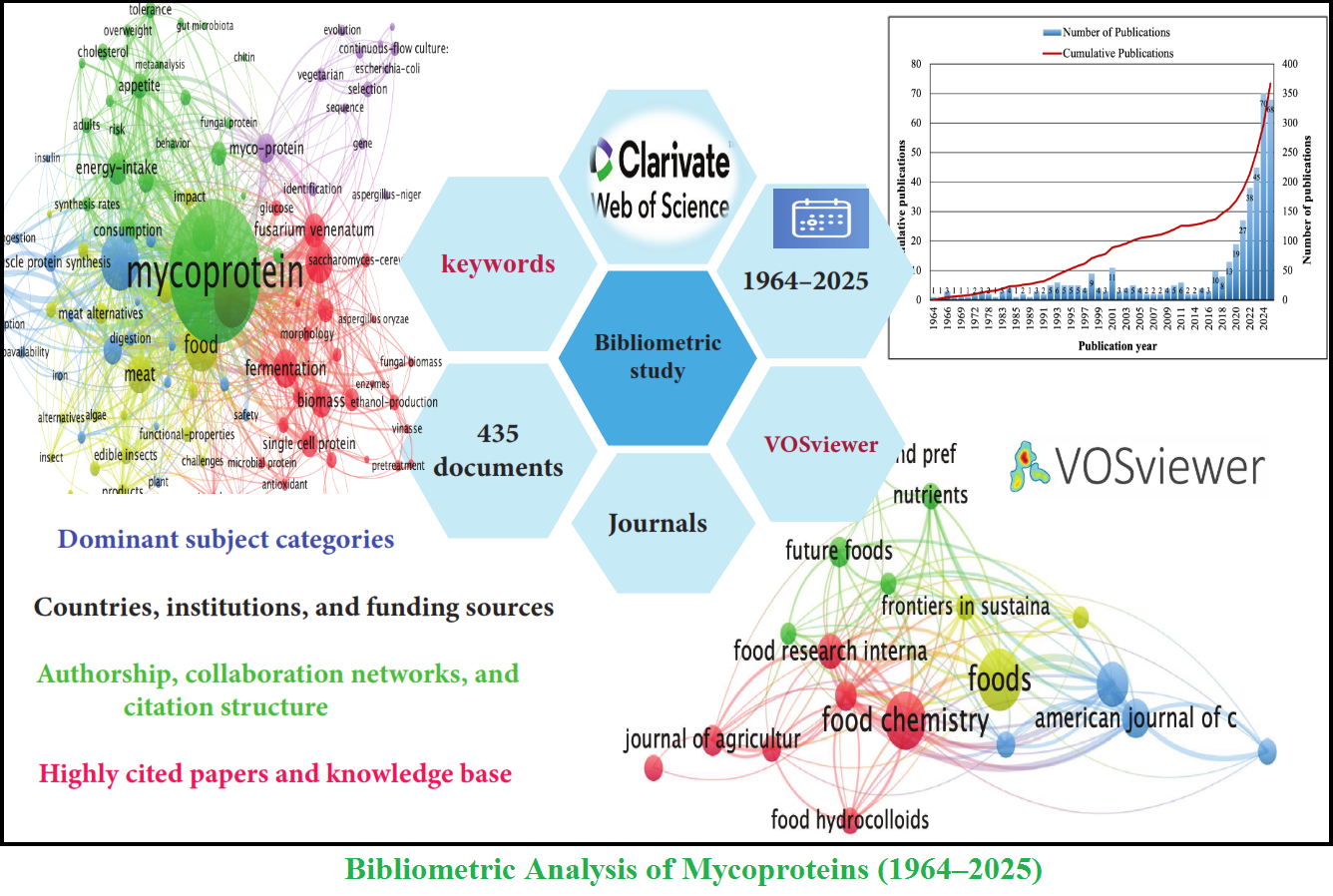
Material and Methods: Based on the PRISMA framework, a final dataset of 435 relevant articles was selected out of 1,011 initially identified records for analysis following a rigorous two-stage screening and eligibility assessment process. A total of 435 publications indexed in the Web of Science Core Collection (1964–2025) were analyzed using VOSviewer and Microsoft Excel.
Results and Conclusion: Results revealed a significant increase in scientific output over recent decades, reflecting the transition of mycoprotein research from fermentation technology to multidisciplinary uses encompassing food science, nutrition, health and environmental sustainability. The United Kingdom was identified as the most productive country, while Foods published the highest number of articles in this field. The review by Ritala et al. (2017) was the most influential publication, receiving 466 citations. Keyword co-occurrence analysis highlighted recent research hotspots, including alternative proteins, meat analogues, food security, consumer acceptance and sustainable food systems. Despite increasing international collaboration, research activity is still concentrated within a limited number of countries and institutions, revealing important geographical and thematic gaps. By identifying influential contributors, evolving research themes and critical knowledge gaps, this study extended over a descriptive bibliometric assessment to provide strategic insights for further research. The findings offer valuable guidance for researchers, industry stakeholders, funding agencies and policymakers seeking to accelerate innovation and support the transition to further sustainable and resilient protein systems.
Keywords: Alternative protein sources, Bibliometric analysis, Future food systems, Mycoprotein, Research hotspots, Sustainability assessment
- Introduction
The global demand for sustainable and nutritionally adequate dietary proteins has intensified due to population growth, environmental pressures and increasing prevalence of diet-linked chronic diseases [1]. While traditional protein sources such as animal-based proteins (beef, poultry) and even certain plant-based alternatives (soy and peas) face significant challenges regarding land use efficiency, water consumption and greenhouse gas emission, mycoprotein presents a unique paradigm. Unlike plant proteins that often need vast agricultural acreage, mycoprotein production via fungal fermentation offers a significantly higher protein density per unit of land and water, aligning more closely with the circular bioeconomy goals [2, 3]. Mycoprotein, a protein-rich whole food derived from the fermentation of filamentous fungi, has emerged as a promising alternative that addresses nutritional and sustainability concerns in food systems [4].
Originally developed in the 1960s, mycoprotein has attracted scientific attention for its unique combination of high protein content, essential amino acid profile, dietary fiber and functional food characteristics. Nutritional investigations indicate that mycoprotein consumption can improve metabolic outcomes, including decrease in circulating cholesterol and modulation of glycemic responses, potentially attributable to its fiber composition and bioavailability of amino acids [5–7]. In addition to nutrition, mycoprotein includes significant implications for environmental sustainability [8]. Life cycle assessments and modelling studies suggest that substituting a portion of ruminant meat intake with mycoprotein can substantially decrease greenhouse gas emissions and land use, contributing to climate-smart dietary strategies [9]. Moreover, the filamentous fungal biomass shows functional characteristics suitable for meat analogues, including desirable texture and processing characteristics, which are critical for consumer acceptance and industrial use [10, 11]. For the rapidly expanding body of literature, a systematic quantitative synthesis of mycoprotein research (encom-passing its developmental trajectory, influential contrib-utions, collaborative patterns and emerging thematic areas) is urgently needed.
Despite the rapid expansion of mycoprotein research in recent decades, the available literature is fragmented in multiple disciplines, including food science [12], biotechnology, nutrition, sustainability and environmental science [13]. Existing narrative and systematic reviews have primarily focused on technological, nutritional or health-linked aspects of mycoprotein; however, these do not provide a quantitative overview of the field's intellectual structure, scientific collaboration, thematic evolution or emerging research priorities [14]. Bibliometric analysis offers a robust approach to address these gaps by systematically mapping publication trends, influential contributors, research networks and knowledge develop-pment over time [15–17]. Such an analysis is particularly timely given the increasing role of mycoprotein in the global transition to sustainable protein sources. Therefore, this study aimed to provide a comprehensive bibliometric assessment of mycoprotein research, identify major research hotspots and knowledge gaps during 1964–2025 and offer strategic insights to guide further research, innovation and policy development.
Bibliometric analysis is widely recognized as a robust and efficient approach for uncovering research trends and identifying emerging hotspots through the assessment of historical publication data and has extensively been used in various fields of science and engineering [12]. Traditional bibliometric techniques primarily emphasize indicators such as keyword frequency, publication output by countries, institutions, journals and subject categories. However, these descriptive measures alone are insufficient to fully capture the dynamic evolution and intellectual structure of a research domain [15]. In response to this limitation, recent studies have incorporated advanced analytical tools such as social network analysis and citation-based impact metrics to provide deeper and further comprehensive insights into scientific development [16, 17] .To the best of the authors’ knowledge, no study has provided a comprehensive bibliometric mapping of the scientific output linked to mycoprotein and its multidimensional effects. Accordingly, the present study aimed to address this gap by delivering an integrated bibliometric overview of global research trends, key hotspots and further research directions in mycoprotein science and innovation during 1964–2025.
- Methodology
2.1. Data collection
Publications linked to mycoprotein were retrieved from the Science Citation Index Expanded (SCI-E) and the Social Sciences Citation Index (SSCI) within the Web of Science Core Collection. The search was carried out on December 2, 2025, using the following query:
TS = (mycoprotein OR “myco-protein” OR “fungal protein” OR Quorn OR “Quorn™” OR “filamentous fungi protein” OR “fungal biomass protein”). Although the terms single-cell protein (SCP), fungal biomass and mycoprotein are sometimes used interchangeably, these terms represent distinct concepts. The SCP includes a broad term referring to protein-rich biomass produced from microorganisms, including bacteria, yeasts, filamentous fungi and microalgae [18–20]. Fungal biomass specifically represents the biomass generated from filamentous fungi, irrespective of its intended use in food, feed and biotechnology [21]. In contrast, mycoprotein is a food-grade fungal biomass produced for human consumption, predominantly derived from Fusarium venenatum and characterized by its high protein and dietary fiber contents, favorable nutritional profile and functional characteristics [22]. Therefore, although mycoprotein is a type of fungal biomass and belongs to the broader category of SCP, not all fungal biomass or SCP products can be classified as mycoprotein.
Although the Web of Science indexes publications in multiple languages, almost all records provide English titles, abstracts, keywords and author affiliation data. The Web of Science (WoS) was selected as it is widely recognized as a gold-standard database for scientometric analyses, featuring rigorous indexing standards, authoritative publications and highly standardized metadata. Figure 1 presents the PRISMA flow diagram outlining the literature selection process. The initial search identified 1,011 records published between 1964 and 2025. Following the preliminary screening, 446 records were retained, comprising 307 research articles, 78 review articles, 24 meeting abstracts, 14 early access articles, 13 editorials, nine book chapters and one article in press. To provide a comprehensive overview of the scientific landscape of mycoprotein research, all relevant document types were considered for inclusion rather than limiting the analysis to research articles and review articles only. Although meeting abstracts, editorials, book chapters and early access articles accounted for a relatively small proportion of the dataset, these were included because they may reflect emerging research topics, early dissemination of scientific findings and developments that have contributed to the evolution of the field. All document types were then subjected to the same eligibility assessment to ensure their relevance to the scope of this study.
During the eligibility assessment, the records retrieved using the search terms “fungal protein” and “filamentous fungal protein” were carefully assessed. Several publications were excluded because they were not directly linked to mycoprotein or represented only lexical matches that fell outside the scope of the present study. After this screening process, a final dataset of 435 relevant public-cations was retained for bibliometric analysis. The complete records and cited references of these publications were then extracted, including information on authors, affiliations, publication years, document types, research areas, source titles, article titles, author keywords, abstracts, languages and citation counts.
2.2. Bibliometric analysis framework
A comprehensive bibliometric approach was used to systematically map the intellectual structure and developmental trajectory of mycoprotein research within the food science domain. The bibliometric analysis was designed to address three major objectives of (i) to assess the temporal evolution of mycoprotein research, (ii) to identify the leading contributors and collaboration patterns and (iii) to investigate the major research themes and emerging research frontiers in this field. All relevant bibliographic information, including titles, abstracts, author information, keywords, citation metrics and other metadata, were extracted and compiled in CSV format for analysis.
Two major analytical tools were used. VOSviewer v.1.6.18 was used to construct bibliometric networks and visualize keyword co-occurrence patterns and collaboration structures, while Microsoft Excel 2019 was used to generate descriptive statistics and complementary graphical outputs. VOSviewer was selected because of its ability to efficiently construct and visualize bibliometric networks and its widespread use in bibliometric studies. Prior to network generation, a data-cleaning process was carried out to standardize various keyword formats and merge synonyms (“mycoprotein” and “myco-protein”) using customized thesaurus file; thereby, ensuring accuracy of the analysis. Network maps were generated using association strength normalization method and clustering algorithm embedded within VOSviewer. In the visualized maps, the size of each node represented the frequency of an item, while the link thickness indicated the strength of the relationship (e.g., co-authorship or co-occurrence). Minimum threshold values (e.g., minimum occurrences of keywords, publications or citations such as a threshold of 25 citations for highly cited documents) were investigated based on the specific characteristics of each analysis.
The dataset, spanning from the earliest relevant publication from 1964 to 2025, was assessed using chronological framework. The analytical strategy integrated multiple dimensions. First, publication trends, dominant subject categories and leading journals were assessed to regulate the positioning of mycoprotein research within the broader scientific landscape. Second, the contributions and collaborative relationships in productive countries, institutions and authors were analyzed to identify major knowledge hubs and patterns of international cooperation. Moreover, the conceptual structure and emerging research frontiers were investigated through a combined assessment of research trends, author keyword co-occurrence and highly cited publications. This integrative bibliometric design provided several advantages over purely descriptive analyses. By simultaneously assessing collaboration networks, citation performance and the semantic evolution of research themes, this enabled a robust quantitative mapping of the field and revealed the interaction between established research domains and emerging research areas [23], including sensory optimization, health functionality and sustainable production systems. Accordingly, this methodology provided a comprehensive representation of the current state of mycoprotein research and established a data-driven basis for identifying further research directions.
- Results and Discussion
- Global research trends and publication growth (1964–2025)
The temporal distribution of publications illustrated the evolution of mycoprotein research over time. Based on the bibliometric dataset comprising 435 publications, the earliest publication dated back to 1964, indicating that the scientific foundations of mycoprotein research were established several decades ago. However, for several decades, the annual publication output was low, with a fewer than five publications per year, reflecting the exploratory stage of research in this field. As shown in Figure 2, publication output increased gradually from the late 1990s to the early 2000s, coinciding with increasing interest in alternative protein sources, microbial biotechnology and sustainable food systems. This uptrend became significantly further pronounced after 2020, when 273 publications (62.8% of the total dataset) were published within only six years (2020–2025). Annual publication output increased from 19 publications in 2020 to 74 in 2025, representing an approximately 289% increase (3.9-fold growth) over five years. The highest publication outputs were recorded in 2024 (n = 70) and 2025 (n = 74), highlighting the rapidly increasing scientific interest in mycoprotein as a sustainable protein source and its uses in food science and biotechnology [24].
This accelerated growth was unlikely to reflect a simple increase in publication volume alone. Rather, it coincided with major global developments, including heightened concerns over climate change, food security, population growth, resource-efficient food production and the environmental effects of conventional livestock systems. These challenges have accelerated scientific and industrial investment in sustainable protein alternatives, positioning mycoprotein as a promising candidate because of its high protein quality, favorable amino acid profile, efficient land and water use and comparatively low greenhouse gas emission [25]. In parallel, advances in fermentation technology, fungal biotechnology and precision bioprocessing have enhanced the technical feasibility and commercial scalability of mycoprotein production, further stimulating research activity. The increasing involvement of the food industry, increasing consumer demand for sustainable and health-promoting foods and policy initiatives supporting low-carbon food systems have contributed to the rapid expansion of the field [26]. Therefore, recent research has shifted beyond production optimization to encompass nutrition, health benefits, consumer acceptance, techno-economic feasibility, life cycle assessment and regulatory consideration, reflecting the transformation of mycoprotein from a niche microbial product into a strategically important component of sustainable food systems [27]. Overall, the publication trend demonstrates a sustained increase in research output, reflecting the increasing scientific interest in mycoprotein research.
- Dominant subject categories and influential journals
In total, 435 articles were analyzed, covering 672 Web of Science subject categories and published across 413 journals, highlighting the multidisciplinary nature of mycoprotein research. Food Science and Technology was the dominant subject category, accounting for 165 publications (24.6%), followed by Nutrition and Dietetics (92, 13.7%), Biotechnology and Applied Microbiology (63, 9.4%), Chemistry Applied (38, 5.7%) and Biochemistry and Molecular Biology (24, 3.6%). This distribution indicated that mycoprotein research has historically been driven by food formulation, processing technologies and product development while progressively incorporating nutritional, biochemical and biotechnological perspectives.
The predominance of Food Science and Technology reflected the central role of mycoprotein as an emerging alternative protein ingredient, with research focusing on improving sensory quality, functionality, nutritional value and industrial uses [2, 10, 11]. The strong representation of Nutrition and Dietetics further demonstrated increasing scientific interests in the physiological effects of mycoprotein, including protein quality, gut health, satiety and metabolic outcomes [28–30]. The sustained contribution of Biotechnology and Applied Microbiology highlighted the importance of fermentation optimization, fungal strain development and process innovation as the technological foundation of mycoprotein production [31]. Temporal changes in subject categories revealed a clear evolution of research priorities. Earlier studies primarily emphasized microbial cultivation and fermentation technology, whereas recent publications increasingly address sustainability assessment, life cycle analysis, food security, circular bioeconomy and consumer behavior [32–34]. This shift has reflected the transition of mycoprotein research from a production-oriented discipline to an integrated research field addressing scientific, environmental, nutritional and socioeconomic challenges associated with food systems. Publications were concentrated within a relatively small number of established journals in food science and nutrition (Table 1). Journals such as Foods, Food Chemistry and the British Journal of Nutrition have played a critical role in disseminating high-quality research on mycoprotein by providing platforms that integrate food technology, nutritional sciences and sustainability. Their continued prominence reflects not only high publication output but also their broad readership, interdisciplinary scope and influence in shaping research priorities within the field. The increasing presence of mycoprotein studies in journals with wider interdisciplinary coverage further indicated that the field was expanding over food technology into areas such as public health, environmental sustainability and biotechnology. This diversification has enhanced the visibility of mycoprotein research and facilitates knowledge exchange within researchers from multiple disciplines; thereby, accelerating scientific progress and innovation.
Overall, the distribution of subject categories and publication outlets demonstrated that mycoprotein research evolved into a mature and multidisciplinary research domain. The convergence of food science, biotechnology, nutrition and sustainability within influential journals reflected the increasing recognition of mycoprotein as a strategic component of sustainable food systems.
- Productive and influential countries
The analysis of geographical distribution and institutional contributions revealed that research on mycoprotein and its effects was dominated by a limited number of countries with strong scientific infrastructure and long-standing interest in alternative protein research. The United Kingdom was the leading contributor, reflecting its historical role in the development and commercialization of mycoprotein, as well as long-standing collaboration between academia and industry. This leadership has been reinforced by continuous investment in alternative protein research, advanced fermentation technologies and interdisciplinary programs integrating food science, biotechnology and nutrition.
The United States, China, Germany, the Netherlands and Italy made substantial contributions to the field (Table 2). While European countries have largely driven technological innovation and nutritional research, the rapid increase in publications from China reflected increasing national investment in biotechnology, food security and sustainable protein production. Further broadly, the increasing contribution of emerging economies suggested that mycoprotein was attracting recognition as a promising solution to challenges associated to population growth, climate change and environmental effects of conventional livestock production. Expanding international collaborations and greater access to research funding have further accelerated scientific output from these regions, contributing to a further geographically diverse research landscape [35, 36].
Overall, the distribution of productive countries indicated that mycoprotein research was increasingly concentrated globally, with strong leadership from early-adopting countries and increasing participation from emerging research economies. This pattern reflected transition of mycoprotein from a regionally developed innovation to a globally relevant solution addressing further challenges in food security, nutrition and environmental sustainability [34].
- Authorship, collaboration network and citation structure
The analysis of authorship patterns, collaboration networks and citation relationships provides deeper insight into the intellectual and social structure of research on mycoprotein and its effects. Coauthorship network analysis revealed that a limited number of prolific and influential authors played a central role in shaping the research landscape. These authors often acted as collaborative hubs, linking multiple institutions and countries and contributing to the dissemination of knowledge within disciplinary and geographical boundaries. The presence of several well-defined clusters suggested that mycoprotein research has developed around core research groups, frequently aligned with specific thematic focuses such as food technology, nutrition and health outcomes or sustainability and environmental assessment. Collaborations between the authors are shown in Figure 3, demonstrating authors that published more than six articles and the isolated nodes were ignored. International collaboration was particularly prominent within authors affiliated with institutions in Europe and North America, with increasing participation from Asian countries in recent years. This pattern reflected a gradual shift from localized research efforts to global and interdisciplinary collaboration, enhancing the visibility and effect of published studies.
The inclusion criteria included a minimum of 25 citations per document, decreasing the initial pool from 435 to 134 articles. The most cited study was Ritala (2017), with 466 citations, highlighting its significant effect in the field. The relationship between authorship productivity and citation impact indicated that highly productive authors and research groups tended to receive disproportionately higher citation counts, suggesting their strong effect on the development of the field. Highly cited documents are frequently the result of collaborative research, involving multiple authors and institutions, which highlights the positive association between collaboration intensity and scientific impact. Total link strength indicated the overall intensity of an author’s collaborative relationships, reflecting the extent of coauthorship within the research network. Finnigan with 30 articles and 857 citations had total link strength of 111 which included a strong collaboration network. Khosravi-Darani with nine articles and 377 citations had total link strength of zero which indicated that she was effective with a limited collaboration (Table 3).
Document-citation analysis further showed that a relatively small proportion of publications accounted for a large share of total citations, highlighting the existence of a core knowledge base within mycoprotein research. These highly cited articles often served as foundational references, addressing key topics such as nutritional and health effects, production technologies and environmental performance of mycoprotein.
- Highly cited papers and knowledge base
The analysis of highly cited publications provided valuable insight into the knowledge base and intellectual foundations of research on mycoprotein and its impacts. Citation analysis indicated that a relatively small number of papers accounted for a significant proportion of total citations, demonstrating the presence of a core body of influential literature that has shaped the development and direction of this research field. The most highly cited articles were predominantly review articles and pioneering experimental studies, which have played a critical role in consolidating existing knowledge and defining further research agendas [37, 38]. These publications primarily focused on key themes such as nutritional composition and health effects of mycoprotein, production and fermentation technologies, safety and allergenicity and environmental performance, compared to conventional protein sources [39, 40]. Their high citation impact reflected their foundational nature and broad relevance within multiple disciplines (Table 4). The citation network demonstrates that influence within the field extended beyond studies focused exclusively on myco-protein. Several highly cited publications have contributed indirectly by advancing broader concepts linked to alter-native proteins, microbial biotechnology, sustainable food systems and life cycle assessment [41, 42]. Although these studies were not exclusively dedicated to mycoprotein, the studies have provided essential scientific and method-ological foundations that have significantly affected further mycoprotein research. Therefore, their inclusion reflected their intellectual contribution to the development of the field rather than a narrow topical focus
Temporal citation patterns further revealed the evolution of scientific priorities. Foundational studies published during the early stages of the field received citations decades after publication because they established core knowledge on fungal physiology, fermentation technology and industrial production. In contrast, more recent highly cited articles have accumulated citations rapidly owing to the increasing global interest in sustainable protein sources, climate change mitigation, food security and healthy dietary transitions [43]. This shift illustrates how mycoprotein research has evolved from addressing technical production challenges to broader multidisciplinary questions involving nutrition, public health, environmental sustainability, consumer acceptance and circular bioeconomy strategies [34, 44].
Overall, the highly cited articles formed a coherent interconnected knowledge base that has supported current research on mycoprotein. These studies not only provided essential scientific evidence but also acted as conceptual anchors, guiding the emergence of novel research themes and supporting the rapid growth of the field. The continued citation of classic and recent high-impact articles suggested that mycoprotein research was built upon a stable evolving intellectual framework, reinforcing its significance within a broader context of sustainable health-oriented protein research.
- Keyword co-occurrence analysis and thematic evolution of mycoprotein research
The analysis of author keywords and their temporal evolution provided a comprehensive overview of the hot issues and thematic development in mycoprotein research over the studied period. The keyword analysis began with 2126 terms extracted from the input data, using a minimum occurrence threshold of five to yield 142 keywords. For each, total co-occurrence link strength was computed, followed by manual screening of top candidates to select the 109 most relevant to mycoprotein research literature. These refined keywords formed the basis for the density visualization map and co-occurrence network (Figures 5a and b).
In the early stage of mycoprotein research, the major focus was on microbial protein, fermentation, fungal biomass and production efficiency, with the aim of demonstrating the technical feasibility and safety of mycoprotein as a novel food ingredient. At this stage, studies were largely technology-oriented and limited in scope. As the field developed, attention shifted to nutritional and health aspects and keywords such as protein quality, amino acid composition, dietary fiber, cholesterol decrease, glycemic response and metabolic health became further prominent, reflecting the increasing interest in functional foods and the increasing prevalence of diet-linked chronic diseases.
In recent years, environmental and sustainability-linked themes such as life cycle assessment, carbon footprint, greenhouse gas emissions, resource efficiency and sustainable food systems have attracted significant importance, with global efforts to decrease the environmental effects of animal-based proteins [14, 45]. Emerging topics, including alternative proteins, meat analogues, consumer acceptance, food security and circular economy, indicated a shift to an interdisciplinary appli-cation-driven research landscape.
The thematic evolution of mycoprotein research revealed a clear transition from a technology-oriented domain to a multidimensional and application-driven field. This trajectory was consistent with recent studies, reporting that mycoprotein provides high-quality protein with favorable digestibility and hypocholesterolemic effects, while offering substantially lower environmental effects, compared to ruminant meat for land use, water consumption and greenhouse gas emission [14]. However, current literature emphasized the importance of consumer perception, sensory optimization in meat analogues and industrial scalability as critical factors for large-scale implementation [46].
- Critical gaps, emerging uses and further research priorities in mycoprotein science and innovation
The bibliometric analysis highlighted the significant progress achieved in mycoprotein research and the presence of critical gaps that constrained its broader scientific, technological and societal impact. While publication trends, citation patterns and keyword evolution indicated rapid expansion and increasing interdisciplinarity, the current knowledge base is still unevenly developed within themes, regions and application domains. In addition, the funding analysis revealed that most research were supported by food science and biotechnology funding agencies, whereas relatively a limited support was identified from clinical and environmental funding bodies. This imbalance might partly explain the slower development of long-term health studies and life cycle assessment (LCA) research.
One of the most prominent gaps identified was the limited availability of long-term and population-based health studies. Although nutritional composition and short-term metabolic responses to mycoprotein have extensively been investigated, evidence regarding long-term consumption, chronic disease outcomes and vulnerable population groups are limited. This gap limits the translation of scientific findings into robust dietary guidelines and health policies. A second major gap concerned environmental and system-level assessments. Despite the increasing number of studies addressing sustainability, most life cycle assessments were based on generic or region-specific assumptions, often focusing on high-income countries. There is a clear need for context-adapted and comparative environmental assess-ments, particularly in regions with different energy mixes, agricultural inputs and regulatory frameworks. These findings were similar to the bibliometric findings, which showed that sustainability and environment-linked topics were less represented than research on food formulation, production technologies and nutritional characteristics.
In addition, the bibliometric data revealed a geographically institutional concentration of research output, dominated by a small number of countries and research centers. Partic-ularly, Africa and South America were underrepresented in the scientific landscape, despite their increasing interests in sustainable food systems and alternative protein production. This geographical imbalance might limit the global use of current knowledge, as regional differences in food systems, agricultural resources, consumer preferences and regulatory frameworks were insufficiently represented. Further res-earch should therefore promote stronger international collaborations and capacity building to increase scientific contributions from these underrepresented regions.
The keyword co-occurrence analysis further identified several emerging research directions, including consumer acceptance, sensory quality, health functionality, sustain-nability and alternative protein development. Accordingly, further research should expand these themes by integrating multidisciplinary approaches, rather than assuming that topics such as hybrid protein blends, clean-label products or the circular bioeconomy are well established. Greater emphasis should be dedicated to clinical validation, region-specific environmental assessments and international collaboration to strengthen the evidence base for sustainable mycoprotein development.
Further research should extend over optimizing production processes to address the broader scientific, technological and regulatory challenges associated to large-scale adoption of mycoprotein. Advances in strain engineering and synthetic biology offer promising opportunities to improve protein yield, nutritional quality, functional characteristics and production efficiency through the development of next-generation fungal strains. Comprehensive techno-economic assessments are needed to assess the commercial feasibility, scalability and environmental performance of emerging pro-duction technologies under industrial conditions. Equally important is regulatory consideration, including food safety assessment, approval pathways for novel fungal strains, labeling requirements and harmonization of international regulatory frameworks, which play a critical role in facilitating global market acceptance. Integrating these multidisciplinary perspectives with ongoing research in nutrition, sustainability and consumer acceptance is esse-ntial for accelerating innovation and supporting the successful commercialization of mycoprotein as a sustainable protein source. Figure 6 presents the suggested further research priorities in mycoprotein science, highlighting the key areas that need further investigation to advance scientific knowledge and support the sustainable development of the field.
Overall, strengthening collaboration between academia, industry and policy-makers is essential to accelerate innovation and facilitate evidence-based decision-making. Furthermore, aligning scientific research with regulatory and societal needs can support the responsible scaling of mycoprotein production and its integration into sustainable food strategies.
- Conclusion
Over the past six decades, mycoprotein research has evolved from a niche field centered on fungal fermentation and production technologies into a rapidly expanding multidisciplinary domain integrating food science, nutr-ition, sustainability, health and alternative protein innov-ation. This bibliometric analysis demonstrates that the recent acceleration in scientific output reflects the increasing global interests in sustainable protein sources and highlights the increasing convergence of biotechnology, food technology and environmental sciences.
In addition to characterizing publication trends, collab-oration networks, influential contributors and thematic evolution, this study provided an evidence-based overview of the intellectual landscape of mycoprotein research and identified key areas needing further investigations. Despite the significant growth of the field, important knowledge gaps are still reported, particularly regarding long-term health outcomes, industrial-scale implementation, techno-economic feasibility, regulatory harmonization and consumer acceptance within diverse cultural and geographical contexts. In addition, the geographical concentration of research output highlights the need for greater participation from underrepresented regions, especially Africa and South America, to promote a further inclusive global research landscape.
Similar to other bibliometric studies, the present analysis was based on a single bibliographic database and predefined search terms, which might exclude relevant publications indexed elsewhere. Nevertheless, the findings have provided a valuable strategic reference for researchers, funding agencies, industry stakeholders and policymakers by identifying emerging research directions and oppor-tunities for further collaborations. As the transition to susta-inable food systems accelerates, advances in biotechnology, strain engineering, synthetic biology, techno-economic assessment and regulatory science is critical to translating mycoprotein research into safe, scalable and commercially viable food solutions. Continued international collaboration and interdisciplinary research is essential to realizing the full potential of mycoprotein in supporting resilient, sustainable and equitable global food systems.
- Declaration
5.1. Acknowledgements
This study has been supported by Halal Research Center of IRI, Iran Food and Drug Administration, Ministry of Health and Medical Education, Tehran, Iran.
5.2. Declaration of competing interest
None declared.
5.3. Authors’ Contributions
- T., Data curation, investigation, methodology, software; F. H., conceptualization, supervision, validation, visualization, writing—original draft, formal analysis; H. R, project administration, writing—review and editing
5.4. Using Artificial Intelligent Chatbots
During the preparation of this study, the authors used open AI for grammatical editing. After using this tool/service, the authors reviewed and edited the content as needed and take full responsibility for the content of the published article.
5.5. Ethical Consideration
The study approval was not necessary.
- Alternative protein sources
- Bibliometric analysis
- Future food systems
- Mycoprotein, Research hotspots
- Sustainability assessment
##submission.howToCite##
参考
1. Varzakas T, Smaoui S. Global food security and sustainability issues: The road to 2030 from nutrition and sustainable healthy diets to food systems change. Foods. 2024; 13(2): 306. https://doi.org/10.3390/foods13020306
2. Hashempour-Baltork F, Khosravi-Darani K, Hosseini H, Farshi P, Reihani SFS. Mycoproteins as safe meat substitutes. J Clean Prod. 2020a; 253: 119958. https://doi.org/10.1016/j.jclepro.2020.119958
3. Seyed Reihani SF, Khosravi-Darani K. Mycoprotein production from date waste using Fusarium venenatum in a submerged culture. Appl Food Biotechnol. 2019; 5(4): 243-352. https://doi.org/10.22037/afb.v5i4.3139
4. Hashempour‐Baltork F, Hosseini SM, Assarehzadegan MA, Khosravi‐Darani K, Hosseini H. Safety assays and nutritional values of mycoprotein produced by Fusarium venenatum IR372C from date waste as substrate. J Sci Food Agric. 2020; 100(12): 4433-4441. https://doi.org/10.1002/jsfa.10483
5. Coelho MO, Monteyne AJ, Dunlop MV, Harris HC, Morrison DJ, Stephens FB, Wall BT. Mycoprotein as a possible alternative source of dietary protein to support muscle and metabolic health. Nutr Rev. 2020; 78(6): 486-497. https://doi.org/10.1093/nutrit/nuz077
6. Lee D, Pan J H., Kim D, Heo W, Shin E C, Kim Y J, Shin E C, Kim Y J, Shim Y Y, Reaney M.J T, Ko S G, Hong S B, Cho J T, Kim T G, Lee K, Kim J K. Mycoproteins and their health‐promoting properties: Fusarium species and beyond. Compr Rev Food Sci Food Saf. 2024; 23(3): e13365. https://doi.org/10.1111/1541-4337.13365
7. Davoudi M, Ahmadi Gavlighi H, Hashempour-Baltork F, Khosravi-Darani K. In vitro antidiabetic and antioxidant activities of protein hydrolysates via alkaline autolysis of Fusarium venenatum mycoprotein. Scientific Reports. 2025; 15(1): 13287. https://doi.org/10.1038/s41598-025-97904-5
8. Hosseini SM, Khosravi-Darani K, Mohammadifar MA, Nikoopour H. Production of mycoprotein by Fusarium venenatum growth on modified vogel medium. Asian J Chem. 2009; 21(5): pp. 4017-4022.
9. Chand A. Mycoprotein as beef with benefits. Nat Food. 2022; 3(6): 399. https://doi.org/10.1038/s43016-022-00545-4
10. Hashempour‐Baltork F, Jannat B, Dadgarnejad M, Mirza Alizadeh A, Khosravi‐Darani K, Hosseini H. Mycoprotein as chicken meat substitute in nugget formulation: Physicochemical and sensorial characterization. Food Sci & Nutr. 2023; 11(7): 4289-4295. https://doi.org/10.1002/fsn3.3354
11. Hashempour-Baltork F, Farshi P, Jannat B, Dadgarnejad M, Asgharian R, Khosravi-Darani K, Hosseini H. Total and partial replacement of meat by mycoprotein in hamburger: Physico-chemical, nutritional, mechanical and overall acceptability. Curr Nutr Food Sci. 2024; 20(3): 349-356. https://doi.org/10.2174/1573401319666230418104833
12. Han R, Zhou B, Huang Y, Lu X, Li S, Li N. Bibliometric overview of research trends on heavy metal health risks and impacts in 1989–2018. J Clean Prod. 2020; 276: 123249. https://doi.org/10.1016/j.jclepro.2020.123249
13. Reihani SFS, Khosravi-Darani K. Influencing factors on single-cell protein production by submerged fermentation: A review. Electron J Biotechnol. 2019; 37: 4-40. https://doi.org/10.1016/j.ejbt.2018.11.005
14. Yashaswini B, Shalini K, Shenoy P, Bhaskar S. Mycoprotein: Paving the way for sustainable food production. In: Sustainable Plant Foods. Amsterdam: Elsevier; 2026. p. 271-284. https://doi.org/10.1016/B978-0-443-31652-4.00002-7
15. Colman AM, Dhillon D, Coulthard B. A bibliometric evaluation of the research performance of British university politics departments: Publications in leading journals. Scientometrics. 1995; 32(1): 49-66. https://doi.org/10.1007/BF02020188
16. Fasogbon BM, Adebo OA. A bibliometric analysis of 3D food printing research: A global and African perspective. Future Foods. 2022; 6: 100175. https://doi.org/10.1016/j.fufo.2022.100175
17. Dzhunushalieva GD, Teuber R. A bibliometric analysis of trends in the relationship between innovation and food. Brit Food J. 2024; 126(4): 1554-1572. https://doi.org/10.1108/BFJ-08-2022-0695
18. Gao L, Khoo SC, Zhang Z, Wu X. Trends in sustainable single-cell protein from non-grain feedstocks. Trends Biotechnolo. 2026; 44(1): 65-78. https://doi.org/10.1016/j.tibtech.2025.04.018
19. Umesh M, Thazeem B, Preethi K. Valorization of pineapple peels through single cell protein production using Saccharomyces cerevisiae. Appl Food Biotechnol. 2019; 6(4): 255-263. https://doi.org/10.22037/afb.v6i4.5906
20. Golaghaiee S, Ardestani F, Ghorbani H R. Microbial protein production from Candida tropicalis ATCC13803 in a submerged batch fermentation process. Appl Food Biotechnol. 2017; 4(1): 35-42. https://doi.org/10.22037/afb.v4i1.13698
21. Cao L, Chen Y, Mashad HME, Pan Z, Zhang R. Techno-economic analysis of fungal biomass production from agricultural byproducts: Exploring a low-cost solution for myco-food production. Food Bioprocess Technol. 2026; 19(3): 112. https://doi.org/10.1007/s11947-025-04202-z
22. Khalasi Y, Prakash P, Chuphal N, Malik MA, Mohanta KN. Mycoprotein for circular and sustainable aquaculture growth. Discov Food. 2026; 6(1): 188. https://doi.org/10.1007/s44187-026-00891-3
23. Hassan W, Duarte AE. Bibliometric analysis: A few suggestions. Curr Probl Cardiol. 2024; 49(8): 102640. https://doi.org/10.1016/j.cpcardiol.2024.102640
24. Saeed F, Afzaal M, Khalid A, Shah YA, Ateeq H, Islam F, Akram N, Ejaz A, Nayik G A, Shah M A. Role of mycoprotein as a non-meat protein in food security and sustainability: A review. Int J Food Prop. 2023; 26(1): 683-695. https://doi.org/10.1080/10942912.2023.2178456
25. Akinsemolu A A, Onyeaka H N. Mycoproteins as sustainable food sources: Current applications and future prospects. Discov Appl Sci. 2025; 7(3): 191. https://doi.org/10.1007/s42452-025-06614-0
26. Ridwan H, Ahmed S, Singh R B, Chakravorty S, Medvedev O, Singh R G, Lisdwiyani B K. Sustainable diets and functional foods for the prevention of cardio-metabolic diseases and sustainable development goals of the UNO. An international consensus of scientific statement of the international college of nutrition and 28th world congress on clinical nutrition, Bogor, Indonesia. . BMC Cardiovasc Disord. 2026; 26(1): 569. https://doi.org/10.1186/s12872-026-05557-7
27. Mazac R, Järviö N, Tuomisto HL. Environmental and nutritional life cycle assessment of novel foods in meals as transformative food for the future. Sci Total Environ. 2023; 876: 162796. https://doi.org/10.1016/j.scitotenv.2023.162796
28. Derbyshire E, Ayoob K T. Mycoprotein: Nutritional and health properties. Nutr Today. 2019; 54(1): 7-15. https://doi.org/10.1097/NT.0000000000000316
29. Derbyshire EJ, Theobald H, Wall B T, Stephens F. Food for our future: The nutritional science behind the sustainable fungal protein–mycoprotein. A symposium review. J Nutr Sci. 2023: 12, e44. https://doi.org/10.1017/jns.2023.29
30. Farsi DN, Gallegos JL, Koutsidis G, Nelson A, Finnigan TJ, Cheung W, Muñoz-Muñoz JL, Commane DM. Substituting meat for mycoprotein reduces genotoxicity and increases the abundance of beneficial microbes in the gut: Mycomeat, a randomised crossover control trial. Eur J Nutr. 2023; 62(3): 1479-1492. https://doi.org/10.1007/s00394-023-03088-x
31. Ng ZY, Kee PE, Abdullah R, Lan JC-W, Ling TC, Jiang J-J, Lim JW, Khoo KS. Conversion of lignocellulosic biomass waste into mycoprotein: Current status and future directions for sustainable protein production. Biomass Conver Bior. 2025; 15(24): 31337-31363. https://doi.org/10.1007/s13399-024-06130-y
32. Finnigan T, Mach K, Edlin A. Mycoprotein: A healthy new protein with a low environmental impact. In: Sustainable Protein Sources. Amsterdam: Elsevier; 2024. p. 539-566.
33. Shahid M, Shah P, Mach K, Rodgers-Hunt B, Finnigan T, Frost G, Neal B, Hadjikakou M. The environmental impact of mycoprotein-based meat alternatives compared to plant-based meat alternatives: A systematic review. Future Foods. 2024; 10: 100410. https://doi.org/10.1016/j.fufo.2024.100410
34. Hoxha L, Taherzadeh MJ. Alternative proteins from Filamentous fungi: Drivers of transformative change in future food systems. Fermentation. 2025; 12(1): 7. https://doi.org/10.3390/fermentation12010007
35. Xiong J, Yu Z. Assessing food consumption GHG emissions in China and the impact of alternative proteins on emissions reduction. Ecol Front. 2025; 45(5): 1210-1217. https://doi.org/10.1016/j.ecofro.2025.03.007
36. Zhou Y-M, Liu Y, Liu W, Shen Y. Generation of microbial protein feed (MPF) from waste and its application in aquaculture in China. J Environ Chem Eng. 2023; 11(2): 109297. https://doi.org/10.1016/j.jece.2023.109297
37. Ritala A, Häkkinen S T, Toivari M, Wiebe M G. Single cell protein—state-of-the-art, industrial landscape and patents 2001–2016. Front Microbiol. 2017; 8: 300587. https://doi.org/10.3389/fmicb.2017.02009
38. Smetana S, Mathys A, Knoch A, Heinz V. Meat alternatives: Life cycle assessment of most known meat substitutes. Int J Life Cycle Assess. 2015; 20(9): 1254-1267. https://doi.org/10.1007/s11367-015-0931-6
39. Yu R, Rathnayake PY, Nam C, Yeo SE, Kim T-K, Lee HJ, Yong H I. A comprehensive review on mycoprotein-based meat analog production: Nutritional, functional, physicochemical and safety aspect. Food Sci Biotechnol. 2025; 35: 1–19. https://doi.org/10.1007/s10068-025-02059-8
40. Pasutto E, Dahlin J, Sukumara S, Meramo S. Replacing conventional meat with mycoprotein: Relative and absolute environmental perspectives. Sustain Prod Consum. 2025; 56: 531-545. https://doi.org/10.1016/j.spc.2025.04.019
41. Asgar MA, Fazilah A, Huda N, Bhat R, Karim AA. Nonmeat protein alternatives as meat extenders and meat analogs. Compr Rev Food Sci Food Saf. 2010; 9(5): 513-529. https://doi.org/10.1111/j.1541-4337.2010.00124.x
42. Ismail I, Hwang Y H, Joo S T. Meat analog as future food: A review. J Anim Sci Technol. 2020; 62(2): 111. https://doi.org/10.5187/jast.2020.62.2.111
43. Bryant CJ. Plant-based animal product alternatives are healthier and more environmentally sustainable than animal products. Future Foods. 2022:6, 100174. https://doi.org/10.1016/j.fufo.2022.100174
44. Fu Y. Optimizing sustainable diets with mycoprotein in Finland [Master’s thesis]. Helsinki: University of Helsinki; 2025. 148 p. Available from: http://urn.fi/URN:NBN:fi:hulib-202506122718
45. Upcraft T, Tu W-C, Johnson R, Finnigan T, Van Hung N, Hallett J, Guo M. Protein from renewable resources: Mycoprotein production from agricultural residues. Green Chemistry. 2021; 23(14): 5150-5165. https://doi.org/10.1039/D1GC01021B
46. Cunha PM, Antoniel EP, Silva LOHS, Maia GN, Sydney ACN, Sydney EB, Mascarin GM, Bicas J L, Pierucci A P T R, Duque-Estrada P, Damasio A. From fungal cell factories to mycoproteins: Alternative protein production for human diets. Curr Food Sci Technol Rep. 2025; 3(1): 21. https://doi.org/10.1007/s43555-025-00066-8
- 摘要 ##plugins.themes.ojsPlusA.frontend.article.viewed##: 217 ##plugins.themes.ojsPlusA.frontend.article.times##
- pdf (English) ##plugins.themes.ojsPlusA.frontend.article.downloaded##: 64 ##plugins.themes.ojsPlusA.frontend.article.times##