Assessment of milk-based high protein products as ingredients of low-fat ice creams
食品生物技术的应用,
卷 11 编号 1 (2024),
18 十一月 2023
,
第 34 页
https://doi.org/10.22037/afb.v11i1.46380
摘要
Background and Objective: This study assessed the potential of incorporating high-protein dairy ingredients into ice cream recipes in response to increasing consumer interest in high-protein foods with improved nutritional benefits. The goal was to assess the functional and compositional characteristics of protein ingredients derived from skim milk, which could play a critical role in creating low-fat ice cream that meets sensory expectations.
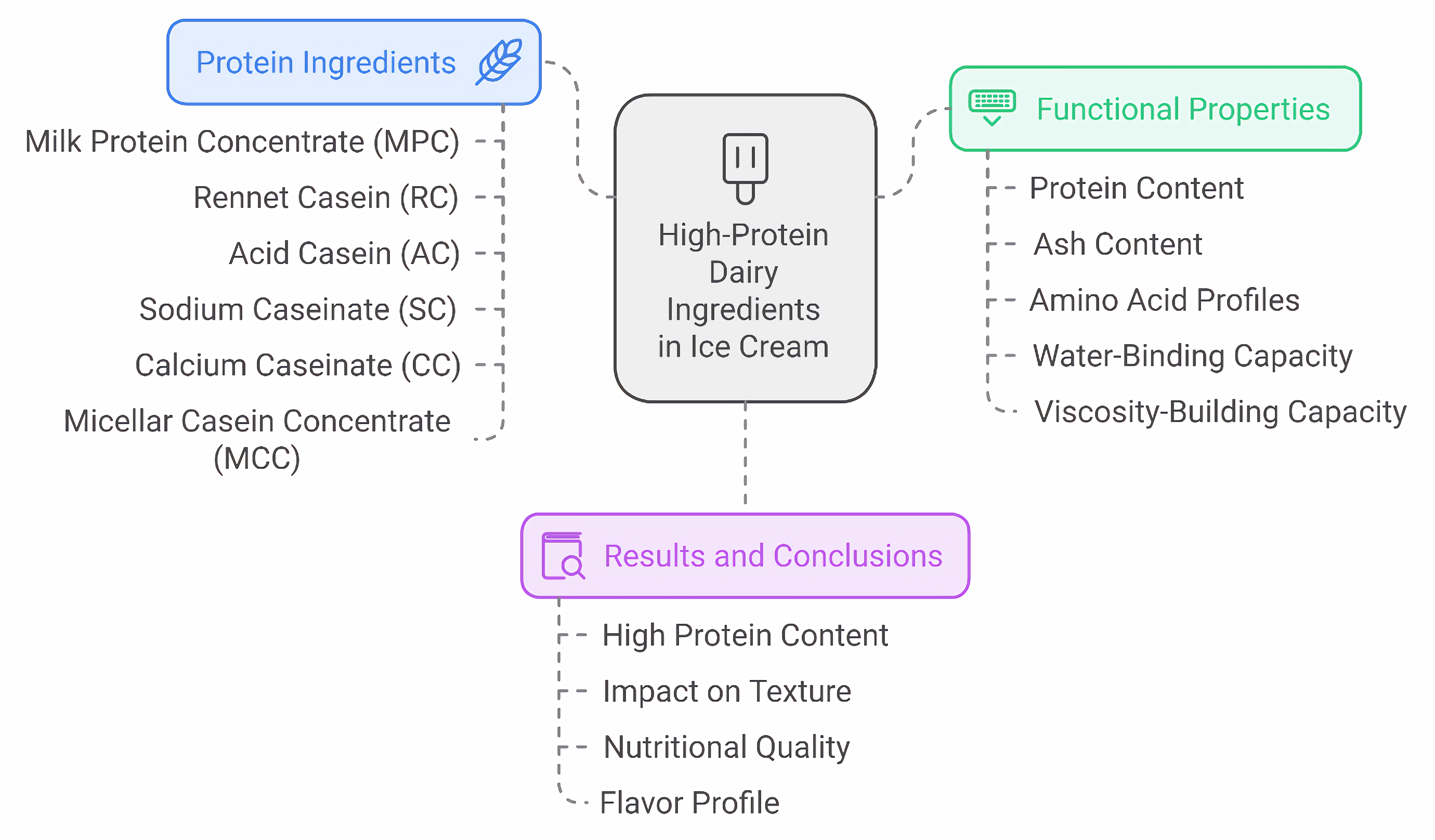
Material and Methods: Various milk-based protein ingredients, including milk protein concentrate, rennet casein, acid casein, sodium caseinate, calcium caseinate, and micellar casein concentrate, have been analyzed for their protein content, ash content, amino acid profiles, and functional characteristics such as water-binding and viscosity-building capacities. This comprehensive assessment was conducted to assess their potential to replicate the creamy texture of traditional ice creams.
Results and Conclusion: The protein content of the ingredients varied from 82.5–92.7%, with acid casein and sodium caseinate showing the highest levels. This high protein content contributed to excellent water-binding and viscosity-building characteristics, which are critical for replicating the creamy texture of ice creams. Rennet casein and sodium caseinate included higher ash contents, which could affect the ice creams' mineral content and overall flavor profile. Although milk protein concentrate, sodium caseinate, and micellar casein concentrate lacked certain essential amino acids, they included biological values of over 50%, thereby enhancing the nutritional quality of low-fat ice cream formulations. The potential of these high-protein dairy ingredients to significantly affect the development of healthier ice cream products with desirable sensory and physicochemical characteristics cannot be exaggerated. Incorporating these ingredients into low-fat ice cream offers a promising approach to creating further nutritious products.
Conflict of interest: The authors declare no conflict of interest.
1. Introduction
Ice cream is one of the most famous frozen desserts used in most countries. According to the FDA (2014), ice cream should contain more than 10% milk fat or 10% non-fat milk solids [1]. If fat content limitations are modified in recipes, high-protein dairy-based ingredients can be used instead of milk fat. Modern technologies in the dairy industry, including microfiltration (MF), ultrafiltration (UF), nanofiltration (NF), and ion exchange (IE), have made it possible to achieve a wide range of high-protein ingredients with specific functional and technological characteristics that can optimize composition and technological aspects of food production [2,3].
In addition to the functionality of dairy-based ingredients for food uses (water binding and viscosity building; emulsification; flavor enhancement; gelling and heat setting; whipping, foaming, aeration, and so on), milk proteins include excellent nutritional value [4]. Due to their distinctive physiological characteristics, high protein ingredients are vital compounds of functional and specialized foods for various age groups, ranging from infant formulations to elderly nutrition [5,6]. Research worldwide verifies the benefits of high-protein diets in weight management, glycemic index regulation, bone health maintenance, muscle loss prevention, and sarcopenia risk [7‒9].
Moreover, modern trends in healthy eating guide consumers to consume foods with high protein content. In 2020, foods with high protein content accounted for nearly 50% of the consumer market [10]. Increased consumer demand for high-protein foods derives innovation in industrial production, addressing the diversity of dairy ingredients and knowledge of their functional characteristics and nutritional values [11].
Expansion of the range of products with increased protein contents is associated with the priority criteria for consumers to choose food products, including attractive organoleptic characteristics, low-calorie contents, health benefits, and safety. Thus, ice creams with decreased fat due to increased protein content should include specified organoleptic characteristics and high biological values [12, 13]. This study collected data on high-protein dairy-based ingredients and technological aspects of their production, as well as functional and technological characteristics that could affect quality indicators of low-fat ice creams. It also compared their nutritional values, focusing on amino acid composition.
2. Materials and Methods
Although skim milk is a secondary resource, it is rich in nutrients, particularly protein, allowing it to produce a wide range of high-protein ingredients with increased nutritional values. Samples of high-protein ingredients were made by foreign manufacturers (Lithuania and Australia) and supplied by Unifood, St. Petersburg, Russia [14]. Chemical compounds (Table 1 and Figure 1) and functional-technological characteristics (Table 2) of high-protein dairy-based ingredients were:
- Milk protein concentrate (MPC)
- Casein such as rennet casein (RC) and acid casein (AC)
- Caseinates such as sodium caseinate (SC) and calcium caseinate (CC)
- Micellar casein concentrate (MCC)
2.2 Methods
2.2.1 Protein and amino acid analyses [15]
The energy values of high-protein ingredients were calculated using coefficients of the energy values of nutrients, such as 3.8 kcal.g-1 for proteins and carbohydrates and 8.9 kcal.g-1 for fats.
The National Standard of the Russian Federation (NSRF) 55577-2013 was used to assess the energy values of the high-protein ingredients based on skim milk. This standard is entitled “specialized and functional food products. Information on distinctive features and efficiency” [16]. According to NSRF 55577-2013, a high-protein product must provide at least 20% of the energy value from proteins. To calculate the amino acid score, the content of each essential amino acid of the investigated ingredient was compared with its content in the reference protein (FAO WHO, 2011) by Eq. 1:
Where, Аx was the mass fraction of an essential amino acid of the investigated ingredient, g.100g-1 protein, and A was the mass fraction of an essential amino acid in the reference protein, g.100g-1 protein.
An amino acid with a scoring rate of less than 100% was called “limiting.” In the presence of several limiting amino acids in the composition of the product/ingredient, the amino acid with the lowest amino acid score was called the “first limiting amino acid.” The biological value of the protein component was assessed using Eqs. 2–4 suggested by Professors I. A. Rogov and N. N. Lipatov, which included coefficients of differences of the amino-acid score (CDAAS, %) and biological value (BC, %). In particular, CDAAS (%) showed the average excess of the amino acid score of essential amino acids, compared to the lowest score of an essential amino acid.
Where, ∆DAAS was the difference between the amino-acid score calculated based on Eq. 3 and n was the number of essential amino acids. Where, Ci was the score of “i” th essential amino acid (%), and Cmin was the minimum score of essential amino acids (%). The protein component's biological value (BV) was assessed using Eq. 4.
3. Results and Discussion
3.1 High-protein Composition and Energy Value
Analysis of high-protein ingredients derived from skim milk, following NSRF 55577-2013 standards, verifying that all the samples were qualified as high-protein products, contributing more than 20% of their total energy value from protein (Table 3 and Figure 2). Sodium caseinate (SC) varied, offering the highest energy value at 360.4 kcal.100g-1, closely followed by acid casein (AC) at 359.6 kcal.100g-1. Protein contributes over 95% of the total caloric content in most samples, underscoring its significance (Figure 2) [4]. These characteristics make these ingredients excellent candidates for high-protein formulations, particularly in low-fat ice creams, where nutritional value is critical without compromising sensory appeal. SC and AC emerge as the top performers when breaking down the protein content, with protein concentrations reaching 92.7% and 92.0%, respectively. Although lactose and fat contents were minimal, they varied within the samples. For example, SC included the lowest lactose content (0.3%), while RC (rennet casein) included the highest fat content (up to 2.0%) [17]. These differences were more than nutritional details alone, as they affected the functional roles of the ingredients in food products.
3.2 Protein and Amino Acid Composition
In addition to total protein content, the amino acid composition of these high-protein ingredients is critical to their nutritional quality. Compared to FAO/WHO 2011 standards, a rich profile of essential amino acids (EAA) is seen (Table 4 and Figure 3). For example, micellar casein (MCC) and milk protein concentrate (MPC) delivered high levels of leucine (9.8 g.100g-1 protein for MCC) and lysine (7.90 g.100g-1 protein for MCC), which are vital for muscle growth and repair [18]. However, RC was limited by its lower lysine content, which decreased its overall biological value (BV) compared to other ingredients (Figure 3). The biological value of these protein ingredients varied significantly. The MCC, MPC, and SC were particularly advantageous, as they lacked limiting amino acids, resulting in biological values of 58.19, 72.23, and 75.35%, respectively. These characteristics make them highly appropriate for enriching the protein content of low-fat ice creams, which aims to enhance nutritional value without losing quality (Table 5) [19,20].
3.3 Biochemical Pathways and Production Processes
The high-protein ingredients analyzed were produced through various biochemical and biotechnological processes such as coagulation, ultrafiltration, and dehydration (Figure 4). These methods included distinct products with specific functional characteristics. For example, caseinates produced through enzymatic or acid coagulation include excellent emulsifying and gelling characteristics, making them ideal for improving the texture and mouthfeel of ice creams [21]. The SC and AC, known for their high protein content, include unique water-binding and viscosity-enhancing capabilities. These characteristics are key for replicating the creamy texture of full-fat ice creams in low-fat versions, ensuring that the final product still appeals to consumers despite decreased fat content [22,23].
3.4 Physicochemical and Sensory Effects
The type and concentration of high-protein ingredients profoundly affect the physicochemical characteristics of low-fat ice creams. Proteins, especially SC and MCC, play critical roles in binding water and creating emulsions, which are essential for maintaining the desired texture and stability. These ingredients help control ice crystal growth during freezing and storage and contribute to smoother, further homogenous products (Table 1) [24,25]. From a sensory perspective, these proteins' ability to prevent fat globules from coalescing enhances the overall appearance and mouthfeel of the ice cream. For example, MPC provides a balanced combination of protein and fat that smooths the texture without introducing off-flavors that can occur with proteins high in ash content, such as RC and SC [26‒28]. Furthermore, the gelling capability of SC contributes to a firmer structure, which is critical for product stability over time [29].
3.5 Functional and Technological Benefits
Functional characteristics of high-protein ingredients are more significant than simple nutritional improvements as they are essential for maintaining the quality of low-fat ice creams during processing and storage. Characteristics such as solubility, dispersibility, and heat stability at neutral pH are critical for ensuring product integrity [30]. For example, excellent solubility of these proteins prevents sedimentation and helps maintain uniformity of the final product. Additionally, their emulsifying characteristics ensure that fat is evenly distributed, preventing separation and enhancing texture [31]. These protein water-binding and viscosity-enhancing capabilities allow for significant fat decrease without losing the creamy smooth textures that consumers expect. This is particularly important as demand increases for lower-calorie options that do not compromise taste [32]. Furthermore, the ability of these ingredients to contribute to browning and color development during cooking enhances the visual appeal of ice creams, making them further attractive to consumers [33,34].
3.6 Challenges and Limitations
Despite the advantages of using high-protein dairy ingredients in low-fat ice creams, challenges are still reported. One significant issue includes the potential for off-flavors, particularly with higher ash-content ingredients such as RC and SC. These off-flavors can negatively affect the overall taste profile of the ice creams, making it essential to carefully select and combine ingredients to achieve the desired flavor [35]. Additionally, ingredients such as RC with higher moisture content can affect the ice cream texture and decrease its shelf life, needing formulation adjustments [36].
3.7 Future Directions
The results of this study highlight several opportunities for further studies. One opportunity includes the synergistic effects of combining various protein types to optimize low-fat ice cream's sensory and physicochemical characteristics. Investigating how protein modifications such as enzymatic treatments or cross-linking that further improve functionality can lead to further versatile uses of these ingredients [37,38]. Addressing off-flavors and moisture content challenges is a priority for improving product quality. Innovations in biotechnology, including advanced ultrafiltration techniques and enzymatic modifications, offer promising ways to develop better high-protein ingredients that meet nutritional and sensory expectations [39,40]. Further studies in this field will likely lead to additional innovative solutions that align with consumer preferences for healthier, more enjoyable food options [41].
4. Conclusion
In conclusion, incorporating high-protein dairy-based ingredients into low-fat ice cream formulations offers a promising approach to creating healthier dessert options that retain desirable sensory and physicochemical characteristics. These ingredients can be designed to enhance texture, stability, and overall quality using modern biotechnological processes such as ultrafiltration and enzymatic treatments. Comparative analysis of various high-protein ingredients highlights their unique contributions, with sodium caseinate and micellar casein highlighting their exceptional water-binding, gelling, and emulsification characteristics. While challenges such as managing off-flavors and moisture content are still addressed, developments of high-protein dairy ingredients provide significant opportunities for innovations in the food industry. Future studies should focus on optimizing protein blends and investigating new processing techniques to further enhance the appeal and functionality of low-fat ice creams. Integrating biochemistry and biotechnology in food science drives advancements that align with consumer demands for nutritious, delicious, and sustainable food products.
5. Acknowledgements
This study was funded by the Science Committee of the Ministry of Education and Science, Republic of Kazakhstan (grant no. AP19175509).
6. Conflict of Interest
The authors declare no conflict of interest.
- Caseins
- Dairy Products
- Dietary Proteins
- Food Texture
- Ice Cream
- Nutritional Value
##submission.howToCite##
参考
Electronic Code of Federal Regulations (e-CFR). Title 21: Food and drugs. Part 135-Frozen Desserts; §135.110 Ice cream and frozen custard [Internet]. U.S. Food and Drug Administration. Available from: https://www.ecfr.gov/current/title-21/chapter-I/subchapter-B/part-135/subpart-B/section-135.110 [Accessed 27 October 2023].
Melnikova EI, Stanislavskaya EB, Bogdanova EV, Shabalova ED. Micellar casein production and use in dairy protein industry. Food Process Tech Technol. 2022; 52(3): 592-601. (In Russian). https://doi.org/10.21603/2074-9414-2022-3-2389
Meena GS, Singh AK, Panjagari NR, Arora S. Milk protein concentrates: Opportunities and challenges. J Food Sci Technol. 2017; 54(10): 3010-3024. https://doi.org/10.1007/s13197-017-2796-0
Suthar J, Jana A, Balakrishnan S. High protein milk ingredients-a tool for value-addition to dairy and food products. J Dairy Vet Anim Res. 2017; 6(1): 259-265. https://doi.org/10.15406/jdvar.2017.06.00171
Thompkinson DK, Kharb S. Aspects of infant food formulation. Compr Rev Food Sci Food Saf. 2007; 6(4): 79-102. https://doi.org/10.1111/j.1541-4337.2007.00020.x
Phillips SM, Tang JE, Moore DR. The role of milk- and soy-based protein in support of muscle protein synthesis and muscle protein accretion in young and elderly persons. J Am Coll Nutr. 2009 ;28(4): 343-354. https://doi.org/10.1080/07315724.2009.10718096
Pasiakos SM. Metabolic advantages of higher protein diets and benefits of dairy foods on weight management, glycemic regulation and bone. J Food Sci. 2015; 80(Suppl 1): A2-A7. https://doi.org/10.1111/1750-3841.12804
Josse AR, Atkinson SA, Tarnopolsky MA, Phillips SM. Diets higher in dairy foods and dietary protein support bone health during diet- and exercise-induced weight loss in overweight and obese premenopausal women. J Clin Endocrinol Metab. 2012; 97(1): 251-260. https://doi.org/10.1210/jc.2011-2165
Phillips SM, Martinson W. Nutrient-rich, high-quality, protein-containing dairy foods in combination with exercise in aging persons to mitigate sarcopenia. Nutr Rev. 2019; 77(4): 216-229. https://doi.org/10.1093/nutrit/nuy062
Cornall J. A dive into high protein trends, claims and applications. Dairy Reporter. 2021 Aug 20 [cited 6 October 2023]. Available from: https://www.dairyreporter.com/Article/2021/08/20/A-dive-into-high-protein-trends-claims-and-applications
Jana AK. High Protein Dairy Foods: Technological Considerations, In: Singh RRB, Arora S, Sharma GS, editors. Dairy Foods. Woodhead Publishing, Cambridge. 2022: p.159-193. https://doi.org/10.1016/B978-0-12-820478-8.00013-4
Teixeira NS, de Alcântara M, Martins IB, Chávez DW, Rosenthal A, Chaves AC, et al. Attitudes and conceptions of Brazilian consumers toward ice cream and protein addition. Food Qual Prefer. 2023; 108: 104881. https://doi.org/10.1016/j.foodqual.2023.104881
Kwak HS, Meullenet JF, Lee Y. Sensory profile, consumer acceptance and driving sensory attributes for commercial vanilla ice creams marketed in the United States. Int J Dairy Technol. 2016; 69(3): 346-355. https://doi.org/10.1111/1471-0307.12314
Nadtochii LA, Karl A, Khashim MA, Pavlova AS, Bendenko EA. Investigation of the properties of commercial high-protein dairy-based products. Polzunov Vestn. 2020; (2): 63-69. (In Russian). https://doi.org/10.25712/ASTU.2072-8921.2020.02.012
Nadtochii LA, Baranenko DA, Lu W, Safronova AV, Lepeshkin AI, Ivanova VA. Rheological and physicochemical properties of yogurt with oat–chia seeds composites. Agron Res. 2020; 18(3): 1816-1828. https://doi.org/10.15159/AR.20.142
Federal Agency for Technical Regulation and Metrology. Functional foodstuffs. Information about distinctive signs and efficiency claims. GOST R 55577-2013 [Internet]. Moscow: Standartinform; 2014 [cited 1 October 2014]. (In Russian). Available from: https://internet-law.ru/gosts/gost/55874/
Sharma A, Jana AH, Chavan RS. Functionality of milk powders and milk-based powders for end use applications-A review. Compr Rev Food Sci Food Saf. 2012; 11(5): 518-528. https://doi.org/10.1111/j.1541-4337.2012.00199.x
Huppertz T. Novel Applications of Enzymes in the Dairy Sector: Optimizing Functional Properties of Milk Proteins by Enzymatic Cross-Linking, In: Corredig M, editor. Dairy-Derived Ingredients: Food and Nutraceutical Uses. Woodhead Publishing, Cambridge. 2009: pp. 394-416. https://doi.org/10.1533/9781845697198.3.394
Goff HD. Ice Cream, In: Fox PF, McSweeney PLH, editors. Advanced Dairy Chemistry, 3rd Edition. Springer, New York. 2006: pp. 441-474. https://doi.org/10.1007/0-387-28813-9_12
Muse MR, Hartel RW. Ice cream structural elements that affect melting rate and hardness. J Dairy Sci. 2004; 87(1): 1-10. https://doi.org/10.3168/jds.S0022-0302(04)73135-5
Javidi F, Razavi SM. New Hydrocolloids in Ice Cream, In: Razavi SM, editor. Emerging Natural Hydrocolloids: Rheology and Functions. Wiley. 2019: pp. 525-547. https://doi.org/10.1002/9781119418511.ch21
Li M, Correa-González YX, Li T, Wu T. Assessing ice recrystallization inhibition effect of stabilizer in ice cream systems: Methods and influencing factors. Food Hydrocoll. 2024; 134: 110743. https://doi.org/10.1016/j.foodhyd.2024.110743
Hartel RW, Rankin SA, Bradley RL Jr. A 100-year review: Milestones in the development of frozen desserts. J Dairy Sci. 2017; 100(12): 10014-1025. https://doi.org/10.3168/jds.2017-13278
Singh H, Ye A. Interactions and Functionality of Milk Proteins in Food Emulsions, In: Boland M, Singh H, Thompson A, editors. Milk Proteins, 3rd Edition. Academic Press, London. 2020: p. 467-497. https://doi.org/10.1016/B978-0-12-815251-5.00012-8
Taha A, Casanova F, Šimonis P, Stankevič V, Gomaa MA, Stirkė A. Pulsed electric field: fundamentals and effects on the structural and techno-functional properties of dairy and plant proteins. Foods. 2022; 11(11): 1556. https://doi.org/10.3390/foods11111556
Sodini I, Morin P, Olabi A, Jiménez-Flores R. Compositional and functional properties of buttermilk: A comparison between sweet, sour and whey buttermilk. J Dairy Sci. 2006; 89(2): 525-536. https://doi.org/10.3168/jds.S0022-0302(06)72115-4
Guo M, Wang G. History of Whey Production and Whey Protein Manufacturing, In: Guo M, Wang G, editors. Whey Protein: Production, Chemistry, Functionality and Applications. Wiley-Blackwell, Chichester. 2019: pp.1-12. https://doi.org/10.1002/9781119256052.ch1
Huppertz T, de Kruif CG. Structure and stability of nanogel particles prepared by internal cross-linking of casein micelles. Int Dairy J. 2008; 18(5): 556-565. https://doi.org/10.1016/j.idairyj.2007.10.009
Smithers GW. Whey and whey proteins-From 'gutter-to-gold'. Int Dairy J. 2008; 18(7): 695-704. https://doi.org/10.1016/j.idairyj.2008.03.008
Anema SG, Li Y. Association of denatured whey proteins with casein micelles in heated reconstituted skim milk and its effect on casein micelle size. J Dairy Res. 2003; 70(1): 73-83. https://doi.org/10.1017/S0022029902005903
Augustin MA, Udabage P. Influence of processing on functionality of milk and dairy proteins. Adv Food Nutr Res. 2007; 53: 1-38. https://doi.org/10.1016/S1043-4526(07)53001-9
Goff HD, Hartel RW. Ice Cream, 7th ed. Springer, New York. 2013. https://doi.org/10.1007/978-1-4614-6096-1
Singh H, Ye A. Structural and biochemical factors affecting the digestion of protein-stabilized emulsions. Curr Opin Colloid Interface Sci. 2013; 18(4): 360-370. https://doi.org/10.1016/j.cocis.2013.04.006
Albano KM, Cavallieri AL, Nicoletti VR. Electrostatic interaction between proteins and polysaccharides: physicochemical aspects and applications in emulsion stabilization. Food Rev Int. 2019; 35(1): 54-89. https://doi.org/10.1080/87559129.2018.1467442
Tolve R, Zanoni M, Ferrentino G, Gonzalez-Ortega R, Sportiello L, Scampicchio M, Favati F. Dietary fibers effects on physical, thermal and sensory properties of low-fat ice cream. LWT. 2024; 199: 116094. https://doi.org/10.1016/j.lwt.2024.116094
Das N, Hooda A. Chemistry and Different Aspects of Ice Cream, In: The Chemistry of Milk and Milk Products. Oakville (ON): Apple Academic Press. 2023: p. 65-86. https://doi.org/10.1201/9781003340706
Goff HD, Hartel RW. Ice cream structural elements that affect melting rate and hardness. J Dairy Sci. 2004; 87(1): 1-10. https://doi.org/10.3168/jds.S0022-0302(04)73135-5
Jin Y, Gu Z, Cheng L, Li C, Li Z, Hong Y. Physicochemical characterization of debranched waxy rice starches and their effect on the quality of low-fat ice cream mixtures. Food Biosci. 2024; 57: 103485. https://doi.org/10.1016/j.fbio.2023.103485
Atalar I, Kurt A, Gul O, Yazici F. Improved physicochemical, rheological and bioactive properties of ice cream: enrichment with high-pressure homogenized hazelnut milk. Int J Gastr Food Sci. 2021; 24: 100358. https://doi.org/10.1016/j.ijgfs.2021.100358
McSweeney PLH, Fox PF. Advanced Dairy Chemistry. Volume 1B: Proteins: Applied Aspects, 4th Edition. Springer, New York. 2013: pp. 30-45. https://doi.org/10.1007/978-1-4614-4714-6
Guven M, Karaca OB. The effects of varying sugar content and fruit concentration on the physical properties of vanilla and fruit ice-cream-type frozen yogurts. Int J Dairy Technol. 2002; 55(1): 27-31. https://doi.org/10.1046/j.1471-0307.2002.00034.x.
- 摘要 ##plugins.themes.ojsPlusA.frontend.article.viewed##: 1293 ##plugins.themes.ojsPlusA.frontend.article.times##
- pdf (English) ##plugins.themes.ojsPlusA.frontend.article.downloaded##: 336 ##plugins.themes.ojsPlusA.frontend.article.times##