Association between the Microbial Polyhydroxyalkanoate Biopolyesters and Food Chains - Mirrored by Contributions to Applied Food Biotechnology, 2014–2024
食品生物技术的应用,
卷 11 编号 1 (2024),
18 十一月 2023
,
第 e33 页
https://doi.org/10.22037/afb.v11i1.46138
摘要
Background and Objective: In 2014, the first issue of Applied Food Biotechnology was launched. In 2024, the journal celebrates its tenth anniversary. As an editorial board member of the journal, I take the opportunity to appreciate this jubilee by reflecting articles published in this journal at the intersection of the food chain and biotechnological production of polyhydroxyalkanoates biopolyesters, which are sustainable and intrinsically natural alternatives to conventional plastics. Polyhydroxyalkanoates are biodegradable polymers produced via microbial cultivation, predominantly resorting to heterotrophic substrates. As an increasing trend, polyhydroxyalkanoates are produced from various food and agro-industrial byproducts, which can be upgraded to raw biotechnological materials.
Results and Conclusion: The present publication addressed the multifaceted role of food chain as a source of raw materials (carbon feedstocks) for polyhydroxyalkanoates production, a provider of organic filler materials to enhance characteristics of polyhydroxyalkanoates and a target for the use of these biopolyesters in food packaging. Based on previous contributions to Applied Food Biotechnology, the manuscript assesses environmental and economic implications of integrating polyhydroxyalkanoates production within the food chain, highlighting the potential to decrease food-industrial wastes, carbon footprints and coproduction of polyhydroxyalkanoates and additional valued bioproducts. This includes challenges associated to scaling up polyhydroxyalkanoates production such as feedstock availability, production costs and market acceptance. By analyzing current advancements and case studies previously published in Applied Food Biotechnology, this editorial paper provides insights into how polyhydroxyalkanoates biopolyesters could effectively be integrated into existing food supply chains, potentially transforming waste streams into value-added bioproducts. Presented publications suggested that if appropriate technological and policy supports provided, polyhydroxyalkanoates could play a critical role in enhancing sustainability of the plastics industry and global food safety.
- Introduction
Microbial polyhydroxyalkanoate polyesters (PHA) are interesting biomaterials due to their intrinsically natural characteristics [1]. Their production is embedded into the patterns of circular economy and matches targets of the UN Sustainable Development Goals [2] and Principles of Green Chemistry [3]. Although PHA is still underrepresented in the biopolymer market for quantity, it is currently experiencing “a new wave of industrialization” with a rapid increase in annual growth rates [4]. Being biobased (based on renewable resources), biosynthesized (produced in vivo by the intracellular biocatalytic toolbox of living organisms), biocompatible (no known threats of PHA to nature and its organisms) and biodegradable (complete disintegration into the original starting materials CO2 and water by the action of living organisms in diverse environments) makes PHAs the “future green materials of choice” when it comes to substituting end-of-pipe petroplastics in various fields of uses [5,6]. These uses predominately encompass single-use plastics such as packaging materials, drinking straws or cutlery. Furthermore, high-end uses in various industries are addressed, including agriculture, aquaculture and biomedicine [4]. At a first glance, it might not be trivial for non-experts to figure out how PHA biopolyesters and the food chain could be interrelated. How are “bioplastics” linked to human nutrition and hence to foods and feeds? Why are these materials interested by a scientific journal such as Applied Food Biotechnology? In fact, there are several connections between these areas as follows:
- First, the biobased nature of PHA biopolyesters needs appropriate carbon sources for their production [1]. It was established for decades to carry out heterotrophic PHA production based on such carbon sources, which play roles in food and feed productions. Carbohydrates such as starch, sucrose and edible oils are typically served as feedstocks for PHA production; thus, conflicting with food safety and consuming land areas. This, of course, provokes ethical conflicts such as the “plate versus plastic” controversy. It was not before the late 1990s and early 2000s, when a paradigm shift in the scientific community occurred. Researchers started to replace such nutritionally important materials with the second generation feedstocks and hence organic wastes and surplus materials [7–9]. The first important connection between the PHA and food chain becomes visible. Agroindustry and the food processing industry generate numerous organic side products that can be used as feedstocks for biotechnological purposes such as PHA production instead of being disposed. This can occur either directly or after converting these typically complex materials to accessible carbon sources via appropriate upstream processing strategies. Moreover, optimization strategies to adapt the cultivation media to such novel feedstocks is necessary [10]. Prime examples include use of waste cooking and frying oils [11,12], surplus whey from dairy industries [13], molasses and other sugar and candy industrial waste streams [14–16], bakery wastes [17], wastes from rice production [18], fruit wastes [19,20], oils extracted from and hydrolysates of spent coffee grounds [21–23], crude glycerol from biodiesel production based on waste cooking oil or slaughtering wastes [24] or low-quality biodiesel fractions originating from animal processing [25]. Personally, the author of this article worked for several years on this topic. As a PhD student, the author was engaged in the EU-FP5 project WHEYPOL (2001–2004), where lactose-rich waste streams from dairy industries were used for PHA production (https://online.tugraz.at/tug_online/pl/ui/$ctx/fdb_detail.ansicht?cvfanr=F12277&cvorgnr=37&v_proces=8&sprache=2). Later, the author coordinated the EU-FP7 project ANIMPOL (2010–2012), which studied the biotechnological conversion of carbon-containing waste streams from the animal processing industries for eco-efficient production of high added PHA biopolyesters (https://cordis.europa.eu/project/id/245084/results).
- Food packaging, which serves for storage, transportation and commercialization of foods, needing appropriate packaging materials. Food packaging is typically based on petrochemical plastics due to their inherent benefits such as low density, transparency and high barrier against oxygen, water vapor, CO2 and UV. Moreover, the customers expect that such packaging materials act as barriers for essential food flavors. In food packaging uses, high oxygen and water vapor barriers (gas barriers) are the most important prerequisite for preserving quality of the products throughout their entire life cycle. Quantities of oxygen and CO2, gas atmosphere in the packaging and respiration rates (gas mass transfer) of the packaging must be addressed to optimally preserve the packaged foods. Variations in color, taste and smell, oxidation of lipids, formation of microorganisms and damages to nutrients need to be avoided [26].
Packaging, especially in the food sector, should not only be biological such as bio-based and biodegradable (compostable), but should include a similar or improved performance to established packaging materials. Based on petrochemical established plastics, these are expected to outperform established packaging materials [27]. To meet these requirements, the packaging industry often uses expensive multilayer co-extruded or laminated plastic films to combine the respective techno-functional characteristics of various polymers [28]. This means that food packaging is often high technology. Established polymer films used for food packaging frequently consist of ethylene vinyl alcohol (EVOH) copolymers as one layer to create a sufficient oxygen barrier (important to avoid aerobic perishing of foods). However, such polymers used for these uses are petroleum-based (not biobased) and their combination with other polymers in various layers damages recyclability since monomaterials (e.g., EVOH) with high purity are needed for reprocessing (recycling) [29]. As an emerging trend, we witness an increasing number of studies substituting petrochemical food packaging such as EVOH by natural alternatives. A prime example includes whey protein-based films for food packaging. Whey retentate protein coating can extend the shelf life of foods due to its high barrier characteristics against gases such as oxygen [30]. Future developments should focus on use of packaging carrier layers made of PHA (biotechnologically produced from whey permeate, a surplus product of foods, dairies and industries), which includes poorer gas barrier characteristics but is water-repellent (PHA is hydrophobic) and another layer of whey protein film (high gas barrier, but more hydrophilic than PHA) on top. Moreover, it should be studied if another sealing layer of PHA adds further benefits to such novel food packaging materials. Thus, a surplus material of food production, whey, serves as a food packaging material.
Combining PHA films with filler materials of agro-industrial origin to design smart and functional food packaging materials is a novel idea. This was exemplified by Kovalcik and colleagues, who combined the microbial biopolyester PHA poly(3-hydroxybutyrate-co-3-hydroxyvalerate) [poly(3HB-co-3HV)] with lignin, an agricultural surplus product from corn, rice or cane sugar production via thermoforming to develop novel composite materials for packaging purposes. After assessing compatibility of the two raw materials, deep-drawn (thermoformed) composite specimens were assessed for effects of the lignin fraction (0–10 wt%) on melting and crystallization behaviors, thermo-oxidative stability and mechanical and viscoelastic (how elastic or crystalline is the material) characteristics and to assess their permeability or barrier for oxygen and CO2. The incorporated lignin was highly compatible with the bulk materials used (microbial PHA) and acted as an active additive through reinforcing effects (better tensile strength; improvement of viscoelastic characteristics). As intended, gas permeability decreased by combining PHA with 1 wt% lignin. Moreover, permeability decreased by 77% for oxygen and by 91% for CO2, compared to native PHA biopolyester samples. In addition, the low thermo-oxidation stability, a typical characteristic of pure PHA, increased for the lignin-containing materials. The first report on thermoformed composite materials of microbial poly(3HB-co-3HV) and lignin introduced a new class of bio-based polymer materials that could further be used for the packaging of various perishable goods [31]. The subsequent section summarizes previous contributions to Applied Food Biotechnology, which draw a holistic picture of the interrelations between PHA biopolyesters and the food chain.
- Individual Contributions
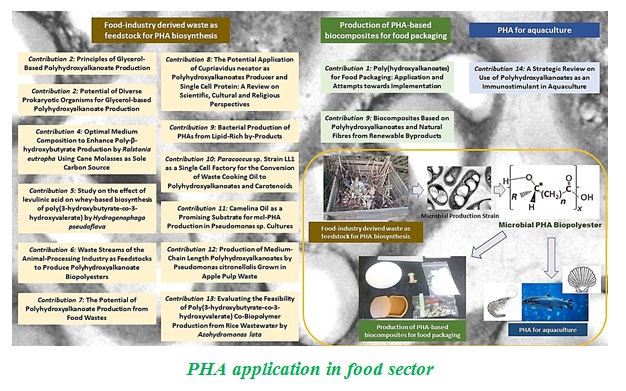
2.1. Contribution 1. Poly(hydroxyalkanoates) for Food Packaging: Uses and Attempts towards Implementation
This review article, published as the first one in the journal first issue, summarized the facts making PHA biopolyesters promising materials able to compete with petrochemical plastics in the food packaging sector. The article addressed shortcomings in specific aspects of PHA material performance and highlighted economic factors of their biosynthesis and purification as existing hurdles on the way towards the market penetration of PHA for food packaging. The review discussed advantages and drawbacks of PHAs as food packaging materials and provided examples on how PHA material characteristics could be upgraded by developing novel composite materials. This included use of nanoparticles of diverse origins to create novel nanocomposites with tailored gas permeation behaviors [32].
2.2. Contribution 2. Principles of Glycerol-based Polyhydroxyalkanoate Production
Glycerol-based PHA production and challenges of using crude glycerol as a feedstock in biotechnology were addressed in this review article, which shed light on the metabolic background of PHA production using glycerol as a carbon source. Particularities of glycerol-based PHA biosynthesis were discussed as well. This included effects of inhibitors present in crude glycerol stemming from the biodiesel production process, calling for purification steps of the raw materials. Moreover, biosynthesis of PHA with typically low-molecular mass when using glycerol as carbon source and resulting effects of such low-molecular mass on polymer processing and characteristics were discussed [33].
2.3. Contribution 3. Potential of Diverse Prokaryotic Organisms for Glycerol-based Polyhydroxyalkanoate Production
As previously stated, glycerol is a major product of biodiesel production, which in turn is based on waste materials of gastronomy, namely waste cooking oil, or on waste lipids from rendering and slaughtering industries. The contribution collected available studies describing the performance of various bacterial and haloarchaeal wild-type species, mixed microbial cultures and presented studies on the use of genetically engineered organisms as production strains for glycerol-based PHA biosynthesis. Therefore, this article dived deeply into microbiology. Kinetic data for microbial growth and PHA accumulation, thermo-mechanical characteristics of recovered glycerol-based PHA samples and mathematical models established by various research teams to describe glycerol-based PHA production were included in this review article, providing an overview of the state of knowledge at that time also providing an outlook to expected developments [34].
2.4. Contribution 4. Optimal Medium Composition to Enhance Poly-β-hydroxybutyrate Production by Ralstonia eutropha Using Cane Molasses as Sole Carbon Source
Bozorg and colleagues studied growth and poly(3-hydroxybutyrate) [P(3HB)] biosynthesis using Cupriavidus necator, previously classified as Ralstonia eutropha, on various inexpensive, abundant carbon sources. Carbon sources were originated from food and feed industries and included sugar cane molasses, beet molasses, soya bean waste and corn steep liquor. Authors used batch cultivation setups for their experiments. Using sugar cane molasses resulted in production of 0.49 g∙l-1 P(3HB), which made this surplus material the most efficient carbon source within all the assessed materials for the production strain. To improve biomass growth and P(3HB) biosynthesis, cane molasses was pretreated variously. Using sulfuric acid to remove heavy metals and suspended impurities resulted in enhancements in P(3HB) production of 33%. Additionally, urea and corn steep liquor were used as sources of nitrogen, minerals and vitamins. Composition of the molasses-based cultivation media was optimized using response surface methodology and 2n-factorial central composite design, resulting in maximum biomass and P(3HB) concentration of 5.03 and 1.63 g∙l-1, respectively [35].
2.5. Contribution 5. Study on the Effects of Levulinic Acid on Whey-based Biosynthesis of Poly(3-hydroxybutyrate-co-3-hydroxyvalerate) by Hydrogenophaga pseudoflava
This experimental study described production of PHA copolyesters consisting of 3-hydroxybutyrate (3HB) and 3-hydroxyvalerate (3HV) monomers and hence P(3HB-co-3HV). For the first time, bacterial strain of Hydrogenophaga pseudoflava was used for P(3HB-co-3HV) production based on a novel substrate/co-substrate combination. While whey permeate from dairy industry was used as the major carbon source for biosynthesis of catalytically active biomass and 3HB, levulinic acid, originating from the chemical conversion of lignocellulosic feedstocks of agricultural origin, was used as a precursor compound structurally linked to 3HV, allowing for PHA copolyester production. This strategy aimed at increased cost efficiency in P(3HB-co-3HV) production, together with enhanced material quality of P(3HB-co-3HV), compared to highly crystalline P(3HB) homopolyester. It was shown that during nutritionally balanced growth of H. pseudoflava, levulinic acid drastically inhibited microbial growth at rather low concentrations of 0.2 g∙l-1; the growth inhibition constant Ki was assessed as 0.032. This suggested that this compound needed a careful supply at a low dosage during the first cultivation phase. Under nitrogen-limited cultivation conditions, strain inhibition by levulinic acid was less significant. The P(3HB-co-3HV) concentrations and volumetric productivities up to 4.2 g∙l-1 and 0.06 g∙l-1 h-1, respectively, were reached in dependence on levulinic acid supply. Moreover, P(3HB-co-3HV) composition when feeding mixtures of various whey/levulinic acid ratios revealed 3HV fractions in the co-polyester of 0–0.6 mol.mol-1. This study provided a proof-of-concept for the feasibility of combined uses of various waste and surplus materials from food and agro-industry for the generation of PHA biopolyesters with enhanced material characteristics [36].
2.6. Contribution 6. Waste Streams of the Animal-processing Industry as Feedstocks to Produce Polyhydroxyalkanoate Biopolyesters
The European animal processing industry, which includes slaughterhouses, rendering industry and sausage and ham productions, produces enormous quantities of organic side streams, which contain nearly 500,000 t of lipids in addition to substantial quantities of offal materials plus meats and bone meals. Value-adding strategies to use and upgrade these waste materials are needed, for example, for PHA production. The review article collected previous and current studies using these animal-based waste streams for PHA production, selected microbial production strains, diverse upstream processing techniques to generate accessible carbon sources from the raw materials, kinetics for growth and product formation, characterization of the produced PHA biopolyesters, environmental process analysis and economic feasibility of the new processes. Compared case studies provided evidence that use of animal processing wastes as inexpensive feedstocks for PHA production could definitely become economically viable, provided the use of optimized production strains, optimized cultivation regimes, short transportation distances for the raw materials and clear plans for use and commercialization of the produced biopolyesters [37].
Special issue
In 2019, increasing studies and development activities on PHA biopolyesters with context to the food chain provided reasons to launch a special issue of the journal, dedicated to the topic “Linking Food Industry to “Green Plastics” – Polyhydroxyalkanoate (PHA) Biopolyesters from Agro-industrial Byproducts for Securing Food Safety” [Applied Food Biotechnology 6(2), 2019], which was introduced by a key editorial article [38]. Indeed, the special issue motivated a total of eight various authorships worldwide to contribute their recent scientific results on the topic. The individual contributions are present in the following paragraphs.
2.7. Contribution 7. The Potential of Polyhydroxyalkanoate Production from Food Wastes
Brigham and Riedel provided a comprehensive review on the use of underused food wastes of various origin for PHA production. Background of this article included an enormous quantity of more than 1 billion tons of foods wasted year by year, which was not consumed by humans or animals and needed disposal, mostly by dumping in landfills or composting. Therefore, authors addressed an attractive idea of using such organic wastes as carbon sources for cultivation of value-added products, such as PHA biopolyesters. The review showed that wild type and engineered microbial strains could be used to efficiently convert food-derived waste streams to PHA. Generated PHA biopolyesters, depending on the monomeric composition, could have various thermal and mechanical characteristics, which in turn were useful for various technical uses. Importantly, as the take-home-message of the article, PHA production facilities needed establishment closely to sites where food waste accumulate, such as next to large landfills and food processing factories to save transportation costs [39].
2.8. Contribution 8. The Potential Application of Cupriavidus necator as Polyhydroxyalkanoates Producer and Single Cell Protein: A Review on Scientific, Cultural and Religious Perspectives
Chee et al. addressed the fact that conversion of byproducts from the food and agricultural industries provided an attractive strategy to minimize and upgrade wastes. In the article, they combined use of the C. necator strain as cell factory for PHA production and, based on its chemical composition, as a nutritional food or feed source. It was known for a long time that C. necator, owing to its high protein content, could be used as a source of single cell protein (SCP) for animal feed. When fed with PHA-rich C. necator biomass, larvae of the mealworm beetle (Tenebrio molitor) were shown to efficiently digest the non-PHA C. necator part of biomass as a source of protein, while excreting PHA granules in a highly pure form and thus providing an intrinsically biologically methods for PHA recovery. This review focused on the nutritional value of C. necator as a SCP source and associated safety aspects when used as animal feed. The novel combination of using byproducts from the agriculture and food industries as carbon feedstocks to produce SCP and PHA biopolyesters with the follow-up use of the SCP to cultivate T. molitor larvae was discussed with the public acceptance of using SCP and T. molitor biomass as food sources for human nutrition, depending on the global regions and cultural conditions [40].
2.9. Contribution 9. Biocomposites Based on Polyhydroxyalkanoates and Natural Fibers from Renewable Byproducts
Cinelli and colleagues used PHA biopolyesters and natural fibers as fillers for the generation of biobased composites. This approach attracted attentions from various end users from the packaging sector to producers of automotive components. In their article, authors produced biobased composites using compostable PHA biopolyesters plus natural fibers or fillers derived by wood industry and food wastes, namely legumes byproducts. P(3HB-co-3HV) copolyesters were processed with biobased and biodegradable plasticizers such as acetyl tributyl citrate and calcium carbonate as inorganic fillers. Variable quantities of natural fibers were added to the polymeric matrix for the production of composites. These green biocomposites were produced through melt extrusion and injection molding. Characterization of the novel composites was accomplished via thermal, rheological, mechanical and morphological studies. It was shown that characteristics of the generated biocomposites were fit with the requirements for the production of rigid food packaging materials, as well as other single use plastic items. Thus, the proof-of-concept for a new way of valorization of food residues was provided [41].
2.10. Contribution 10. Bacterial Production of PHAs from Lipid-rich Byproducts
Favaro and colleagues assessed potential of various lipid-rich side streams as biotechnological substrates such as crude glycerol from biodiesel manufacturing, low-quality biodiesel achieved from fatty waste streams of animal origin and inexpensive bacon rind, udder and tallow from slaughterhouses. Several new microbial isolates and PHA-producing microbes from strain collections were screened for their lipolytic activities needed to convert lipid-rich substrates and their capability for PHA production. In the context of isolation of new strains, interesting microbial species were isolated from soil. These strains were superior to strains isolated from further specific and selective sampling sites such as slaughterhouses. Significantly, two PHA production strains from the collections, C. necator DSM 545 and Pseudomonas oleovorans DSM 1045, were definitely promising. They were able to grow directly on all the lipid-rich substrates and produced various quantities of PHA biopolyesters, P(3HB) homopolyester and P(3HB-co-3HV) copolyesters [42].
2.11. Contribution 11. Paracoccus sp. Strain LL1 as a Single Cell Factory for the Conversion of Waste Cooking Oil to Polyhydroxyalkanoates and Carotenoids
Kumar and Kim addressed the fact that co-generation of other value-added bioproducts in addition to PHA by a similar microbial production strain during a similar cultivation cycle could help decrease the overall PHA production costs by up to 50%. For the first time, it was shown that PHA and carotenoids (especially astaxanthin that is important for aquaculture, especially farming of salmons and trout) could be produced in parallel by the halophilic Gram-negative strain of Paracoccus sp. LL1 using waste cooking oil as a food waste-derived carbon source. Paracoccus sp. LL1 was grown through batch cultivation mode in a defined mineral medium containing 1 vol% waste cooking oil. Various surfactants were used as emulsifiers to facilitate substrate utilization by the cells. Recovered PHA was characterized by fluorescent microscopy imaging, Fourier transform infra-red spectroscopy (FT-IR) and gas chromatography (GC). Used as a carbon source, waste cooking oil led to 1.0 g∙l-1 P(3HB-co-3HV) copolyester production with biosynthesis of 0.89 mg∙l-1 of carotenoids after a cultivation time of 96 h. Cell dry mass increased 2.7-fold when 0.1 vol% Tween-80 was used as emulsifier to enhance lipid distribution in the aqueous phase. It was shown for the first time that Paracoccus sp. LL1 constituted an auspicious candidate as a single cell factory for the bioconversion of inexpensive, food-related surplus materials into value-added bioproducts [43].
2.12. Contribution 12. Camelina Oil as a Promising Substrate for mcl-PHA Production in Pseudomonas sp. Cultures
Bustamante and colleagues studied production of medium-chain-length polyhydroxyalkanoates (mcl-PHA), which constituted PHA biopolyesters with building blocks of more than five carbon atoms, in contrast to short-chain-length PHA (scl-PHA) such as P(3HB) and P(3HB-co-3HV). These mcl-PHA biopolyesters included intriguing material characteristics, making them interesting as elastic and sticky specialty biopolymers, which could be used for example as adhesives. Previously, mcl-PHA producers from the Pseudomonas genus revealed high substrate-to-product conversion yields on lipids. Relatively, the lipid-rich plant of Camelina sativa is a non-food crop that does not compete with human nutrition; however, its seeds contain nearly 43 wt% (w.w-1) oil in dry matter, nearly 90% thereof are unsaturated fatty acids. In this study, camelina oil was first assessed as a substrate for the production of mcl-PHA by various strains of Pseudomonas spp. Moreover, PHA production was studied in a nitrogen-limited media supplemented with crude or saponified camelina oil. Under phosphate-limited conditions, PHA production was optimized in fed-batch cultivation setups. Pseudomonas resinovorans DSM 21078, the most auspicious organisms, was used for direct conversion of camelina oil without prior saponification. On bioreactor scale, a mcl-PHA content of up to 40 wt% was achieved, which was in a similar range as the highest mcl-PHA production for this strain using edible plant oils, quantifying to 13.2 g∙l-1. To conclude, camelina oil was a viable carbon source for mcl-PHA production without the need of excessive upstream processing to pretreat the raw materials such as saponification or hydrolysis [44].
2.13. Contribution 13. Production of Medium-Chain Length Polyhydroxyalkanoates by Pseudomonas citronellolis Grown in Apple Pulp Waste
Rebocho and colleagues provided an additional study on mcl-PHA production based on food-industrial byproducts. Apple pulp waste from the fruit processing industry, a sugar-rich waste material with high potential as a feedstock for the production of value-added bioproducts, was used as a carbon source. Moreover, Pseudomonas citronellolis NRRL B-2504 was used as production strain for biosynthesis of natural mcl-PHA elastomers, which included characteristics of “biolatex”. Technically, solid apple-pulp waste fraction was removed, while the soluble fraction rich in fructose (17.7 g∙l-1), glucose (7.5 g∙l-1) and sucrose (1.2 g∙l-1) was used in laboratory-scale bioreactor cultivation of the strain P. citronellolis NRRL B-2504 in batch mode. The strain reached a mcl-PHA fraction in dry biomass of 30 wt% and a volumetric productivity for mcl-PHA of 0.025 g.l-1 h-1. Product (mcl-PHA) predominantly consisted of 3-hydroxydecanoate (3HD; 68% mol) and 3-hydroxyoctanoate (3HO; 22% mol) with low contents of 3-hydroxydodecanoate (3HDD; 5% mol), 3-hydroxytetradecanoate (3HTD; 4% mol) and 3-hydroxyhexanoate (3HHx; 1% mol). The molecular mass was reported as 3.7 × 10⁵ Da. Furthermore, DSC assessment revealed a glass transition (Tg) and melting temperature(Tm) of -12 and 53 °C, respectively, as typical values for mcl-PHA, and an onset of thermal degradation temperature (Td) of 296 °C. The Mcl-PHA films were prepared via a solvent-casting technique. These were translucid, colorless, flexible, dense, ductile and permeable to O2 and CO2. Moreover, mechanical characteristics of the films (tensile strength and elongation at break) and the water contact angle were assessed in this study. Mechanical characteristics were in a similar range for other mcl-PHA samples previously assessed while the water contact angle, a measure for surface hydrophobicity and surface constitution, was similar to values reported for natural rubbers. To conclude, apple pulp waste seemed an appropriate carbon source for mcl-PHA production and produced mcl-PHA samples demonstrated characteristics that made them promising alternatives to polymers from petrochemistry [45].
2.14. Contribution 14. Interconnection of Waste Chicken Feather Biodegradation and Keratinase and mcl-PHA Production Using Pseudomonas putida KT2440
Pernicova and colleagues upgraded a definitely underinvestigated waste raw material to a biotechnological substrate. Waste chicken feathers, deriving from poultry processing industry is annually produced at high quantities in numerous countries and these enormous quantities deserve innovative disposal strategies. Authors of the study used Pseudomonas putida KT2440 (DSM 6125), a microorganism capable of converting chicken feathers as its sole carbon substrate, for biodegradation of feathers. This was possible due to hydrolytic enzyme of keratinase excreted by the strain. Keratinase can conveniently be isolated after biodegradation of feathers and represents a significant byproduct of the presented technology. In addition, microbial culture of P. putida KT2440 is capable of mcl-PHA biosynthesis. Briefly, P. putida KT2440 was cultured for 7 d in presence of waste chicken feathers as the sole carbon source. During the cultivation process, activity of keratinase and bacterial growth were monitored. After the cultivation, biocatalytically active microbial biomass generated during feather degradation was recovered via filtration and then used for mcl-PHA production. Waste cooking oil, the second food-derived waste material used in the study, was referred as a sole carbon source. During the biodegradation of waste chicken feathers, bacterial cells did not produce significant quantities of mcl-PHA. After feather biodegradation when active bacterial cells were transferred into a nitrogen-deprived defined mineral medium containing waste cooking oil, a high mcl-PHA content of 61% of the bacterial cell dry mass was achieved. The accumulated mcl-PHA consisted of 3HHx (27.2 mol%) and 3HO (72.8 mol%) monomeric building blocks. This study demonstrated for the very first time possible connection of using waste chicken feathers with bioproduction of keratinase, an industrially important enzyme and mcl-PHA elastomers based on waste cooking oil, a food-industrial surplus product [46].
Articles published after the special issue
2.15. Contribution 15. Assessing Feasibility of Poly(3-hydroxybutyrate-co-3-hydroxyvalerate) Co-biopolymer Production from Rice Wastewater by Azohydromonas lata
Amini et al. used starchy rice wastewater for the production of PHA by the bacterial strain of Azohydromonas lata DSM 1123 in batch cultivation setups. Rice wastewater is known for its high biochemical and chemical oxygen demands and organic loads, majorly in form of starch. This causes serious environmental concerns. In this study, it was shown that rice wastewater could potentially be used as a low-cost substrate for PHA biopolyester production. First, Aspergillus niger fungus was used to hydrolyze starch dissolved in rice wastewater to fermentable soluble sugars (glucose and maltose). Second, A. lata was cultured in wastewater containing hydrolyzed starch at various C:N:P ratios to study PHA biosynthesis. Third, effects of various nitrogen (ammonium sulphate, ammonium nitrate, ammonium chloride and urea) and carbon sources (hydrolyzed rice wastewater, wastewater plus acetate and wastewater plus butyrate) on PHA biosynthesis were assessed at a fixed C:N:P ratio of 100:4:1. This study showed that A. lata was able to accumulate PHA from starchy rice wastewater in presence of simple carbon sources under limited nutrient conditions, especially phosphate. The highest PHA fraction in biomass was achieved when ammonium sulphate was used as a nitrogen source. The highest recorded cell dry mass and PHA concentration were respectively reported as 4.64 and 2.8 g∙l-1 at a PHA content in biomass of 60 wt%. Results indicated that phosphate and nitrogen limitations significantly affected PHA biosynthesis and rice wastewater constituted a potential alternative carbon source for PHA production [47].
2.16. Contribution 16. A Strategic Review on Use of Polyhydroxyalkanoates as an Immunostimulant in Aquaculture
In this review article, Santosh and Umesh addressed the increasing concerns on the excessive use of antibiotics in aquaculture. As an alternative to established antibiotics, studies currently focus on the use of short chain fatty acids and other biocompatible molecules for prophylaxis and treatment of diseases affecting aquatic species. As rather new field of PHA biopolyesters use associated to food production, they demonstrated antimicrobial activity, contributing to the success of aquaculture. Until recent years, only a little attention was dedicated to the use of microbial PHA as antimicrobial compounds in aquaculture. However, studies of PHA co-fed with fish fodders in aquaculture have substantiated their auspicious roles as ecologically benign alternatives for commercially available established antibiotics with strong immunomodulatory effects in fish and crustacea. Further effects of PHA supplementation included higher survival rates for mussels and increased development rates and stress resistance for crabs. Data from these studies were provided in this review
article. It was shown that this research field currently witnessed a dynamic development due to PHA promising immunomodulatory and antimicrobial activity against widespread pathogens in aquaculture. Despite the fact that a range of hypothesis and research data sets are available for explaining the mechanisms underlying the immunostimulatory effects of PHA biopolyesters, genetic and molecular bases of these phenomena still need in-depth investigations [48].
- Conclusion
It has been shown that biotechnologically produced PHA biopolyesters and food chain are strongly interrelated on several levels, including level of using organic wastes from food production and processing as biotechnological carbon source that provides a solution for waste disposal problems, level of PHA-based food packaging and level of enhancing material characteristics of PHA using food industry-derived additives and fillers. An additional level recently accrued as use of PHA as immunostimulants and novel antimicrobials in aquaculture. All these levels contribute to enhancement of security in food production, storage and commercialization. It is clear that several sectors are faced new challenges in future, including food and agroindustry (“Is waste really waste?”), waste disposal sector (separation of waste streams as cleanly as possible, preferably on site), packaging sector (development, design and market introduction of new materials) and recycling sector (adaptation to new materials with biodegradability). In general, PHA biopolyesters can be addressed as green materials of choice when upgrading food industry wastes and designing smart food packaging materials. The scientific community and the society uniformly can expect dynamic progresses in the further intertwining of these two fields, food and green plastics, which are entangled much closer than expected a priori.
- Acknowledgements
The author thanks the Editor-in-Chief for the invitation to prepare this editorial manuscript.
- Conflict of Interest
The author reports no conflict of interest.
- Authors Contributions
MK was the sole author.
- Using Artificial Intelligent chatbots
Artificial intelligent chatbots were not used.
References
- Mukherjee A, Koller M. Microbial PolyHydroxyAlkanoate (PHA) biopolymers—Intrinsically natural. Bioengineering 2023; 10 (7): 855.
https://doi.org/10.3390/bioengineering10070855
- Mukherjee A, Koller M. Polyhydroxyalkanoate (PHA) bio-polyesters – circular materials for sustainable development and growth. Chem Biochem Eng Q 2022; 36 (4): 273-293.
https://doi.org/10.15255/CABEQ.2022.2124
- Mukherjee A, Koller M. Polyhydroxyalkanoate (PHA) biopolyesters-emerging and major products of industrial biotechnology. The EuroBiotech Journal 2022; 6 (2): 49-60.
https://doi.org/10.2478/ebtj-2022-0007
- Koller M, Mukherjee A. A new wave of industrialization of PHA biopolyesters. Bioengineering 2022; 9 (2): 74.
https://doi.org/10.3390/bioengineering9020074
- Koller M, Mukherjee A. Polyhydroxyalkanoates–linking characteristics, applications and end-of-life options. Chem Biochem Eng Q 2020; 34 (3): 115-129.
https://doi.org/10.15255/CABEQ.2020.1819
- Akaraonye E, Keshavarz T, Roy I. Production of polyhydroxyalkanoates: the future green materials of choice. J Chem Technol Biotechnol 2010; 85 (6): 732-743.
https://doi.org/10.1002/jctb.2392
- Rodriguez-Perez S, Serrano A, Pantión AA, Alonso-Fariñas B. Challenges of scaling-up PHA production from waste streams. A review. J Environ Manage 2018; 205: 215-230.
https://doi.org/10.1016/j.jenvman.2017.09.083
- Novelli LDD, Sayavedra SM, Rene ER. Polyhydroxyalkanoate (PHA) production via resource recovery from industrial waste streams: A review of techniques and perspectives. Bioresource Technol 2021; 331: 124985.
https://doi.org/10.1016/j.biortech.2021.124985
- Kannah RY, Kumar MD, Kavitha S, Banu JR, Tyagi VK, Rajaguru P, Kumar G. Production and recovery of polyhydroxyalkanoates (PHA) from waste streams - A review. Bioresource Technol 2022; 366, 128203.
https://doi.org/10.1016/j.biortech.2022.128203
- Khosravi Darani, K, Vasheghani-Farahani E, Shojaosadati SA. Application of the taguchi design for production of polyβ-hydroxybutyrate) by Ralstonia eutropha. Iran J Chem & Chem Eng 2004; 23 (1): 131-136.
https://doi.org/10.30492/ijcce.2004.8171
- Pernicova I, Kucera D, Nebesarova J, Kalina M, Novackova I, Koller M, Obruca S. Production of polyhydroxyalkanoates on waste frying oil employing selected Halomonas Bioresource Technol 2019; 292: 122028.
https://doi.org/10.1016/j.biortech.2019.122028
- Sangkharak K, Khaithongkaeo P, Chuaikhunupakarn T, Choonut A, Prasertsan P. The production of polyhydroxyalkanoate from waste cooking oil and its application in biofuel production. Biomass Convers Bioref 2021; 11: 1651-1664.
https://doi.org/10.1007/s13399-020-00657-6
- Tripathi AD, Paul V, Agarwal A, Sharma R, Hashempour-Baltork F, Rashidi L, Khosravi Darani, K. Production of polyhydroxyalkanoates using dairy processing waste - A review. Bioresource Technol 2021; 326: 124735.
https://doi.org/10.1016/j.biortech.2021.124735
- Tripathi AD, Raj Joshi T, Kumar Srivastava S, Khosravi Darani, K, Khade S, Srivastava J. Effect of nutritional supplements on bio-plastics (PHB) production utilizing sugar refinery waste with potential application in food packaging. Prep Biochem Biotechnol 2019; 49 (6): 567-577.
https://doi.org/10.1080/10826068.2019.1591982
- Kiselev EG, Demidenko AV, Zhila NO, Shishatskaya EI, Volova TG. Sugar beet molasses as a potential C-substrate for PHA production by Cupriavidus necator. Bioengineering 2022; 9(4): 154.
https://doi.org/10.3390/bioengineering9040154
- Simò-Cabrera L, Garcia-Chumillas S, Benitez-Benitez SJ, Cánovas V, Monzó F, Pire C, Martinez-Espinosa RM. Production of Poly(3-hydroxybutyrate-co-3-hydroxyvalerate) (PHBV) by Haloferax mediterranei Using Candy Industry Waste as Raw Materials. Bioengineering 2024; 11 (9): 870.
https://doi.org/10.1080/10826068.2019.1591982
- Montemurro M, Salvatori G, Alfano S, Martinelli A, Verni M, Pontonio E, Villano M, Rizzello CG. Exploitation of wasted bread as substrate for polyhydroxyalkanoates production through the use of Haloferax mediterranei and seawater. Frontiers Microbiol 2022; 13: 1000962.
https://doi.org/10.3389/fmicb.2022.1000962
- Brojanigo S, Alvarado-Morales M, Basaglia M, Casella S, Favaro L, Angelidaki I. Innovative co-production of polyhydroxyalkanoates and methane from broken rice. Sci Total Environ 2022; 825: 153931.
https://doi.org/10.1016/j.scitotenv.2022.153931
- Follonier S, Riesen R, Zinn M. Pilot-scale production of functionalized mcl-PHA from grape pomace supplemented with fatty acids. Chem Biochem Eng Q 2015; 29 (2): 113-121.
https://doi.org/10.15255/CABEQ.2014.2251
- Kovalcik A, Pernicova I, Obruca S, Szotkowski M, Enev V, Kalina M, Marova I. Grape winery waste as a promising feedstock for the production of polyhydroxyalkanoates and other value-added products. Food Bioprod Proc 2020; 124: 1-10.
https://doi.org/10.1016/j.fbp.2020.08.003
- Obruča S, Benesova P, Petrik S, Oborna J, Prikryl R, Marova I. Production of polyhydroxyalkanoates using hydrolysate of spent coffee grounds. Proc Biochem 2014; 49 (9): 1409-1414.
https://doi.org/10.1016/j.procbio.2014.05.013
- Obruča S, Petrik S, Benesova P, Svoboda Z, Eremka L, Marova I. Utilization of oil extracted from spent coffee grounds for sustainable production of polyhydroxyalkanoates. Appl Microbiol Biotechnol 2014; 98: 5883-5890.
https://doi.org/10.1007/s00253-014-5653-3
- Bomfim ASCD, Oliveira DMD, Voorwald HJC, Benini KCCDC, Dumont MJ, Rodrigue D. Valorization of spent coffee grounds as precursors for biopolymers and composite production. Polymers 2022; 14 (3): 437.
https://doi.org/10.3390/polym14030437
- Koller M, Obruča S. Biotechnological production of polyhydroxyalkanoates from glycerol: A review. Biocat Agricult Biotechnol 2022; 42: 102333.
https://doi.org/10.1016/j.bcab.2022.102333
- Koller M, Braunegg G. Biomediated production of structurally diverse poly(hydroxyalkanoates) from surplus streams of the animal processing industry. Polimery 2015: 60 (5): 298-308.
https://doi.org/10.14314/polimery.2015.298
- Brody AL, Bugusu B, Han JH, Sand CK, McHugh TH. Innovative food packaging solutions. J Food Sci 2008; 73 (8): 107-116.
https://doi.org/10.1111/j.1750-3841.2008.00933.x
- Tang XZ, Kumar P, Alavi S, Sandeep KP. Recent advances in biopolymers and biopolymer-based nanocomposites for food packaging materials. Crit Rev Food Sci Nutr 2012; 52 (5): 426-442.
https://doi.org/10.1080/10408398.2010.500508
- Alias AR, Wan MK, Sarbon NM. Emerging materials and technologies of multi-layer film for food packaging application: A review. Food Control 2022; 136: 108875.
https://doi.org/10.1016/j.foodcont.2022.108875
- Mokwena KK, Tang J. Ethylene vinyl alcohol: a review of barrier characteristics for packaging shelf stable foods. Crit Rev Food Sci Nutr 2012; 52 (7): 640-650.
https://doi.org/10.1080/10408398.2010.504903
- Schmid M, Dallmann K, Bugnicourt E, Cordoni D, Wild F, Lazzeri A, Noller K. Characteristics of whey-protein-coated films and laminates as novel recyclable food packaging materials with excellent barrier characteristics. Int J Polym Sci 2012; 2012 (1): 562381.
https://doi.org/10.1155/2012/562381
- Kovalcik A, Machovsky M, Kozakova Z, Koller M. Designing packaging materials with viscoelastic and gas barrier characteristics by optimized processing of poly(3-hydroxybutyrate-co-3-hydroxyvalerate) with lignin. React Funct Polym. 2015; 94: 25-34.
https://doi.org/10.1016/j.reactfunctpolym.2015.07.001
- Koller M. Poly(hydroxyalkanoates) for food packaging: application and attempts towards implementation. Appl Food Biotechnol. 2014; 1 (1): 3-15.
https://doi.org/10.22037/afb.v1i1.7127
- Koller M, Marsalek L. Principles of Glycerol-Based Polyhydroxyalkanoate Production. Appl Food Biotechnol. 2015; 2 (4): 3-10.
https://doi.org/10.22037/afb.v2i4.8270
- Koller M, Marsalek L. Potential of Diverse Prokaryotic Organisms for Glycerol-based Polyhydroxyalkanoate Production. Applied Food Biotechnol. 2015; 2 (3), 3-15.
https://doi.org/10.22037/afb.v2i3.8271
- Bozorg A, Vossoughi M, Kazemi A, Alemzadeh I. Optimal medium composition to enhance poly-β-hydroxybutyrate production by Ralstonia eutropha using cane molasses as sole carbon source. Applied Food Biotechnol. 2015; 2 (3), 39-47.
https://doi.org/10.22037/afb.v2i3.8883
- Koller M, Hesse P, Fasl H, Stelzer F, Braunegg G. Study on the effect of levulinic acid on whey-based biosynthesis of poly(3-hydroxybutyrate-co-3-hydroxyvalerate) by Hydrogenophaga pseudoflava. Applied Food Biotechnol. 2017; 4 (2): 65-78.
https://doi.org/10.22037/afb.v4i2.16337
- Koller M, Shahzad K, Braunegg G. Waste streams of the animal-processing industry as feedstocks to produce polyhydroxyalkanoate biopolyesters. Applied Food Biotechnol. 2018; 5 (4): 193-203.
https://doi.org/10.22037/afb.v5i4.18557
- Koller M. Linking food industry to “green plastics”–polyhydroxyalkanoate (PHA) biopolyesters from agro-industrial by-products for securing food safety. Applied Food Biotechnol. 2019; 6 (1), 1-6.
https://doi.org/10.22037/afb.v6i1.17979
- Brigham CJ, Riedel SL. he potential of polyhydroxyalkanoate production from food wastes. Applied Food Biotechnol. 2019; 6 (1): 7-18.
https://doi.org/10.22037/afb.v6i1.22542
- Chee JY, Lakshmanan M, Jeepery IF, Hairudin NHM, Sudesh K. The potential application of Cupriavidus necator as polyhydroxyalkanoates producer and single cell protein: A review on scientific, cultural and religious perspectives. Applied Food Biotechnol. 2019; 6 (1): 19-34.
https://doi.org/10.22037/afb.v6i1.22234
- Cinelli P, Mallegni N, Gigante V, Montanari A, Seggiani M, Coltelli MB., Bronco S, Lazzeri, A. Biocomposites based on polyhydroxyalkanoates and natural fibres from renewable byproducts. Applied Food Biotechnol. 2019; 6 (1): 35-43.
https://doi.org/10.22037/afb.v6i1.22039
- Favaro L, Basaglia M, Rodriguez JEG, Morelli A, Ibraheem O, Pizzocchero V, Casella S. Bacterial production of PHAs from lipid-rich by-products. Applied Food Biotechnol. 2019; 6 (1): 45-52.
https://doi.org/10.22037/afb.v6i1.22246
- Kumar P, Kim B. Paracoccus strain LL1 as a single cell factory for the conversion of waste cooking oil to polyhydroxyalkanoates and carotenoids. Appl Food Biotechnol. 2019; 6 (1): 53–60.
https://doi.org/10.22037/afb.v6i1.21628
- Bustamante D, Tortajada M, Ramon D, Rojas A. Camelina oil as a promising substrate for mcl-PHA production in Pseudomonas cultures. Appl Food Biotechnol. 2019; 6 (1): 61-70.
https://doi.org/10.22037/afb.v6i1.21635
- Rebocho AT, Pereira JR, Freitas F, Neves LA, Alves VD, Sevrin C, Grandfils C, Reis MA. Production of medium-chain length polyhydroxyalkanoates by Pseudomonas citronellolis grown in apple pulp waste. Appl Food Biotechnol. 2019; 6 (1): 71-82.
https://doi.org/10.22037/afb.v6i1.21793
- Pernicova I, Enev V, Marova I, Obruca S. Interconnection of waste chicken feather biodegradation and keratinase and mcl-PHA production employing Pseudomonas putida Appl Food Biotechnol. 2019; 6 (1): 83-90.
https://doi.org/10.22037/afb.v6i1.21429
- Amini M, Sobhani S, Younesi H, Abyar H, Salamatinia B, Mohammadi M. Evaluating the feasibility of poly (3-hydroxybutyrate-co-3-hydroxyvalerate) co-biopolymer production from rice wastewater by Azohydromonas lata. Appl Food Biotechnol. 2019; 7 (2): 73-83.
https://doi.org/10.22037/afb.v7i2.26642
- Umesh M, Santhosh AS. A strategic review on use of Polyhydroxyalkanoates as an Immunostimulant in aquaculture. Appl Food Biotechnol. 2021; 8 (1): 1–18.
https://doi.org/10.22037/afb.v8i1.31255
- Biopolymers
- Biotechnology
- Food Packaging
- Food waste
- Polyhydroxyalkanoates
- Surplus materials
##submission.howToCite##
参考
Mukherjee A, Koller M. Microbial PolyHydroxyAlkanoate (PHA) biopolymers—Intrinsically natural. Bioengineering 2023; 10 (7): 855.https://doi.org/10.3390/bioengineering10070855
Mukherjee A, Koller M. Polyhydroxyalkanoate (PHA) bio-polyesters – circular materials for sustainable development and growth. Chem Biochem Eng Q 2022; 36 (4): 273-293.https://doi.org/10.15255/CABEQ.2022.2124
Mukherjee A, Koller M. Polyhydroxyalkanoate (PHA) biopolyesters-emerging and major products of industrial biotechnology. The EuroBiotech Journal 2022; 6 (2): 49-60.https://doi.org/10.2478/ebtj-2022-0007
Koller M, Mukherjee A. A new wave of industrialization of PHA biopolyesters. Bioengineering 2022; 9 (2): 74.https://doi.org/10.3390/bioengineering9020074
Koller M, Mukherjee A. Polyhydroxyalkanoates–linking characteristics, applications and end-of-life options. Chem Biochem Eng Q 2020; 34 (3): 115-129.https://doi.org/10.15255/CABEQ.2020.1819
Akaraonye E, Keshavarz T, Roy I. Production of polyhydroxyalkanoates: the future green materials of choice. J Chem Technol Biotechnol 2010; 85 (6): 732-743.https://doi.org/10.1002/jctb.2392
Rodriguez-Perez S, Serrano A, Pantión AA, Alonso-Fariñas B. Challenges of scaling-up PHA production from waste streams. A review. J Environ Manage 2018; 205: 215-230.https://doi.org/10.1016/j.jenvman.2017.09.083
Novelli LDD, Sayavedra SM, Rene ER. Polyhydroxyalkanoate (PHA) production via resource recovery from industrial waste streams: A review of techniques and perspectives. Bioresource Technol 2021; 331: 124985.https://doi.org/10.1016/j.biortech.2021.124985
Kannah RY, Kumar MD, Kavitha S, Banu JR, Tyagi VK, Rajaguru P, Kumar G. Production and recovery of polyhydroxyalkanoates (PHA) from waste streams - A review. Bioresource Technol 2022; 366, 128203.https://doi.org/10.1016/j.biortech.2022.128203
Khosravi Darani, K, Vasheghani-Farahani E, Shojaosadati SA. Application of the taguchi design for production of polyβ-hydroxybutyrate) by Ralstonia eutropha. Iran J Chem & Chem Eng 2004; 23 (1): 131-136.https://doi.org/10.30492/ijcce.2004.8171
Pernicova I, Kucera D, Nebesarova J, Kalina M, Novackova I, Koller M, Obruca S. Production of polyhydroxyalkanoates on waste frying oil employing selected Halomonas strains. Bioresource Technol 2019; 292: 122028.https://doi.org/10.1016/j.biortech.2019.122028
Sangkharak K, Khaithongkaeo P, Chuaikhunupakarn T, Choonut A, Prasertsan P. The production of polyhydroxyalkanoate from waste cooking oil and its application in biofuel production. Biomass Convers Bioref 2021; 11: 1651-1664.https://doi.org/10.1007/s13399-020-00657-6
Tripathi AD, Paul V, Agarwal A, Sharma R, Hashempour-Baltork F, Rashidi L, Khosravi Darani, K. Production of polyhydroxyalkanoates using dairy processing waste - A review. Bioresource Technol 2021; 326: 124735.https://doi.org/10.1016/j.biortech.2021.124735
Tripathi AD, Raj Joshi T, Kumar Srivastava S, Khosravi Darani, K, Khade S, Srivastava J. Effect of nutritional supplements on bio-plastics (PHB) production utilizing sugar refinery waste with potential application in food packaging. Prep Biochem Biotechnol 2019; 49 (6): 567-577.https://doi.org/10.1080/10826068.2019.1591982
Kiselev EG, Demidenko AV, Zhila NO, Shishatskaya EI, Volova TG. Sugar beet molasses as a potential C-substrate for PHA production by Cupriavidus necator. Bioengineering 2022; 9(4): 154.https://doi.org/10.3390/bioengineering9040154
Simò-Cabrera L, Garcia-Chumillas S, Benitez-Benitez SJ, Cánovas V, Monzó F, Pire C, Martinez-Espinosa RM. Production of Poly(3-hydroxybutyrate-co-3-hydroxyvalerate) (PHBV) by Haloferax mediterranei Using Candy Industry Waste as Raw Materials. Bioengineering 2024; 11 (9): 870.https://doi.org/10.1080/10826068.2019.1591982
Montemurro M, Salvatori G, Alfano S, Martinelli A, Verni M, Pontonio E, Villano M, Rizzello CG. Exploitation of wasted bread as substrate for polyhydroxyalkanoates production through the use of Haloferax mediterranei and seawater. Frontiers Microbiol 2022; 13: 1000962.https://doi.org/10.3389/fmicb.2022.1000962
Brojanigo S, Alvarado-Morales M, Basaglia M, Casella S, Favaro L, Angelidaki I. Innovative co-production of polyhydroxyalkanoates and methane from broken rice. Sci Total Environ 2022; 825: 153931.https://doi.org/10.1016/j.scitotenv.2022.153931
Follonier S, Riesen R, Zinn M. Pilot-scale production of functionalized mcl-PHA from grape pomace supplemented with fatty acids. Chem Biochem Eng Q 2015; 29 (2): 113-121.https://doi.org/10.15255/CABEQ.2014.2251
Kovalcik A, Pernicova I, Obruca S, Szotkowski M, Enev V, Kalina M, Marova I. Grape winery waste as a promising feedstock for the production of polyhydroxyalkanoates and other value-added products. Food Bioprod Proc 2020; 124: 1-10.https://doi.org/10.1016/j.fbp.2020.08.003
Obruča S, Benesova P, Petrik S, Oborna J, Prikryl R, Marova I. Production of polyhydroxyalkanoates using hydrolysate of spent coffee grounds. Proc Biochem 2014; 49 (9): 1409-1414.https://doi.org/10.1016/j.procbio.2014.05.013
Obruča S, Petrik S, Benesova P, Svoboda Z, Eremka L, Marova I. Utilization of oil extracted from spent coffee grounds for sustainable production of polyhydroxyalkanoates. Appl Microbiol Biotechnol 2014; 98: 5883-5890.https://doi.org/10.1007/s00253-014-5653-3
Bomfim ASCD, Oliveira DMD, Voorwald HJC, Benini KCCDC, Dumont MJ, Rodrigue D. Valorization of spent coffee grounds as precursors for biopolymers and composite production. Polymers 2022; 14 (3): 437.https://doi.org/10.3390/polym14030437
Koller M, Obruča S. Biotechnological production of polyhydroxyalkanoates from glycerol: A review. Biocat Agricult Biotechnol 2022; 42: 102333.https://doi.org/10.1016/j.bcab.2022.102333
Koller M, Braunegg G. Biomediated production of structurally diverse poly(hydroxyalkanoates) from surplus streams of the animal processing industry. Polimery 2015: 60 (5): 298-308.https://doi.org/10.14314/polimery.2015.298
Brody AL, Bugusu B, Han JH, Sand CK, McHugh TH. Innovative food packaging solutions. J Food Sci 2008; 73 (8): 107-116.https://doi.org/10.1111/j.1750-3841.2008.00933.x
Tang XZ, Kumar P, Alavi S, Sandeep KP. Recent advances in biopolymers and biopolymer-based nanocomposites for food packaging materials. Crit Rev Food Sci Nutr 2012; 52 (5): 426-442.https://doi.org/10.1080/10408398.2010.500508
Alias AR, Wan MK, Sarbon NM. Emerging materials and technologies of multi-layer film for food packaging application: A review. Food Control 2022; 136: 108875.https://doi.org/10.1016/j.foodcont.2022.108875
Mokwena KK, Tang J. Ethylene vinyl alcohol: a review of barrier characteristics for packaging shelf stable foods. Crit Rev Food Sci Nutr 2012; 52 (7): 640-650.https://doi.org/10.1080/10408398.2010.504903
Schmid M, Dallmann K, Bugnicourt E, Cordoni D, Wild F, Lazzeri A, Noller K. Characteristics of whey-protein-coated films and laminates as novel recyclable food packaging materials with excellent barrier characteristics. Int J Polym Sci 2012; 2012 (1): 562381.https://doi.org/10.1155/2012/562381
Kovalcik A, Machovsky M, Kozakova Z, Koller M. Designing packaging materials with viscoelastic and gas barrier characteristics by optimized processing of poly(3-hydroxybutyrate-co-3-hydroxyvalerate) with lignin. React Funct Polym. 2015; 94: 25-34.https://doi.org/10.1016/j.reactfunctpolym.2015.07.001
Koller M. Poly(hydroxyalkanoates) for food packaging: application and attempts towards implementation. Appl Food Biotechnol. 2014; 1 (1): 3-15.https://doi.org/10.22037/afb.v1i1.7127
Koller M, Marsalek L. Principles of Glycerol-Based Polyhydroxyalkanoate Production. Appl Food Biotechnol. 2015; 2 (4): 3-10.https://doi.org/10.22037/afb.v2i4.8270
Koller M, Marsalek L. Potential of Diverse Prokaryotic Organisms for Glycerol-based Polyhydroxyalkanoate Production. Applied Food Biotechnol. 2015; 2 (3), 3-15.https://doi.org/10.22037/afb.v2i3.8271
Bozorg A, Vossoughi M, Kazemi A, Alemzadeh I. Optimal medium composition to enhance poly-β-hydroxybutyrate production by Ralstonia eutropha using cane molasses as sole carbon source. Applied Food Biotechnol. 2015; 2 (3), 39-47.https://doi.org/10.22037/afb.v2i3.8883
Koller M, Hesse P, Fasl H, Stelzer F, Braunegg G. Study on the effect of levulinic acid on whey-based biosynthesis of poly(3-hydroxybutyrate-co-3-hydroxyvalerate) by Hydrogenophaga pseudoflava. Applied Food Biotechnol. 2017; 4 (2): 65-78.https://doi.org/10.22037/afb.v4i2.16337
Koller M, Shahzad K, Braunegg G. Waste streams of the animal-processing industry as feedstocks to produce polyhydroxyalkanoate biopolyesters. Applied Food Biotechnol. 2018; 5 (4): 193-203.https://doi.org/10.22037/afb.v5i4.18557
Koller M. Linking food industry to “green plastics”–polyhydroxyalkanoate (PHA) biopolyesters from agro-industrial by-products for securing food safety. Applied Food Biotechnol. 2019; 6 (1), 1-6.https://doi.org/10.22037/afb.v6i1.17979
Brigham CJ, Riedel SL. he potential of polyhydroxyalkanoate production from food wastes. Applied Food Biotechnol. 2019; 6 (1): 7-18.https://doi.org/10.22037/afb.v6i1.22542
Chee JY, Lakshmanan M, Jeepery IF, Hairudin NHM, Sudesh K. The potential application of Cupriavidus necator as polyhydroxyalkanoates producer and single cell protein: A review on scientific, cultural and religious perspectives. Applied Food Biotechnol. 2019; 6 (1): 19-34.https://doi.org/10.22037/afb.v6i1.22234
Cinelli P, Mallegni N, Gigante V, Montanari A, Seggiani M, Coltelli MB., Bronco S, Lazzeri, A. Biocomposites based on polyhydroxyalkanoates and natural fibres from renewable byproducts. Applied Food Biotechnol. 2019; 6 (1): 35-43.https://doi.org/10.22037/afb.v6i1.22039
Favaro L, Basaglia M, Rodriguez JEG, Morelli A, Ibraheem O, Pizzocchero V, Casella S. Bacterial production of PHAs from lipid-rich by-products. Applied Food Biotechnol. 2019; 6 (1): 45-52.https://doi.org/10.22037/afb.v6i1.22246
Kumar P, Kim B. Paracoccus sp. strain LL1 as a single cell factory for the conversion of waste cooking oil to polyhydroxyalkanoates and carotenoids. Appl Food Biotechnol. 2019; 6 (1): 53–60.https://doi.org/10.22037/afb.v6i1.21628
Bustamante D, Tortajada M, Ramon D, Rojas A. Camelina oil as a promising substrate for mcl-PHA production in Pseudomonas sp. cultures. Appl Food Biotechnol. 2019; 6 (1): 61-70.https://doi.org/10.22037/afb.v6i1.21635
Rebocho AT, Pereira JR, Freitas F, Neves LA, Alves VD, Sevrin C, Grandfils C, Reis MA. Production of medium-chain length polyhydroxyalkanoates by Pseudomonas citronellolis grown in apple pulp waste. Appl Food Biotechnol. 2019; 6 (1): 71-82.https://doi.org/10.22037/afb.v6i1.21793
Pernicova I, Enev V, Marova I, Obruca S. Interconnection of waste chicken feather biodegradation and keratinase and mcl-PHA production employing Pseudomonas putida KT2440. Appl Food Biotechnol. 2019; 6 (1): 83-90.https://doi.org/10.22037/afb.v6i1.21429
Amini M, Sobhani S, Younesi H, Abyar H, Salamatinia B, Mohammadi M. Evaluating the feasibility of poly (3-hydroxybutyrate-co-3-hydroxyvalerate) co-biopolymer production from rice wastewater by Azohydromonas lata. Appl Food Biotechnol. 2019; 7 (2): 73-83.https://doi.org/10.22037/afb.v7i2.26642
Umesh M, Santhosh AS. A strategic review on use of Polyhydroxyalkanoates as an Immunostimulant in aquaculture. Appl Food Biotechnol. 2021; 8 (1): 1–18.https://doi.org/10.22037/afb.v8i1.31255
- 摘要 ##plugins.themes.ojsPlusA.frontend.article.viewed##: 478 ##plugins.themes.ojsPlusA.frontend.article.times##
- pdf (English) ##plugins.themes.ojsPlusA.frontend.article.downloaded##: 249 ##plugins.themes.ojsPlusA.frontend.article.times##