Preparation of a Microbial Time-temperature Indicator by Using the Vegetative Form of Bacillus amyloliquefaciens for Monitoring the Quality of Chilled Food Products
بیوتکنولوژی غذایی کاربردی,
دوره 4 شماره 2 (2017),
5 آوریل 2017
,
صفحه pp. 79-84
https://doi.org/10.22037/afb.v4i2.15809
چکیده
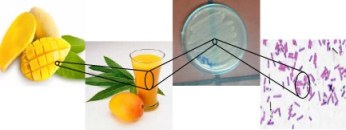
Background and Objective: Time-temperature indicators are used in smart packaging, and described as intelligent tools attached to the label of food products to monitor their timetemperature history. Since the previous studies on microbial time-temperature indicators were only based on pH-dependent changes, and they were long-time response indicators, in the present work, a new microbial time-temperature indicator was designed by using the alpha amylase activity of Bacillus amyloliquefaciens vegetative cells.
Material and Methods: The designed time-temperature indicator system consists of Bacillus amyloliquefaciens, specific substrate medium and iodine reagent. The relation of the timetemperature
indicator’ response to the growth and metabolic activity (starch consumption and production of reduced sugars) of Bacillus amyloliquefaciens was studied. In addition, the temperature dependence of the time-temperature indicator was considered at 8 and 28˚C. Finally, in order to adjust time-temperature indicator endpoint, the effect of the inoculum level was investigated at 8ºC.
Results and Conclusion: In the designed system, a color change of an iodine reagent to yellow progressively occurs due to the starch hydrolysis. The effect of the inoculum level showed the negative linear relationship between the levels of Bacillus amyloliquefaciens inoculated in the medium and the endpoints of the time-temperature indicators. The endpoints were adjusted to 156, 72 and 36 hours at the inoculum levels of 102, 104 and 106 CFU ml-1, respectively. The main advantages of the time-temperature indicator is low cost and application for monitoring the quality of chilled food products.
Conflict of interest: The authors declare no conflict of interest.
- ▪ Amylase activity ▪ Bacillus amyloliquefaciens ▪ Smart packaging ▪ Time-temperature indicator (TTI)
ارجاع به مقاله
مراجع
Pavelková A. Time temperature indicators as devices intelligent packaging. Acta Universitatis Agriculturae et Silviculturae Mendelianae Brunensis. 2013; 61(1):245-51.
Choi DY, Jung SW, Lee DS, Lee SJ. Fabrication and Characteristics of Microbial Time Temperature Indicators from Bio-Paste Using Screen Printing Method. Packag Technol Sci. 2014; 27(4):303-12.
Vaikousi H, Biliaderis CG, Koutsoumanis KP. Development of a Microbial Time/Temperature Indicator Prototype for Monitoring the Microbiological Quality of Chilled Foods. Appl Environ Microbiol. 2008; 74(10):3242–3250.
Vaikousi H, Biliaderis CG, Koutsoumanis KP. Applicability of a microbial Time Temperature Indicator (TTI) for monitoring spoilage of modified atmosphere packed minced meat. Int J Food Microbiol. 2009; 133:272– 27 8.
Makino Y. Model for Aerobic Growth of Bacillus Amyloliquefaciens in Processed Soy Sauce under Various Conditions of Temperature, Initial Dry Cell Mass and Ethanol Concentration. Food Sci Technol Res. 2005; 11(1):115-21.
Crane JM, Frodyma ME, Bergstrom GC. Nutrient-induced spore germination of a Bacillus amyloliquefaciens biocontrol agent on wheat spikes. J Appl Microbiol. 2014; 116(6):1572-83.
Deb p, Talukdar SA, Mohsina K, Sarker PK, Sayem SA. Production and partial characterization of extracellular amylase enzyme from Bacillus amyloliquefaciens P-001. SpringerPlus 2013; 2:154.
Xiao Z1, Storms R, Tsang A. A quantitative starch-iodine method for measuring alpha-amylase and glucoamylase activities. Anal Biochem. 2006; 351(1):146-8.
Miller GL. Use of dinitrosalicylic acid reagent for determination of reducing sugar. Anal. Chem. 1959; 31: 426–428.
Yan S, Huawei C, Limin Z, Fazheng R, Luda Z, Hengtao Z. Development and characterization of a new amylase type time–temperature indicator. Food Control. 2008; 19(3):315-9.
Rao MS, Pintado J, Stevens WF, Guyot JP. Kinetic growth parameters of different amylolytic and non-amylolytic Lactobacillus strains under various salt and pH conditions. Bioresour Technol. 2004; 94:331–337.
Konopka A. Microbial physiological state at low growth rate in natural and engineered ecosystems. Curr Opin Microbiol. 2000; 3: 244–247.
Koutsoumanis K, Giannakourou MC, Taoukis PS, Nychas GJE. Application of shelf life decision system (SLDS) to marine cultured fish quality. Int J Food Microbiol. 2002; 73:375–382.
- چکیده مشاهده شده: 1453 بار
- PDF (English) دانلود شده: 1335 بار