Probiotic Bacteria in Fish Sauce Fermentation: Current Uses, Health Benefits, Challenges and Future Perspectives
Applied Food Biotechnology,
Vol. 14 No. 1 (2027),
17 November 2026
,
Page 1-20 (e1)
https://doi.org/10.22037/afb.v14i1.52114
Abstract
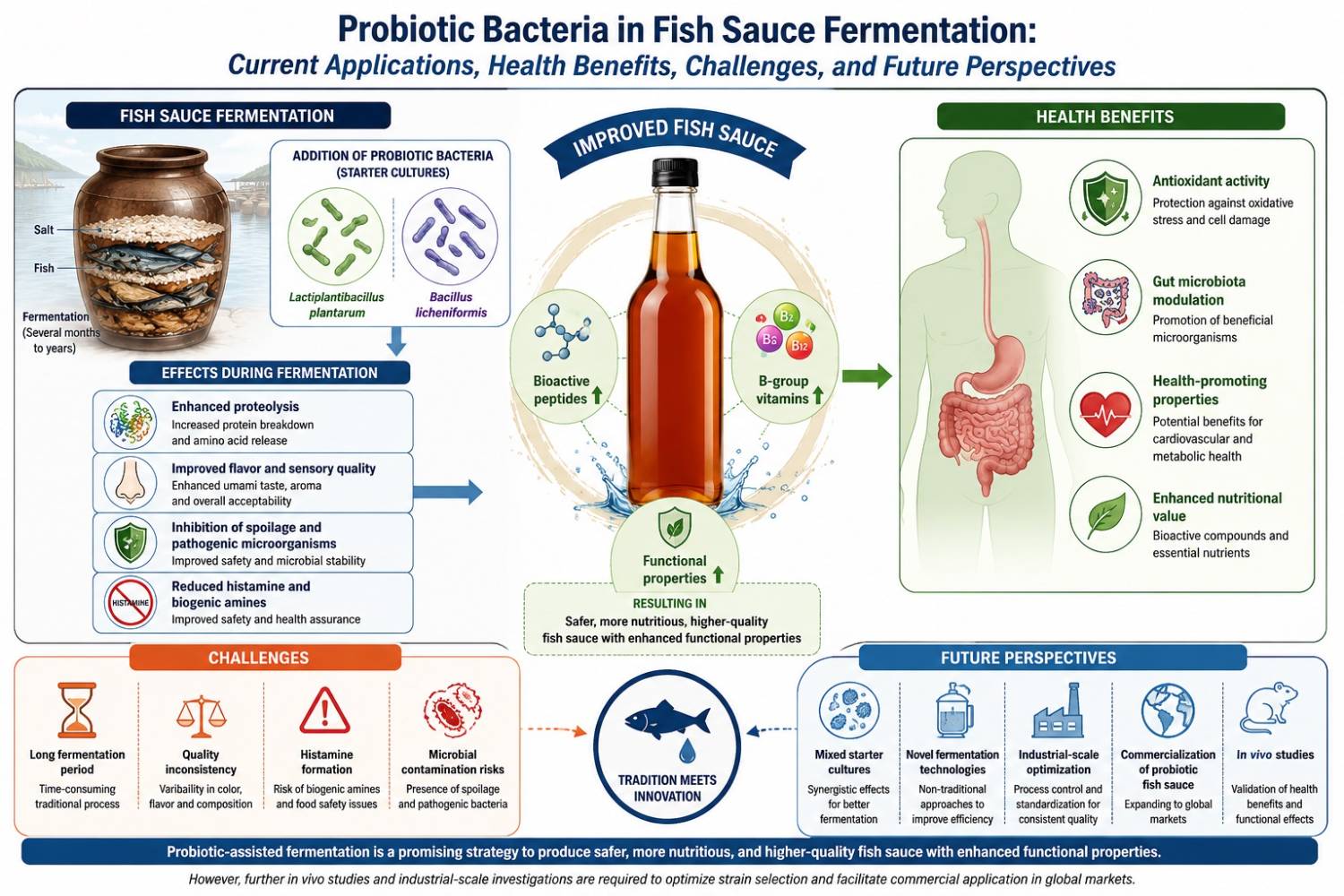
Background and Aim: Fish sauce is a traditional functional product produced by the fermentation of fish with salt. There are disadvantages in the sauce manufacturing such as the long fermentation time, inconsistency of quality, production of histamine and contamination risks. Starter culture of probiotic bacteria have become a feasible means to overcome these disadvantages to make a safer, higher-quality and healthier sauce through changing the micro flora. Micro flora modify the microenvironment and metabolism of sauce and improve the fermentation process by synthesizing desired metabolites and bioactive compounds. This study reviewed various effects of probiotic microorganisms during the fermentation of fish sauce concerning its product quality, food safety, flavor development and bioactive substances for functional characteristics.
Material and Methods: Web of Science, Scopus, PubMed and Google Scholar were searched to collect data. The following terms were combined in the searching for references linked to the lactic acid bacteria, fermented fish products, probiotics, Pediococcus pentosaceus, Lactiplantibacillus plantarum, Bacillus licheniformis, Tetragenococcus halophilus and fish sauce fermentation.
Results and Conclusion: Probiotic microorganisms, particularly Lactiplantibacillus plantarum and Bacillus licheniformis, were beneficial in accelerating protein degradation, improving the sensory characteristics of sauce, preventing proliferation of spoilage and microbes and decreasing generation of biogenic amines and histamine. These could boost bioactive peptides and group-B vitamin contents of sauces for better health and improved characteristics in functional products. Non-conventional fermentations and mixed starter cultures might promise in improving process efficiency and constancy in sauce production. Fermentation with probiotic has emerged as an excellent technology that can provide better and safer products and includes great potential to commercialization; however, in vivo research and scaling-up for industrial uses of the probiotic fish sauce are necessary.
- INTRODUCTION
Fish sauce is one of the most ancient fermented traditional fish products and a part of the cultural heritage of Southeast Asian countries such as Thailand, Vietnam, Philippines and Cambodia. The sauce produced via natural fermentation of fish in high salt is appreciated for unique flavor, unique aroma and savory taste as well as its biological qualities [1]. Production process involved the action of microorganisms and various chemical, biological reactions that converted high molecular weight proteins to low molecular products, which include smaller peptides and amino acids that can be used as savoring agents of these products. Because of its important cultural and consumption characteristics, fish sauce production has increasingly become interested by the scientists [2].
Regarding further investigation on the important roles of microorganism in fermented product, adoption of probiotic bacteria as starting cultures in fish sauce fermentation has been suggested as a novel alternative approach [3–4]. Fish sauce has widely been known as a popular traditional seasoning product and involved in research in recent years since food with health benefits has been popular. The last several years have included significant progress in Food Microbiology and the use of probiotic microorganisms to enhance the process and widen the product scope of fermented seafood. Therefore, probiotic-assisted fish sauce fermentation has shown significant promise in combining the conventional technique with biotechnology advancement [5].
Traditional fish sauce is mainly produced via natural fermentation and depends on native microbial flora. Although this natural process produces products with diverse flavors, due to the uncontrolled microbial composition, it is prone to producing biogenic amines such as histamine and other toxic compounds that can harm consumers. Histamine, in particular, can cause food poisoning called scombroids in high doses. Therefore, controlling the growth of microorganisms that produce these compounds and replacing them with safe and beneficial strains is greatly important [6].
Despite all these advantages, use of probiotics in fish sauce fermentation faces challenges. One of these challenges is the selection of strains that can survive in high salinity conditions and have effective fermentation activity. Furthermore, stability of these strains during the storage process and their transportation and quality assurance and sensory acceptance of the product by the consumers are other issues that need further research [7].
Regarding the growing global trend in consuming healthy fermented foods and the increasing demand for safe, nutritious and quality products, it seems that the use of probiotic bacteria in fish sauce production can not only solve the problems of traditional methods, but also provide new horizons for the development of this traditional food industry on a global scale. Recent scientific studies emphasize the high potential of this approach. In recent years, mass production of probiotic fish sauces with superior characteristics is expected [8–9]. The present study reviewed various effects of probiotic microorganisms during the fermentation process of fish sauce concerning product quality, food safety, flavor development and bioactive substances for functional characteristics of the fish sauce.
- METHOD: LITERATURE SEARCH STRATEGY AND STUDY SELECTION
This study searched thoroughly all the literature associating to use of probiotics during fish sauce production. Web of Science, Scopus, PubMed and Google Scholar were searched electronically to collect published data. The following terms were combined in the searching for references linked to the lactic acid bacteria (LAB), fermented fish products, probiotics, Pediococcus (P.) pentosaceus, Lactiplantibacillus (L.) plantarum, Bacillus (B.) licheniformis, Tetragenococcus (T.) halophilus and fish sauce fermentation. Articles published in English from 2000 to 2026 and those published from 2020 to present time were highlighted to achieve a sufficient up-to-date data. All data collected in this review critically analyzed, compared and contrasted on the basis of technical characters, potential of each candidate in a probiotic capacity and safe character, as well as the strengths and weaknesses in using those candidates. Numerous articles have been investigated, including review articles, book chapters and scientific researches on probiotics, fish sauces and linked areas such as microbial community dynamics, probiotics action mechanisms, fish sauce fermentation, startup cultures of fish sauces, microbes’ interactions in fish sauce starters, and functional and healthful characteristics. However, repeated studies and irrelevant areas as well as the abstracts of conferences or proceedings have not been included.
This comprehensive review article collected all information on probiotic bacterial species that could be used as start culture in fish sauce fermentation based on their functions, technical characteristics, safety assessment, with emphasis on their ecological characters, production of functional ingredients, effects on fermentation and health benefits. Additionally, the study suggested designs of the novel startup cultures, comparisons with commercially accessible probiotics and further prospects of probiotic fish sauces.
- TRADITIONAL FISH SAUCE FERMENTATION
3.1. An Overview of Traditional Fish Sauce
Traditional fish sauce production consists of salting of fish (20–30%) and setting the fish at room temperature (RT) for a prolonged time. Traditional fish sauce is rich in salt and high degree of protein hydrolysis and therefore amino nitrogen, peptides and flavor active compounds are produced in the fish sauce [10]. Chemical composition of the fish sauce and quality attributes are affected by the fish species, concentration of salt, time of fermentation and microbial activity. Major components of compositional and quality characteristics of traditional fish sauce compared with that produced by nontraditional and probiotic-assisted fermentation methods are summarized in Table 1.
The importance of the total nitrogen, amino nitrogen, salt, moisture and pH was that these parameters indicated the overall degradation of protein and quality of the product, reflected the protein hydrolysis, provided the umami, provided for the preservation and selection of microbes, regulated the total protein, controlled the physical characteristics of the product and fixed the extent; to which, microbial activity and stability affected the product [11]. During these conditions, endogenous microbes contribute to the degradation of fish proteins and the generation of flavor associated compounds. Nonetheless, the final product microbial characteristics and quality depend on factors such as the type of fish, environment and initially inherent microorganisms [10].
3.2. Microbiology of Fish Sauce Fermentation
As reported, Halobacterium and Bacillus species, belonging to the genera of halophilic bacteria, play roles in fish sauce fermentation. In addition, lactobacilli and staphylococci can be isolated. However, several of these microbes can accumulate biogenic amines such as histamine to a quantity that causes health problems in humans when consumed too much (Figure 1) [11–12].
- DEFINITION AND CHARACTERISTICS OF PROBIOTIC BACTERIA IN FISH SAUCE
4.1. Probiotic Bacteria: Definition and Characteristics
Probiotic is a live microorganism. If consumed in sufficient quantities, it provide benefits on the health of the host. In the fish sauce fermentation process, probiotic microorganisms include genera of Lactiplantibacillus and Bacillus, especially L. plantarum and B. licheniformis, because of their characteristics and functional values (Table 2).
The L. plantarum can be used as a potential starter culture for the fermentation [13]. Mostly, this bacterial strain grow best at a medium salt concentration, except for certain L. plantarum isolated from fermented foods that able to survive in the high-salt environments. The L. plantarum is usually treated as a supplementary starter rather than the essential microorganisms in the traditional fish sauce fermentation with high-salt contents [14].
4.2. Why Using Probiotics in Fish Sauce?
As a result of higher demand for high quality fermented products with the disadvantages of spontaneous fermentation, researchers have shown further attentions to incorporation of probiotic microorganisms in fish sauce fermentation processes. In traditional spontaneous fermentation, most of fermenting microbial community are based on autochthonous micro flora, leading to unstable fermentation efficiency and different product qualities. To get a better control on microbial process and fermentation procedure, starter culture inoculation of selected probiotic strains have been shown as a promising method [13–15]. In addition, consumer’s awareness of health products with natural fermentation process has forced use of probiotics. Probiotic bacteria offer routes for standardizing fermentation environments, developing novel fish sauce products with desirable attributes and probiotic assisted fermentation, are becoming alternatives to the process of traditional spontaneous fermentation (Table 3) [16–17].
4.3. Technological and Nutritional Benefits of Probiotics in Fish Sauce
Probiotics act as proteolytic agents during the manufacturing of fish sauce. Probiotic secreted proteolytic enzymes are the most important by decomposing fish proteins and amino acids into other molecules. This helps improve flavors, product nutritional values, increase digestibility and contribute to increased yields of healthy beneficial compounds; as shown by Liu et al (2024) [18]. Further beneficial compounds such as bacteriocins and organic acids prevent contaminations [19]. Hence, probiotic technology can significantly extend shelf life, prevent spoilage and avoid health problems. Some probiotic strains enhance fish sauce organoleptic quality and provide desired flavor by producing umami taste via metabolic processing of amino acid metabolism and generating volatized compounds [20].
Moreover, probiotic microorganisms may improve accessibility of essential micronutrients and help producing bioactive peptides with antioxidant, antihypertensive and antibacterial characteristics. These actions can improve health benefits of fermented fish and facilitate their development as functional foods [21–22]. Beneficial effects of probiotic bacteria are species and strain dependents. Any particular probiotic strain may produce specific qualities such as desirable taste, protein degradation, ability of inhibition and production of bioactive products; hence, no specific probiotic has been verified to perform better than any others for all quality characteristics, including sensory, nutritional and health characteristics. Rather, the selection process should be aimed at targeting one particular product of desired technological and functional characteristics [23].
The enhancement in technology and nutritional characteristics resulted from the use of probiotics is mainly contributed from the metabolic functioning of microorganisms during the fermentation process. Therefore, probiotics do not need to survive to improve taste characteristics, enhance nutrition, decrease biogenic amines and improve fermentation yield or speed up fermentation. To use probiotics to benefit the consumers, it is necessary that a sufficient number of viable cells is achieved in the end products [24].
4.4. Potential Health Benefits
In addition to the benefits for fermentation efficiency and quality of end products, probiotic microorganisms may include health benefits as well as those associated to fermentation. Emerging evidence have indicated that certain probiotic strains can positively alter the structure of gut microbes, improve gut integrity and function, promote immune homeostasis and participate in metabolic balance. However, extent of these health effects is often strain dependent and warrants by validation in human intervention trials [25–26].
4.5. Selection Criteria of Probiotic Strains for Fish Sauce Fermentation
In the production process, successful implementation of probiotic bacteria in the fermentation of fish sauce is primarily attributed to appropriate selection of microbial strains. To use probiotic bacteria to industrial fish sauce production, it is necessary to systematically assess the technological, safety and functional characteristics of probiotic microorganisms before selection as starter cultures; as not all probiotics are adapted to the harsh conditions of fish sauce fermentation [21].
4.5.1. Salt tolerance
Tolerance to high salt concentrations is one of the important selection parameters. The process of fish sauce production involves a naturally occurring habitat of 15–30% of NaCl, resulting in osmotic pressure, cellular damage and inhibition of metabolic activity. Probiotic starter culture must provide sustainable proliferation and metabolic activity to prevent detrimental effects on its own and host fish [3].
4.5.2. Acid and bile resistances
To cause a probiotic effect upon ingestion of microorganisms, probiotics should endure travelling the guts, consequently chosen strains should be tolerant to the acidity of the abdomen and bile. Assessment for bile salt as well as gastric acid susceptibility is widely used [27].
4.5.3. Antimicrobial activity
Good probiotic strains are expected with antimicrobial activities to pathogenic microorganisms that affect food quality and safety. Strains could increase the stability and safety of fermented food products by producing various antibacterial compounds such as hydrogen peroxide. Thus, strains with a wide range of antagonistic activities are favorite for use in fermented seafood [28].
4.5.4. Adhesion ability and colonization potential
Interaction with the intestinal epithelium adhesion ability of the probiotic is another vital factor, due to the temporary colonization in the gastrointestinal tract (GIT) and strengthening communication with the host’s immune response between the probiotics. Moreover, probiotics with high adhesion rate usually perform better for efficacy [27].
4.5.5. Safety assessment
Probiotic choice is first affected by safety requirements. Strains suggested should not include virulence genes or toxin producing factors and have not to show pathogenic abilities or carry genes coding for antibiotic resistance that may be transmitted to pathogens. Therefore, genome sequencing has emerged as a valuable tool to check probiotic safety [21].
4.5.6. Technological performance
In addition to possessing probiotic traits, strains need to contain favorable technical characteristics, including rapid growth and consistent fermentation behavior, ability to produce flavor and compatibility with the processing parameters that occur at an industrial scale. Multifunctional strains possessing probiotic and technological characteristics are particularly interested for their use in the production of fish sauce. The identification of the correct strain involves an integrated scientific discipline encompassing microbiology, food science and technology, food genomics and risk assessment to produce beneficial fermentation and safe food [3].
- MAJOR PROBIOTIC CANDIDATES USED IN FISH SAUCE FERMENTATION
5.1. L. plantarum
5.1.1. Biological characteristics of L. plantarum
Researchers have been interested in L. plantarum, an excellent probiotic strain. Although this bacterium is a great probiotic strain, its versatility is particularly attractive in food science. The L. plantarum is detected in several foods that have been fermented using multiple methods. The bacterium can tolerate acidic and high-salt conditions and survive when food is limited. This resilience makes L. plantarum one of the most common fermentation microorganisms in food products [13, 29].
5.1.2. Adaptation to fish-sauce fermentation conditions
The bacteria used in the fermentation of fish sauce must not only have the cells capable of surviving the challenging conditions in the environment but also possess characteristics that allow them to perform well within the complex ecological environment that describes fish sauce fermentation. The process; by which, fish sauce is fermented involves multiple stages of succession of various microorganisms undergoing biochemical reactions that alter the behavior and metabolism of the microbial population for a long time. The L. plantarum has demonstrated ability to adapt to the fermentation environment of fish sauce by demonstrating metabolic flexibility and a wide variety of substrate uses [15], while playing a critically biological role that contributes to these biochemical reactions in the end product. In addition, interactions between L. plantarum and other microorganisms during the fermentation of fish sauce likely alter and affect the ecological microorganisms and subsequently affect flavor generation, nutritional metabolism and stability of the final value added fermented products. These characteristics support the commercial use of L. plantarum in fish sauce fermentation. The L. plantarum is capable of using a full range of carbohydrate and nitrogen sources, which provide it with a competitive advantage during the fermentation. When used as a starter culture, L. plantarum provides consistency to the fermentation process and improve the quality of the final commercial products [30].
5.1.3. Mechanisms of action of L. plantarum
Multiple linked pathways are involved in producing technological and probiotic effects of L. plantarum. One of the most significant pathways is through the production of organic acids and particularly lactic acids. The accumulation of these acids leads to decreased pH of the surrounding area; thereby, making it increasingly difficult for other types of less desirable microorganisms to propagate. Additionally, several of the strains produce bacteriocins and other antimicrobial substances and thus provide added microbial safety (Figure 2) [3, 31].
While there are numerous studies demonstrating the antimicrobial characteristics of L. plantarum, there is a significant variability in the strength of the effects from strain to strain, depending on how the studies were completed; therefore, making it difficult to come to conclusions from direct comparisons of the results. There is limited clinical evidence showing that good probiotic fish sauce can help regulate the immune system through the actions of the probiotic microorganisms and cause unintended but beneficial probiotic effects through the combination of fermentation and probiotic microorganisms [8, 27].
5.1.4. Current uses and functional significance of L. plantarum
The L. plantarum has become a popular target species for research on fish sauce fermentation since it is able to adapt to various environments and show a wide range of genetic capabilities. Several authors demonstrated that L. plantarum was effective when used as the single strain or in combination with other cultures for starter production, resulting in higher product consistency and lower batch-to-batch variation [21].
The L. plantarum wide metabolic capability allows it help interact with other fermenting microorganisms. Latest omics-based studies have uncovered that the bacterium includes various stress response systems and regulatory pathways, which help it adapt to changing environmental conditions. That is why L. plantarum is considered as a good model organism for investigating microbial succession and metabolic interactions during fish sauce fermentation (Figure 3) [32].
In addition to the sheer possibilities of technical improvement, the scientific studies of L. plantarum strongly support its implementation for setting up standardized fermentation processes. However, several differences from one strain to another one still are reported and further research is needed to select strains that perform best and assess their effectiveness in conditions of industrial production [33, 35].
5.2. B. licheniformis
5.2.1. Biological characteristics of B. licheniformis
The B. licheniformis is a Gram-positive bacterium that is capable of forming spores and this characteristic is the biggest reason that further attention is associated to it in food fermentation; giving it ability to adapt to various environmental conditions [36]. Similar to several LAB, B. licheniformis can resist even to the harsh processing conditions using its endospore formation that gives it a protective layer against heat, salinity and other environmental stresses. This characteristic, in fact, makes it appropriate for fermented food systems; where, it is usually difficult for microbes to survive [10]. This species is so common in nature and can be detected in many fermented foods. It has been isolated from seafood products and traditional fish fermented. A number of strains have been identified with positive effects on fermentation performance and food quality [37].
5.2.2. Technological and functional characteristics
Another significant capability of B. licheniformis on its interaction with the environment is the production of various extracellular enzymes and bioactive metabolites on a large scale. Due to these functionalities, the species has attracted attention in a number of food biotechnological processes as a potential element of multifunctional starter cultures. Moreover, isolates have shown antimicrobial activity and probiotic traits, but these characteristics are strictly strain specific [38].
Compared to LAB, B. licheniformis is typically seen as a further technologically resilient microorganism with great potential for industrial use. Then, thorough safety assessment and detailed characterization of individual strains are still necessary steps that need to be addressed before this bacterium is used extensively in the production of commercial fish sauce [36, 39, 40].
5.2.3. Comparison of L. plantarum with B. licheniformis
The B. licheniformis has been shown as further more resilient and stable microorganism under adverse environments, compared to L. plantarum, due to its natural ability to form spores. The B. licheniformis and L. plantarum are commonly used for fermented fish sauce; however, these microorganisms have distinct physiologic characteristics that result in differing functions for the fermentation. The L. plantarum is well known for its health promoting effects, ability to produce organic acids and antibacterial mechanisms, whereas B. licheniformis includes several further enzymes to facilitate the breakdown of proteins into smaller peptides that can be absorbed into the host's body. The two microorganisms, when used separately or in combination, can include synergistic effects and add values to the fermentation (Table 4) [37].
5.2.4. Other probiotic bacteria
Within probiotic microorganisms, L. plantarum has been the subject of most research in fermented seafood. Other bacterial species have also been documented to include important functions in fish fermentations with high-salt contents. Collecting additional knowledge on these probiotic candidates is critical for creating efficient starter cultures used in fish sauce production [41].
5.2.4.1. Tetragenococcus halophilus
Compared to most LAB, T. halophilus may be considered an extreme halophilic bacterium that is able to produce stable fermentation products under conditions of high-salt concentrations. For example, T. halophilus is able to grow on fish sauce at high salinity and this species produces a majority of aroma compounds associated with fish sauce. This makes T. halophilus a significant microorganism and an excellent candidate for use in high salinity fermentation products (Table 5) [35, 40].
5.2.4.2. Weissella species
Members of the genus Weissella are greatly interested lately because they can make not only exopolysaccharides but also other metabolites that change the physicochemical conditions of fermented foods. When fish sauce is fermenting, the Weissella spp. can be involved in changing the texture and producing special flavors (Table 5) [40].
5.2.4.3. P. pentosaceus
As a result of its high production of bacteriocins, P. pentosaceus demonstrations a strong antagonistic activity against harmful microorganisms. Evidence suggests that it plays an important role in maintaining microbial balance during fermentation, indicating it as an appropriate starter culture for improving the microbiological quality of fish sauce (Table 5) [18, 40].
5.2.4.4. Lactiplantibacillus pentosus
The L. pentosus is significant for its capability of metabolizing a wide range of substrates and tolerance to high salinity conditions. Additionally, this includes the ability to enzymatically degrade proteins and, from a phylogenetic perspective, it is closely linked to L. plantarum. Therefore, it represents an excellent candidate for controlled fish sauce fermentation. However, there is limited research describing its use and further study is necessary to fully understand its technological and functional characteristics (Table 5) [41–42].
5.2.4.5. Comparative significance of alternative probiotic species
Despite that these bacteria include great characteristics, documents that link them to fish sauce fermentation are still quite insufficient if compared with the two well-known strains of L. plantarum and B. licheniformis. Further research is necessary to clarify their metabolic functions, how they interact with the native microbial community and their potential for producing on an industrial scale (Table 6) [41, 43–44].
5.2.5. Comparative assessment of probiotic bacteria used in fish sauce fermentation
Various species of bacteria have been studied for use in fish sauce fermentation. However, the research findings show that their efficiency as technology and their beneficial effects as probiotics can vary widely based on the strains and fermentation environment. Thus, it is important to compare these microorganisms to find out the best ones to make functional fish sauce products [28].
5.2.5.1. Overall comparison and critical perspectives
Overall, various types of bacteria can be used to make high quality fish sauce. The various kinds of bacteria involved include various technological and functional characteristics; hence, their ability to ferment depends on the characteristics of the bacteria as well as how they were grown during fermentation, resulting in various metabolic capabilities, enzyme production, probiotic characteristics and ability to adapt to their environment. Therefore, selecting the correct types of bacteria should be carried out based on the specific fermentation process and product quality requirements (Table 7) [31, 45].
5.2.5.2. Comparison of available studies
Because of differences in several factors, including design of the experiment (experimental setup), sources of fermentation substrate, environmental conditions used during fermentation, analytical methods to assess results produced by the fermentation process and criteria to assess the resulting fermented product, it is not easy to compare the research on fish sauce fermentation. The differences within these studies make the findings of each unique and; thus, finding similar results may not necessarily be possible when comparing results from various studies. Researchers must implement uniform experimental designs and consistently assess the results produced by the fermentation process results in greater reproducibility and better comparability of fish sauce fermentation research [20, 47].
- CHALLENGES AND LIMITATIONS OF PROBIOTIC BACTERIAL USE IN FISH SAUCE PRODUCTION
The use of cultured probiotic bacteria in the production of fish sauce includes numerous benefits that range from nutritional and technological to health advantages; however, there are still several scientific, technological, economical and regulatory issues that have not been resolved. All of the highlighted issues can make it difficult to implement, market and receive consumer acceptance. Understanding the existent challenges is necessary to develop enhancing procedures for the functions of probiotics, while preserving quality and safety of the product (Table 8) [11].
6.1. High Salt Stress and Environmental Adaptation
Using probiotic bacteria to produce fish sauce can be challenging because of the excessive salt levels needed for producing fish sauce. Increased salinity causes osmotic distress to the bacterial cells and leads to decreased growth, metabolism and enzyme production. There are probiotic bacteria that include halotolerant characteristics; however, the strain's salinity tolerance varies greatly from one strain to another resulting in variation of survival rates and fermentation rates.
This variability of strains includes an effect on the activity of the probiotic and results in decreased stability of the overall fermentation process. Due to the numerous chemistry and physical factors affecting every fermentation batch, it is almost impossible to set the microbial population stable throughout the fermentation process and achieve a consistent level of product quality [28, 35].
6.2. Preserving Probiotic Viability During Processing and Storage
Preserving probiotic microorganisms alive through processing and storage is possibly the biggest challenge of producing probiotic fish sauce. The population of cells may slowly decrease if they are exposed to harsh conditions such as high salt, temperature fluctuation, oxidative stress and extended storage time, which can bring the instability and loss of functionality of the end product. Moreover, changes in the physicochemical parameters during fermentation and storage may affect microbial survival; thereby, decreasing the persistence of probiotic populations with time. Therefore, ensuring the supply of viable cells up to the point of consumption is a problem that needs solutions for a successful production of probiotic fish sauce [12, 34, 48].
6.3. Complexity of Microbial Ecosystems During Fermentation
Fish sauce is traditionally produced through complex interactions of various microorganisms that are present in the fermentation processes. Microorganisms that coexist in a competitive or cooperative manner affect microbial succession, metabolic activities and fermentation dynamics, which are responsible for variations in the quality and composition of the final products. Due to significant differences in the growth characteristics and metabolic capabilities of the various strains, the fermentation outcomes can be inconsistent. The environmental conditions and the native microbiota composition are usually the major factors affecting behavior of microbial communities; hence, fermentation processes can hardly be predicted and controlled. Thus, differences in microbial interactions may cause differences between observations in the laboratory and those at the industrial scale [13, 34, 49].
6.4. Histamine Formation and Microbiological Safety Concerns
The continuous production of histamine and other biogenic amines in fermented fish products is a major concern due to the negatively effect on the health of consumers as well as the effect on the quality of the products when high levels are present. Safety, including safety of probiotics, is the other major concern linked to the microorganisms, since some strains include the potential for undesirable metabolism or resistance to antimicrobial agents. The potential for the presence of virulent factors and harmful metabolites is greatly concerned due to their potential to decrease microbiological safety of the product. Overall, these difficulties demonstrate challenges in the production of safe and high-quality probiotic fish sauces (Figure 4) [17, 21, 35, 50].
6.5. Regulatory and Standardization Challenges
Regulatory and standardization issues are main challenges for the development and commercialization of probiotic fish sauce. First, regulatory requirements and definitions of probiotic products are different from one country to another one, which lead to discrepancies in product classification and approval system. Moreover, the lack of globally recognized standards for strain selection, fermentation conditions and quality control causes large differences between studies and production systems. These types of disparities make it difficult to compare scientific results and slow down the setting of common manufacturing and product specification standards [5, 39].
6.6. Economic and Industrial Scale Limitations
Although results in the laboratory are interesting, production of probiotic fish sauce on a large scale involves a set of economic and technological restrictions. Differences between laboratory studies and industrial productions include troubles in carrying out reproducibility, microbial stability and process similarities and each separate batch of product can differ its quality and dependability. The expenses that may involve the culture, process control and quality checks can represent significant issues for the commercialization of probiotic fish sauce [34, 49].
6.7. Insufficient Clinical Evidence
Evidence support the technical and functional capabilities of probiotics in fermented fish products, but most research include limitations regarding health effects of probiotic consumption as there are a few studies carried out directly on humans and even a fewer ones providing sufficient clinical data to support making health claims linked to the use of probiotic fish sauces. Most data collected have been through in vitro or animal studies, resulting in an incomplete understanding of how long-term consumption of probiotic fish sauces may affect human physiology and therefore limiting the use of probiotic based fish sauce as a functional food product [26–28, 35].
- FUTURE PROSPECTS, RESEARCH PRIORITIES AND KNOWLEDGE GAPS
The potential of probiotic fish sauce is really brilliant as functional foods, which not only take care of the individuals’ health but also are rich in nutrients. Since people worldwide are becoming further health conscious and demand further natural and fermented products, probiotic fish sauce can be the globally functional food. However, this is a big challenge which can be resolved only if there are simultaneous developments in microbiology, food biotechnology, industrial processing, regulatory structures and consumer education [10].
Segments of knowledge still inhibit the solution for the probiotic fish sauce. Most of the publications have been dealing with mainly microbial isolation and characterization. Relatively, a few references to microbial interactions and fermentation ecology are available. Furthermore, probiotic strains and indigenous microbiota are little known; hence, rendering it impossible to compute fermentation dynamics and optimize microbial communities (Table 9) [24].
7.1. Development of Mixed Starter Cultures
Each strain of probiotic includes various and unique functional and technological characteristics; therefore, research should be carried out on development and design of multiple strain starter cultures that contain functional traits that are complementary. The combination of highly salt tolerant microorganisms with probiotic and enzyme producing strains enhances the yield of the product, its microbiological stability, sensory characteristics and functional characteristics. A better understanding of microbial interactions within this type of consortium enhances the manufacturing process regarding performance and reliability of the manufactured food product [51].
7.2. Omics Based Approaches for Understanding Fermentation Ecology
Nowadays, recent developments in metagenomics, transcriptomics, proteomics and metabolomics represent a comprehensive technique for clarifying the microbial succession, metabolic functions of microorganisms and process of flavor and bioactive compound formations. However, studies use omics in the field of probiotic fish sauce fermentation are still little. However, combining multiple omics technologies with analyses helps achieve insights into the microbial community and guide the construction of starter culture design logically. Though the omics have been suggested as potentially valuable technologies, it is not readily used to enhance industrial fish sauce production due to technological sophistication and costs [24].
7.3. Genome Guided Strain Selection and Adaptive Assessment
An optimal approach to finding strong microorganisms resilient to harsh fermentation conditions may include using genome guided approach or adaptive laboratory assessment of strains. Through whole genome sequencing (WGS), strain safety can be assessed for better acceptance of potential candidate strains for fish sauce production [45].
7.4. Improvement of Probiotic Stability and Preservation Technologies
Further studies should highlight the innovations of state of the art strategies in enhancing stability and efficacy of probiotic microorganisms during storage and transport. Potential strategies such as microencapsulation, freeze drying, coating agents and packaging systems may contribute to preserve cell survivability and their probiotic function. Moreover, novel strategies of formulation and delivery techniques need to investigate values in functionality and use in commercial probiotic fish sauce production [34, 52].
7.5. Human Clinical Validation and Commercial Use
Further human interventional study design is needed to assess best dose, long-term security and evidence based claims. In parallel, product standardization, regulatory alignment and consumer admission are needed to support market rollout and industrial uses of the probiotic fish sauce products [15, 26].
7.6. Economic Viability
Many studies were developed at laboratory scale while there is lack of information concerning the production and commercialization in large scale. Further research must be carried out to develop novel technologies that can assess profitability and cost effectiveness production methods and standardization. Regulation harmonization and industrial scale optimization need to be developed to boost industrial scale production of probiotic fish sauce [53, 54].
7.7. Consumer Acceptance and Market Development
Consumer outlook describes further viability of probiotic fish sauces. In spite of growing knowledge on probiotics worldwide, a very little is understood regarding perception, sensory acceptance and market possibilities of probiotic seafood products. Further research must concentrate on consumer’s perspective, sensory qualities and good communication methods to reinforce self-assurance and boost global market opportunities [55, 56].
The successful integration of results from the laboratory into industry is undoubtedly the most essential part for the creation of scientifically accepted commercial probiotic fish sauce in a wide scale; as must be implemented in a global market. The further studies continuously focus on inter disciplinarily science that includes microbiology, biotechnological, omics disciplines, clinical sciences and food engineering as the keys to revitalize traditional fish sauce fermentation and accelerate next generation functional seafood products (Figure 5) [24, 57].
- CONCLUSION
Therefore, use of probiotics in fish sauce fermentation seems as a good strategy in renovation and modernization of traditional seafood fermentation system. Combination of microbiology science and fermentation helps create new generations for seafood with innovative and valuable food ingredients. This research includes the potential to lead to a better controlled, sustainable scientifically driven fermentation process.
- DECLARATION
9.1. Acknowledgements
The authors thank the Iranian Fisheries Science Research Institute for financial support of this study.
9.2. Declaration of Competing Interest
The authors declare no conflict of interest.
9.3. Authors’ Contributions
Conceptualization, ST and AM; methodology, ST; software, ST; validation, ST and AM; formal analysis, CM; investigation, ST and AM; resources, ST and CH; data curation, KH; writing-original draft preparation, ST, AM, CM and KH; writing-review and editing, ST, AM, CM and KH; visualization, ST and KH; supervision, KH; project administration, ST.
9.4. Using Artificial Intelligent Chatbots
No AI chatbots or tools were used in this study.
- Safety
- Functional Products
- Low-Salt Products
- Starter Cultures
- Sensory Characteristics
- Emerging Food
How to Cite
References
[1]. Kim E, Won JE, Yang SM, Kim HJ, Kim HY. Diversity of a lactic acid bacterial community during fermentation of Gajami-Sikhae, a traditional Korean fermented fish, as determined by matrix-assisted laser desorption/ionization time-of-flight mass spectrometry. Foods. 2022; 11 (7): 909. https://doi.org/10.3390/foods11070909
[2]. Chan CX, Ragan MA. Next-generation phylogenomics. Biol Direct. 2013; 8: 3. https://doi.org/10.1186/1745-6150-8-3
[3]. Anumudu CK, Miri T, Onyeaka H. Multifunctional applications of Lactic Acid Bacteria: Enhancing safety, quality and nutritional value in foods and fermented beverages. Foods. 2024; 13 (23): 3714. https://doi.org/10.3390/foods13233714
[4]. Wang Y, Li C, Li L, Yang X, Wu Y, Zhao Y, Wei Y. Effect of bacterial community and free amino acids on the content of biogenic amines during fermentation of Yu-lu, a Chinese fermented fish sauce. J Aquat Food Prod Technol. 2018; 27(5): 496-507. https://doi.org/10.1080/10498850.2018.1450573
[5]. Zhang Z, Zhang Q, Wang T. Assessment of global health risk of antibiotic resistance genes. Nat Commun. 2022; 13 (1): 1553. https://doi.org/10.1038/s41467-022-29283-8
[6]. Nademi Sh, Mooraki N, Sedaghati M. Evaluation of applying Lactobacillus plantarum and Lactobacillus sakei starters on chemical and microbial properties of "Mahyaveh" fermented fish sauce. Int J Vet Res. 2025; 5(1): 61-77. http://injvr.com/article-1-75-en.html
[7]. Laranjo M, Potes ME, Elias M. Role of starter cultures on the safety of fermented meat products. Front. Microbiol. 2019; 10 (2): 853. https://doi.org/10.3389/fmicb.2019.00853
[8]. Day RLJ, Harper AJ, Woods RM, Davies OG, Heaney LM. Probiotics: Current landscape and future horizons. Future Sci OA. 2019; 5 (4): FSO391. https://doi.org/ 10.4155/fsoa-2019-0004
[9]. Singracha P, Niamsiri N, Visessanguan W, Lertsiri S, Assavanig A. Application of lactic acid bacteria and yeasts as starter cultures for reduced-salt soy sauce (moromi) fermentation. LWT. 2017; 78: 181-188. https://doi.org/10.1016/j.lwt.2016.12.019
[10]. Sim KY, Chye FY, Anton A. Chemical composition and microbial dynamics of budu fermentation, a traditional Malaysian fish sauce. Acta Aliment. 2015; 44 (2015): 185-194. https://doi.org/10.1556/aalim.2014.0003
[11]. Zang J, Xu Y, Xia W, Yu D, Gao P, Jiang Q, Yang F. Dynamics and diversity of microbial community succession during fermentation of Suan yu, a Chinese traditional fermented fish, determined by high throughput sequencing. Food Res. Int. 2018; 111 (2018): 565-573. https://doi.org/10.1016/j.foodres.2018.05.076
[12]. Ma X, Sang C, Yan Y, Zhang J, Bi G, Zhang H, Hao H. Dynamics of bacterial composition and association with quality formation and biogenic amines accumulation during fish sauce spontaneous fermentation. Appl Environ Microbiol. 2022; 88 (13): e00690-22. https://doi.org/ 10.1128/aem.00690-22
[13]. Kieliszek M, Pobiega K, Piwowarek K, Kot AM. Characteristics of the proteolytic enzymes produced by lactic acid bacteria. Molecules. 2021; 26 (2021): 858. https://doi.org/10.3390/molecules26071858
[14]. Hu Y, Li Y, Li XA, Zhang H, Chen Q, Kong B. Application of lactic acid bacteria for improving the quality of reduced-salt dry fermented sausage: Texture, color and flavor profiles. LWT J 2021; 154(1): 112723. https://doi.org/10.1016/j.lwt.2021.112723
[15]. Collins FL, Rios-Arce ND, Schepper JD, Parameswaran N, McCabe LR. The Potential of Probiotics as a Therapy for Osteoporosis. In: Britton RA, Cani PD, editors. Bugs as Drugs. Washington (DC): Am Soc Microbiol. 2018. Chapter 9. https://doi.org/10.1128/9781555819705.ch9
[16]. Cao GT, Dai B, Wang KL, Yan Y, Xu YL, Wang YX. Bacillus licheniformis, a potential probiotic, inhibits obesity by modulating colonic microflora in C57BL/6J mice model. J Appl Microbiol. 2019; 127 (3): 880–888. https://doi.org/10.1111/jam.14352
[17]. Lu X, Jing Y, Zhou X, Zhang N, Tai J, Cao Y. Bacillus licheniformis zhengchangsheng § inhibits obesity by regulating the AMP activated protein kinase signaling pathway. Probiotics Antimicrob Proteins. 2021; 13 (6): 1658–1667. https://doi.org/10.1007/s12602-021-09792-6
[18]. Liu Y, Liu G, Fang J. Progress on the mechanisms of Lactobacillus plantarum to improve intestinal barrier function in ulcerative colitis. J Nutr Biochem. 2024; 124 (2024): 109505. https://doi.org/10.1016/j.jnutbio.2023.109505
[19]. Jaafar A, Mohd Zaini NS, Wan-Mohtar WAAQI, Abd Rahim M, Meor Hussin AS. Production, organoleptic and biological activities of Belacan (Shrimp Paste) and Pekasam (fermented freshwater fish), the ethnic food from the Malay Archipelago. Sains Malays. 2023; 52 (2023): 1217-1230. https://doi.org/10.17576/jsm-2023-5204-14
[20]. Altemio ADC, Bazzo BD, Zambaldi CF, Fonseca GG. Development and evaluation of fish-based sauce prepared with mechanically separated meat of hybrid Sorubim. J Culin Sci Technol. 2024; 2022 (5): 993 -1007. https://doi.org/10.1080/15428052.2022.2099332
[21]. Vinicius G, De Melo P, De Carvalho DP, Neto ACDO, Junqueira SG, Karp LAJ, Letti AI, Soccol MJCR. A review of selection criteria for starter culture development in the food fermentation industry. Food Rev Int. 2020; 36 (2020): 135- 167. https://doi.org/10.1080/87559129.2019.1630636
[22]. Han J, Kong T, Wang Q, Jiang J, Zhou Q, Li P, Zhu B, Gu Q. Regulation of microbial metabolism on the formation of characteristic flavor and quality formation in the traditional fish sauce during fermentation: A review. Crit Rev Food Sci Nutr. 2023; 63 (2023): 7564-7583. https://doi.org/10.1080/10408398.2022.2047884
[23]. Wedajo B. Lactic acid bacteria: benefits, selection criteria and probiotic potential in fermented food. J Prob Health. 2015; 3 (2):129. https://doi.org/10.4172/2329-8901.1000129
[24]. Mayta-Apaza AC, García-Cano I, Dabrowski KD, Jiménez-Flores R. Bacterial diversity analysis and evaluation proteins hydrolysis during the acid whey and fish waste fermentation. Microorganisms. 2021; 9 (2021): 100. https://doi.org/10.3390/microorganisms9010100
[25]. Feng L, Tang N, Liu R, Gong M, Wang Z, Guo Y, Wang Y, Zhang Y, Chang M. The relationship between flavor formation, lipid metabolism and microorganisms in fermented fish products. Food Funct. 2021; 12 (2021): 5685-5702. https://doi.org/10.1039/D1FO00692D
[26]. Chan SXY, Fitri N, Mio Asni NS, Sayuti NH, Azlan UK, Qadi WSM, Dawoud EAD, Kamal N, Sarian MN, Mohd Lazaldin MA, Low CF, Harun S, Hamezah HS, Rohani ER, Mediani AA. Comprehensive review with future insights on the processing and safety of fermented fish and the associated changes. Foods. 2023; 12(3): 558. https://doi.org/10.3390/foods12030558
[27]. Binda S, Hill C, Johansen E, Obis D, Pot B, Sanders ME, Tremblay A, Ouwehand AC. Criteria to qualify microorganisms as “Probiotic” in foods and dietary supplements. Front Microbiol. 2020; 11 (2020): 662-671. https://doi.org/10.3389/fmicb.2020.01662
[28]. Cai H, Tao L, Zhou X, Liu Y, Sun D, Ma O, Yu Z, Jiang W. Lactic acid bacteria in fermented fish: Enhancing flavor and ensuring safety. J Agricul Food Res. 2024; 16 (2024): 101206 https://doi.org/10.1016/j.jafr.2024.101206
[29]. Hu Y, Zhang L, Wen R, Chen Q, Kong B. Role of lactic acid bacteria in flavor development in traditional Chinese fermented foods: a review. Crit. Rev. Food Sci. Nutr. 2022; 62 (2022): 2741-2755. https://doi.org/10.1080/10408398.2020.1858269
[30]. Loyda C, Wichaporn J, Jaranrattanasri A, Tochampa W, Singanusong R. Physicochemical properties, amino acid composition and volatile components of fermented fish (Pla-ra) accelerated by starter cultures. Trends Sci. 2023; 20 (2023): 6576–6576. https://doi.org/ 10.48048/tis.2023.6576
[31]. Xiang H, Sun-Waterhouse D, Waterhouse GIN, Cui C, Ruan, Z. Fermentation-enabled wellness foods: A fresh perspective. Food Sci Hum Wellness. 2019; 8 (2019): 203-243. https://doi.org/10.1016/j.fshw.2019.08.003
[32]. Gowda SG, Narayan B, Gopal S. Bacteriological properties and health-related biochemical components of fermented fish sauce: An overview. Food Rev Int. 2016; 32 (2016): 203-229. https://doi.org/10.1080/87559129.2015.1057844
[33]. Sun Y, Hua Q, Tian X, Xu Y, Gao P, Xia W. Effect of starter cultures and spices on physicochemical properties and microbial communities of fermented fish (Suanyu) after fermentation and storage. Food Res Int. 2022; 159 (2022): 111631. https://doi.org/10.1016/j.foodres.2022.111631
[34]. Fredua-Agyeman M. Surviving process and transit: Controlled freeze drying, storage and enteric coated capsules for targeted delivery of probiotic Lactobacillusacidophilus. Heliyon. 2024; 10(7): e28407. https://doi.org/10.1016/j.heliyon.2024.e28407
[35]. Han J, Hu S, Zhao X, Jiang J, Wang Q, Wu J, Zhao X, Li P, Gu Q. An isolated salt-tolerant Tetragenococcus halophilus 2MH-3 improved the volatile flavor of low-salt fermented fish sauce by regulating the microbial community. Food Res Int. 2024; 196 (2024): 115052. https://doi.org/10.1016/j.foodres.2024.115052
[36]. Nazari M, Mooraki N, Sedaghati M. Chemical and microbial properties of a fermented fish sauce in the presence of Lactobacillus plantarum and Paenibacillus polymyxa. Iran J Fish Sci. 2021; 20 (2021): 663-677. https://doi.org/10.22092/ijfs.2021.124017
[37]. Zhou, Z. Production and application of Lactic Acid: A review. In: Proceedings of the 1st International Conference on Food Science and Biotechnology (FSB 2022), 2023. P. 143-148. https://doi.org/10.5220/0012003800003625
[38]. Cappello MS, Zapparoli G, Logrieco A, et al. Linking wine lactic acid bacteria diversity with wine aroma and flavor. Int J Food Microbiol. 2017; 243 (2017): 16–27. https://doi.org/10.1016/j.ijfoodmicro.2016.11.025
[39]. Muras A, Romero M, Mayer C, Otero A. Biotechnological applications of Bacillus licheniformis. Crit Rev Biotechnol. 2021; 41 (5): 609–627. https://doi.org/10. 1080/07388551.2021.1873239
[40]. Belleggia L, Osimani A. 2023. Fermented fish and fermented fish-based products, an ever-growing source of microbial diversity: A literature review. Food Res Int. 2023; 172 (2023): 113112. https://doi.org/10.1016/j.foodres.2023.113112
[41]. Hien TT, Truc TT, Muoi NV. Effect of salt concentration and pH value on the lactic fermentation process of Kohlrabi (Brassica oleracea L.). J Res Innov Food Sci Techno. 2022; 10 (4): 399-412. https://doi.org/10.22101/JRIFST.2021.295188.1256
[42]. Stergiou OS, Tegopoulos K, Kiousi DE, Tsifintaris M, Papageorgiou AC, Tassou CC, Chorianopoulos N, Galanis A. Whole-genome sequencing, phylogenetic and genomic analysis of Lactiplantibacillus pentosus L33, a potential probiotic strain. Front Microbiol. 2021; 12 (4): 746659. https://doi.org/10.3389/fmicb.2021.746659
[43]. Park SK, Jin H, Song NE, Baik SH. Probiotic properties of Pediococcus pentosaceus JBCC 106 and its lactic acid fermentation on Broccoli juice. Microorganisms. 2023; 11(8):1920. https://doi.org/10.3390/microorganisms11081920
[44]. Zheng J, Wittouck S, Salvetti E, Franz CMAP, Harris HMB, Mattarelli P O, Toole PW, Pot B, Vandamme P, Walter J, Wuyts S, Felis GE, Gänzle MG, Lebeer S. A taxonomic note on the genus Lactobacillus: description of 23 novel genera. Int J Syst Evol Microbiol. 2020; 70(4): 2782–2858. https://doi.org/10.1099/ijsem.0.004107
[45]. Alonso García E, de la Fuente Ordoñez JJ, Lavilla Lerma L, Estudillo-Martínez MD, Castillo-Gutiérrez S, Benomar N, Knapp CW, Abriouel H. Transcriptomic profile and probiotic properties of Lactiplantibacillus pentosus. Front Microbiol. 2021; 12 (4): 747043. https://doi.org/10.3389/fmicb.2021.747043
[46]. Zaghloul EH, Halfawy NME. Marine Pediococcus pentosaceus E3 probiotic properties, whole-genome sequence analysis and safety assessment. Probiotics Antimicro. Prot. 2024; 16 (2): 1925–1936 (2024). https://doi.org/10.1007/s12602-024-10283-7
[47]. Wang Z, Xu Z, Sun L, Dong L, Wang Z, Du M. Dynamics of microbial communities, texture and flavor in Suan zuo yu during fermentation. Food Chem. 2020; 332 (2020): 127364. https://doi.org/10.1016/j.foodchem.2020.127364
[48]. Qi Y, Huang L, Zeng Y, Li W, Zhou D, Xie J, Xie J, Tu Q, Deng D, Yin J. Pediococcus pentosaceus: Screening and Application as Probiotics in Food Processing. Front. Microbiol. 2021; 12 (4): 762467. https://doi.org/10.3389/fmicb.2021.762467
[49]. Bhutani N, Maheshwari R, Sharma N, Kumar P, Dang AS, Suneja P. Characterization of halo-tolerant plant growth-promoting endophytic Bacillus licheniformis MHN 12. J Genet Eng Biotechnol. 2022; 20 (1): 113. https://doi.org/10.1186/s43141-022-00407-3
[50]. Shi J, Li SF, Feng K, Han SY, Hu TG, Wu H. Improving the viability of probiotics under harsh conditions by the formation of biofilm on electrospun nanofiber mat. Foods. 2022; 11 (9): 1203. https://doi.org/10.3390/foods11091203
[51]. Martinez FAC, Balciunas EM, Salgado JM. Lactic acid properties, applications and production: A review. Trends Food Sci Tech. 2013; 30 (1):70–83. https://doi.org/10.1016/j.tifs.2012.11.007
[52]. Bintsis T. Lactic acid bacteria as starter cultures: An update in their metabolism and genetics. AIMS Microbiol. 2018b; 4(4): 665-684. https://doi.org/10.3934/microbiol.2018.4.665
[53]. Errázuriz V, García-González M. More person and, therefore, more satisfied and happy. The affective economy of reading promotion in Chile. Curric Inq. 2021; 51(2): 229-260. https://doi.org/10.1080/03626784.2021.1915690
[54]. Bintsis B. Lactic acid bacteria: their applications in foods. JBMOA. 2018a; 6(2): 89-94. https://doi.org/10.15406/jbmoa.2018.06.00182
[55]. Zang J, Xu Y, Xia W, Regenstein JM. Quality, functionality and microbiology of fermented fish: a review. Crit Rev Food Sci Nutr. 2020; 60 (2020): 1228-1242. https://doi.org/10.1080/10408398.2019.1565491
[56]. Lim JY, Choi YJ, Choi JY, Park SH, Min SG, Lee MA. Effects of adding various salted seafood (jeotgal) types on the microbial, metabolic and sensory dynamics of kimchi during fermentation. Food Chem X. 2026; 35: 103832. https://doi.org/10.1016/j.fochx.2026.103832
[57]. Fusco V, Quero GM, Cho GS, Kabisch J, Meske D, Neve H, Bockelmann W, Franz CMAP. The genus Weissella: Taxonomy, ecology and biotechnological potential. Front Microbiol. 2015; 6 (1): 155. https://doi.org/10.3389/fmicb.2015.00155
- Abstract Viewed: 14 times
- Pdf Downloaded: 8 times