Study of the Antimicrobial Activity of Yeasts Isolated from Kombucha in Mitigating the Spoilage of Clostridium sporogenes in Iranian Acid-heat Coagulated Cheese
Applied Food Biotechnology,
Vol. 13 No. 1 (2026),
7 December 2025
,
Page 1-11 (e6)
https://doi.org/10.22037/afb.v13i1.51471
Abstract
Background and Objective: Kombucha, a beverage made from sugared black tea fermented by symbiotic culture of bacteria and yeasts (SCOBY), has been attended as a health-promoting drink and its important antimicrobial characteristics, as it has demonstrated antimicrobial activity against spoilage-causing microorganisms, including those linked to the dairy industry.
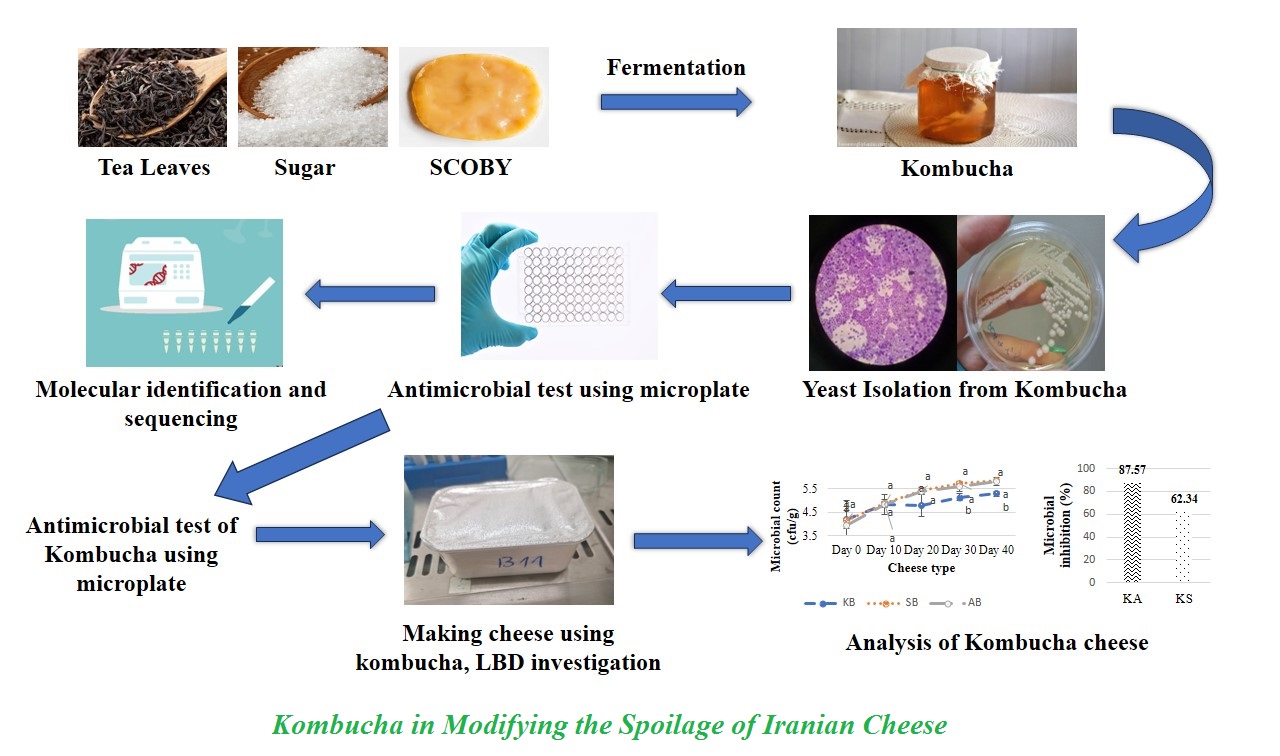
Material and Methods: Four yeast strains were isolated from Kombucha and tested against Clostridium sporogenes ATCC 19404, a gas-forming, proteolytic bacterium implicated in spoilage of dairy products. Two strains with the highest antimicrobial activity were selected and identified via 18S rRNA sequencing. Antimicrobial activity of Kombucha against C. sporogenes was assessed. Kombucha was used as a coagulant with citric acid and coagulant salts, using acid-heat coagulation method in production of Iranian acid-heat coagulated cheese. With these three coagulants, six cheese groups were produced, including three were contaminated with C. sporogenes spores, while the other three were designated as control groups. All samples were stored for 40 d and spoilage control was assessed on Days 0, 10, 20, 30 and 40 under refrigerated storage at 4 ℃. All data were statistically analyzed using ANOVA and Duncan’s multiple range test was used to assess significant differences when P < 0.05.
Results and Conclusion: Results showed that cheese samples made with Kombucha showed greater inhibitory effects, compared to samples coagulated with citric acid and coagulant salts. Furthermore, Kombucha-based cheeses showed significantly lower pH (P < 0.05) and higher acidity over time, indicating greater inhibition of C. sporogenes. These samples preserved firmer texture and better sensory acceptability, compared to cheeses made with citric acid or coagulant salts.
Keywords: Acid-heat coagulated cheese, Anti-microbial characteristics, Clostridium sporogenes, Coagulants, Fermentation, Food Spoilage, Kombucha, Yeast
. Introduction
Iranian acid-heat coagulated cheese is a type of fresh cheese that differs significantly from other commercially fresh cheese made with starter cultures or rennet and it is produced by coagulation through combination of heat and acidification of milk with citric, acetic, lactic acid or coagulant salts at 94 ℃. The near-neutral pH of Iranian acid-heat coagulated cheese makes it susceptible to microbial spoilage, leading to economic loss for producers. Microbiological spoilage is challenging to control, due to the involvement of undesirable microorganisms such as coliforms, yeasts, heterofermentative lactic acid bacteria (LAB) and spore-forming bacteria [1]. Gas-forming spoilage in cheeses can be made by several anaerobes, most particularly spore-forming Clostridium strains, which produce CO2/H2 and off-flavors during growth. In ripened hard and semi-hard cheeses, late blowing defect (LBD) during warm ripening has primarily been linked to C. tryobutyricum and its linked strains. However, LBD develops at temperatures greater than 10 ℃ during ripening and not expected under refrigerated storage [2-4].
Several methods have been investigated in controlling spoilage in cheese, for example physical methods such as bactofugation or microfiltration of milk and using nitrite or lysozyme have been recommended [5]. However, each method includes drawbacks. Bactofugation decreases the number of Clostridium spores but not enough to prevent spoilage in cheese. Microfiltration removes 99% of spores, but is only usable for skimmed milk, as milk fat globules are too large to pass through the filter [6]. The use of nitrite and nitrate as food additives to prevent spoilage includes limitations due to European Food Safety Authority (EFSA), emphasizing on the production of nitrosamine, which is a carcinogenic compound [7]. Lysozyme, derived from egg white, is an effective additive but is an allergen and can be harmful for people with egg allergy [8]. Recently biopreservatives such as bacteriocins have been investigated for controlling cheese spoilage, [9-13] or using Kombucha inoculum as coagulant agent to control cheese spoilage [14].
Kombucha contains a variety of acetic acid bacteria (AAB), LAB and yeasts (e.g., Pichia, Candida, Saccharomyces, Brettanomyces and Zygosaccharomyces) [15]. The activity of these microorganisms and their metabolites provides Kombucha potentials, including antimicrobial, antioxidant [16-18] and therapeutic activities [15, 19-22]. The aim of this study was to investigate the antimicrobial characteristics of yeasts isolated from Kombucha and Kombucha alone as a non-conventional biopreservative against C. sporogenes, using Kombucha inoculum as a coagulant to produce Iranian acid-heat coagulated cheese and through manually contaminating the cheese with spores of C. sporogenes and monitoring the product to investigate its microbiological profile and antimicrobial activity in growth inhibition of C. sporogenes during 40 d of refrigerated storage.
- Materials and Methods
2.1. Kombucha and Fresh Cheese production
Kombucha was produced in Laboratory condition using back slopping method and black tea extract (Camellia sinensis, 0.25% w/v) containing 7.5% w/v sucrose, cooled to room temperature (RT) and inoculated with 10% Kombucha from a previous fermentation and 3% w/v of SCOBY. Fermentation was carried out at RT for 2 m to reach pH 2.5 [23]. Fresh cheese was manufactured in Iran Dairy Industries (Pegah), Gorgan, Iran, from pasteurized milk according to the Institute of Standards and Industrial Researches of Iran (ISIRI) guideline no. 13863, Lactic Cheese - Specifications and Test Methods. To produce fresh cheese according to the guideline, 5% w/v of Kombucha were added to pasteurized milk at 94 °C. The coagulum was cut into pieces, cooled to RT, pack sealed and stored at 4 °C. Two other groups of cheese were produced using citric acid and coagulating salts for comparison [14]
2.2. Isolation of yeasts from Kombucha
Briefly, 100 μl of Kombucha were cultured on yeast extract glucose chloramphenicol (YGC) agar using surface plate method in triplicate and plates were incubated at 28 °C for 72 h. Colonies with various appearances were selected for microscopic assay and isolated using streak plate method [24].
2.3. Preparation of clostridial spore suspension
Clostridium sporogenes ATCC 19404 spore suspension was prepared using the method described by Gamal-eldin et al. (2017). The C. sporogenes was incubated under anaerobic conditions at 37 °C for 24–48 h. The culture containing C. sporogenes was then heated at 63 °C for 40 min to eliminate vegetative cells and quickly stored at 4 °C to initiate thermal shock. Spore concentrations were assessed by plating stock suspensions on RCM agar (reinforced clostridial media). Plates were incubated anaerobically at 37 °C for 48 h. Duplicate plates were used for all dilutions [25].
2.4. Antimicrobial activity of yeasts
The isolated yeast strains from Kombucha were cultivated on sweetened tea (7.5% sucrose) and incubated at 28 °C for 5 d. Cultures were then centrifuged (Centurion, UK) at 5000 rpm for 10 min and cell-free supernatant (CFS) was sterilized in three various ways, using 0.45-μm MCE syringe filters (Biofil, Germany), boiling at 94 ℃ for 2 min and autoclave (121 °C, 15 min). The purpose of boiling was to simulate an environment similar for the creation of acid-heat coagulated cheese and using autoclave to sterilize the yeast strains as well. A diluted bacterial suspension of C. sporogenes ATCC 19404 (104 spores.ml-1) was prepared as described in Section 2.3. Using 96-well microplate and Mueller-Hinton (MH) broth, the antimicrobial characteristics of the sterilized supernatant of each yeast isolate were investigated through incubation of the microplates at 37 °C under anaerobic conditions using anaerobic gas packs (Anaerocult A, Merck, Germany). The antimicrobial activity was assessed using microplate spectrophotometer and Eq. 1:
Eq. 1
Where, was an average of the replicates of light absorption values at 600 nm of the positive control and was an average of the replicates of light absorption values at 600 nm of the negative control. Each test was carried out in triplicate [26].
2.5. DNA extraction and molecular identification of the yeast isolates
Two yeast isolates with the highest antimicrobial activity were selected and their DNA were extracted using phenol-chloroform method. The PCR reaction was carried out by amplifying 18S rRNA gene using ITS-1 (5’-TCCGTAGGTGAACCTGCGG-3’) and NL-4 (5’-GGTCCGTGTTTCAAGACGG-3’) primers. The thermal protocol included an initial denaturation of 94 °C for 5 min, followed by 35 cycles including denaturation at 94 °C for 30 s, primer annealing at 55 °C for 40 s and extension at 72 °C for 60 s. The process was terminated at a final extension of 72 °C for 7 min [27].
2.6. Antimicrobial activity of Kombucha
Antimicrobial activity of Kombucha against C. sporogenes was investigated using a similar protocol in Section 2.3. Kombucha first was neutralized using filter sterilized 1 N NaOH and antimicrobial activity test was carried out twice [24].
2.7. Microbiological analysis of fresh cheese made with Kombucha
Fresh cheese was made using Kombucha as coagulant agent and for comparison, fresh cheeses were produced using coagulant salts and citric acid. Each sample was contaminated with 103 spores.ml-1 of C. sporogenes, control samples without clostridial spores were made. Samples were pack sealed in cups and stored at 4 °C for further analysis during 40 d of storage with 10-d intervals. At each sampling time, 10 g of cheese were mixed with sterile saline (0.85% NaCl) and homogenized for 5 min using stomacher. Dilutions were prepared and each was plated on RCM agar, containing 0.7% l-cysteine hydrochloride as reducing agent to help anaerobic growth. Triplicate plates were incubated at 37 °C for 72 h in anaerobic jar (Merck, Germany) [19,20,28-47].
2.8. Sensory analysis
Sensory analysis was carried out with 15 trained panelists selected from university staff and students. Moreover, 15 trained panelists were asked to rate appearance, color, flavor and consistency, based on 5-point hedonic scale (5- really good, 4- good, 3- normal, 2- bad, 1- really bad) [14].
2.9. Texture profile analysis (TPA)
Using the procedure described by MacFie (1990), a texture profile analysis (TPA) test using TA.XT Plus (Stable Micro System, UK) was assessed through two-cycle compression testing, where each cheese sample was cut into 2 × 2 cm2 cubes and the texture profiler was calibrated using strain rate of 2 mm.s-1 for velocity, 5-s compression delay time and 0.2 N contact force [29].
2.10. Statistical analysis
All analyses and assays were carried out in triplicate for all produced samples and values were expressed as average ±SD (standard deviation). Microbiological data, pH, acidity and texture analysis were carried out using one-way analysis of variance (ANOVA) with SPSS v.26 (IBM, USA). Duncan’s multiple range test was used to assess significant differences within the studied parameters. Differences were considered statistically significant when P < 0.05.
- Results and Discussion
3.1. Antimicrobial activity of the isolated Yeasts against Clostridium sporogenes
Using centrifuge to collect CFS of the yeast isolates in addition to use boiling and syringe filters, the pH value of CFS of each isolate were acidic. The KSY2 and KSY4 isolates included the lowest pH value and overall, showed the highest antimicrobial activity against C. sporogenes. As shown in Table 1, the inhibition percentage of the selected yeast isolated were 99 and 88.5 when using syringe filters and the inhibition percentages were 75.17 and 67.7 when using heat to CFS of the isolates. The KSY2 and KSY4 samples in the two treatments included significant differences (P < 0.05). The CFS of yeast strains were sterilized using autoclave, showing no antimicrobial activity.
The ability of yeasts to ferment sugar might explain the decrease in pH value due to decomposition of sucrose into glucose and fructose under anaerobic conditions, resulting in the production of CO2 or alcohol in the fermentation [30]. It was reported that non-saccharomyces yeasts might play a significant role at the beginning of anaerobic fermentation, increasing ethanol content or producing various metabolites such as aromatic esters, organic acids, fatty acids or higher alcohols. However, it appears that the antimicrobial effects were due to the possible heat-stable metabolites produced by the yeasts such as organic acids produced through sucrose decomposition, leading to decrease in pH and subsequently showing antimicrobial activity against C. sporogenes [31].
3.2. Molecular identification of yeast isolates
Yeast strains of KSY2 and KSY4, which showed the highest antimicrobial activity against C. sporogenes, were identified as Candida parapsilosis (Table 2). It was reported that C. parapsilosis might naturally be present in the human intestinal microbiota at 102 to 104 CFU.g-1. Candida strains, including C. parapsilosis from feta cheese and feces of healthy babies, were isolated and their probiotic characteristics were assessed, as C. parapsilosis strains had the highest adhesion to intestinal cells and the highest cholesterol decrease in other Candida strains. This yeast has been reported in foods such as fermented olives, cassava and fermented dairy products [32-33]. The C. parapsilosis is known for its significant ability and capacity to ferment carbon sources. It was reported that C. parapsilosis could produce mannitol from glucose during the fermentation, with 1.97 g.l-1 of mannitol produced after 120 h of fermentation [34]. It is possible that C. parapsilosis in Kombucha uses glucose and fructose as carbon sources as similar results reported by Sievers et al. (1995), suggesting this strain was involved in the production of mannitol in Kombucha [35]. Mannitol is a substance produced by microorganisms in Kombucha and can be used as a carbon source by AAB [36-37].
3.3. Antimicrobial characteristics of Kombucha against Clostridium sporogenes
Heat-treated Kombucha showed a 97% inhibition of C. sporogenes, slightly higher than that Kombucha without heat-treatment did (94%). Neutralized Kombucha with NaOH (1 N) showed no antimicrobial activity against C. sporogenes. Velicanski et al. (2014) reported that acetic acid produced during fermentation by AAB and yeasts decreased the pH, resulting in antimicrobial activity [38]. Kaewkod et al. (2019) highlighted the importance of organic acids in Kombucha antimicrobial activity against pathogenic bacteria such as Escherichia coli, Salmonella Typhi and Shigella dysenteriae, while neutralized Kombucha did not show any antimicrobial activity against these microorganisms. Kombucha contains heat-resistant antimicrobial agents, which can be used in various food matrices to control thermophilic spore-forming bacteria [39].
Kombucha antimicrobial characteristics are attributed to the activity and production of metabolites by yeasts and AAB during fermentation. According to Al-Mohammadi et al., 2021, Kombucha contains nine groups of chemical components, including alcohols, acids, lactones, condensed heterocyclic compounds, antibiotics, esters, aldehydes, fatty acids and alkaloids. These metabolites act synergistically, contributing to Kombucha antimicrobial characteristics. While the low pH contributes to the antimicrobial effects, other heat-stable and pH-dependent compounds play roles in Kombucha as an antimicrobial agent [40-41].
3.4. Analysis of Kombucha Fresh Cheese
3.4.1. pH and Acidity
Although, fresh cheese made with Kombucha generally included low pH levels (Table 3) [37-42; 43]. By comparing the 10-d interval of each sample, pH values decreased over time with the highest decrease in Kombucha cheese contaminated with spores (KB). The acidity, as shown in Table 4 and through comparing each sample the 10-d intervals, increased significantly in the same cheese group. The C. sporogenes is proteolytic and gas-forming and its metabolism can increase pH and drive spoilage in dairy matrices. In this study, Kombucha-derived treatments
limited these changes, consistent with decreased growth and activity of C. sporogenes [44]. Therefore, it could be concluded that the use of Kombucha might inhibit the growth of C. sporogenes inoculated into cheeses. Changes in the acidity of cheeses produced with coagulant salt and citric acid and contaminated with C. sporogenes and their respectively control groups were not significant (P > 0.05). However, the average acidity of Kombucha cheeses showed a significant difference (P < 0.05), compared to the other cheese groups. Due to the possible growth of C. sporogenes in cheeses produced with coagulant salt and citric acid and since their respective changes were not significant, it might indicate the growth of C. sporogenes and the neutralization of the acids during storage.
3.4.2. Antimicrobial effect of Kombucha on fresh cheese against Clostridium sporogenes
Microbial count on artificially contaminated cheese groups of Kombucha, coagulating salts and citric acid was carried out during 40 d of storage. The results (Fig. 1) indicated an increase in microbial count of cheese made with coagulant salt from 4.15 to 5.82 CFU.g-1 and citric acid from 3.95 to 5.81 CFU.g-1. There were no significant changes (P > 0.05) in these groups, indicating that neither coagulant salts nor citric acid showed antimicrobial effect against C. sporogenes in fresh cheese over 40 d of storage. Cheese samples made with Kombucha showed an increasing trend from 4.19 to 5.27 CFU.g-1; however, the increase in microbial count was less than that in other groups. Comparison of average microbial count in Kombucha cheese on Days 30 and 40 of storage showed a significant change (P < 0.05), compared to the other two groups of cheese.
It was assessed that Kombucha cheese showed 87.57% higher inhibition effect, compared to citric acid cheese, and 62.34% higher inhibition effect, compared to coagulant salts cheese. Vukic et al. (2021) detected that use of Kombucha in producing fresh cheese included inhibitory effects on E. coli and Listeria monocytogenes during 30 d of storage, decreasing microbial count by 98.35 and 98.98%, compared to the control group, respectively. This effect was likely due to the antimicrobial characteristics of Kombucha, which were attributed to its pH and bioactive compounds, including phenolic compounds. These compounds included bacteriostatic and anti-proliferative effects against bacterial growth [38-45].
3.4.3. Texture Analysis
During 40 d of storage, there were no changes in the texture of the cheeses in the control group. According to Fig. 2 and by comparing the average of each contaminated cheese group in each interval, Kombucha cheese contaminated with C. sporogenes demonstrated a further stable texture, compared to cheeses made with coagulant salt and citric acid with significant changes (P < 0.05), suggesting possible antimicrobial effects of Kombucha against C. sporogenes. Moreover, the changes in cheese made with citric acid included a harder texture, which could be attributed to the purity of the citric acid in the formulation. Pure citric acid promotes further aggregation of milk proteins in cheese [46]. According to Gomez-Torres et al. (2015), the softening of cheese texture is due to metabolic activity of Clostridium genus, leading to the hydrolysis of milk proteins and further disruption of the cheese matrix [47]. Therefore, the softening of cheeses made with coagulant salt and citric acid was more significant than that in Kombucha cheese. The inhibitory effect of Kombucha on the growth of C. sporogenes, contributed to the firmer further consistent texture of the Kombucha cheese.
3.4.4. Sensory analysis
After cheese production, sensory analysis was carried out, with the sensorial attributes are present in Fig. 3 (color, aroma, cuttability, taste, chewiness and mouthfeel). Iranian acid-heat coagulated cheese produced with Kombucha included a mild sour taste with a soft spreadable texture, distinguishing it from commercially available acid-heat coagulated cheese, which were made with coagulant salt. It seems that except the overall result, the sensorial attributes between cheese made with Kombucha and cheese made with salt included no significant differences (P > 0.05) only in the color characteristic. Although the Kombucha cheese received an overall acceptable score (4.14/5), based on information in Fig. 3, its lowest score was in the color characteristic, attributed to the slight browning from the use of black tea in Kombucha production. Similarly, in the sensory evaluation by Vukic et al. (2021), freshly produced Kombucha cheese scored the lowest for aroma and color. Cheese produced with citric acid included the lowest overall score with an average of 3.38 and its sensorial attributes and overall results showed significant differences (P < 0.05), comparing to cheeses made with Kombucha and coagulant salt [14,16-22,28-48].
- Conclusion
The inherent nature of dairy products and the processing of Iranian acid-heat coagulated cheese has made this product susceptible to various types of microbial spoilage, including gas-forming spoilage by Clostridium spp. in dairy systems. Under refrigerated storage (4 °C), Kombucha and cell-free yeast metabolites moderated spoilage indicators and inhibited C. sporogenes, compared to acid or salt coagulants. Several methods have been suggested to prevent microbial spoilage such as using chemical and physical methods. Considering the preferences of the society and the popularity of using natural preservatives in the field of food industry and the preference of consumers to use foods produced with natural preservatives with beneficial health characteristics; Kombucha, as a novel product with unique compounds resulted from the activity of bacteria and yeasts, were investigated as a biological additive. For Kombucha and the metabolites from identified Kombucha yeasts, C. parapsilosis had high antimicrobial characteristics against C. sporogenes. It was investigated that the inhibitory effect of Kombucha, as a coagulant used in cheese, was 87.57% higher, compared to cheese coagulated with citric acid. In comparison to cheese made with coagulant salts, Kombucha showed an inhibitory effect of 62.34%. Therefore, Kombucha can be used as a potential biopreservative. Further research should be carried out to understand precise capabilities of various types of Kombucha due to the presence of their specific compounds and their potential use in dairy industry products, especially Iranian acid-heat coagulated cheese.
- Acid-heat coagulated cheese
- Anti-microbial characteristics
- Clostridium sporogenes
- Coagulants
- Fermentation
- Food Spoilage
- Kombucha
- Yeast
How to Cite
References
Ledenbach LH, Marshall RT. Microbiological spoilage of dairy products. In: Compendium of the Microbiological Spoilage of Foods and Beverages. Springer; 2009. p. 41–67. https://doi.org/10.1007/978-1-4419-0826-1_2
2. Klijn N, Nieuwenhof FF, Hoolwerf JD, Van Der Waals CB, Weerkamp AH. Identification of Clostridium tyrobutyricum as the causative agent of late blowing in cheese by species-specific PCR amplification. Appl Environ Microbiol. 1995; 61(8): 2919-2924. https://doi.org/10.1128/aem.61.8.2919-2924.1995
3. Ruusunen M, Surakka A, Korkeala H, Lindström M. Clostridium tyrobutyricum strains show wide variation in growth at different NaCl, pH and temperature conditions. J Food Prot [Internet]. 2012; 75(10): 1791-1795. https://doi.org/10.4315/0362-028X.JFP-12-109
4. Podrzaj L, Burtscher J, Küller F, Domig KJ. Strain-Dependent Cheese Spoilage Potential of Clostridium tyrobutyricum. Microorganisms [Internet]. 2020; 8(11): 1836. https://doi.org/10.3390/microorganisms8111836
5. Lodi R, Stadhouders J. The use of lysozyme to control butyric acid fermentation. Bull Int Dairy Fed. 1990; 251: 51-54.
6. Garde S, Arias R, Gaya P, Nuñez M. Occurrence of Clostridium spp. in ovine milk and Manchego cheese with late blowing defect: Identification and characterization of isolates. Int Dairy J. 2011; 21(4):272–278. https://doi.org/10.1016/j.idairyj.2010.11.003
7. EFSA Panel on Contaminants in the Food Chain (CONTAM). Nitrate in vegetables. EFSA J. 2008; 689:1-79. https://doi.org/10.2903/j.efsa.2008.689
8. Khorshidian N, Khanniri E, Koushki MR, Sohrabvandi S, Yousefi M. An overview of antimicrobial activity of lysozyme and its functionality in cheese. Front Nutr. 2022; 9: 833618.
9. Martínez-Cuesta MC, Requena T, Peláez C. Use of a bacteriocin-producing transconjugant as starter in acceleration of cheese ripening. Int J Food Microbiol. 2001;70(1-2):79-88. https://doi.org/10.1016/S0168-1605(01)00516-5
10. Gómez-Torres N, Ávila M, Gaya P, Garde S. Prevention of late blowing defect by reuterin produced in cheese by a Lactobacillus reuteri adjunct. Food Microbiol. 2014; 42: 82-88. http://dx.doi.org/10.1016/j.fm.2014.02.018
11. Cleveland J, Montville TJ, Nes IF, Chikindas ML. Bacteriocins: Safe, natural antimicrobials for food preservation. Int J Food Microbiol. 2001;71(1):1-20. https://doi.org/10.1016/S0168-1605(01)00560-8
12. Mauriello G, De Luca E, La Storia A, Villani F, Ercolini D. Antimicrobial activity of a nisin-activated plastic film for food packaging. Lett Appl Microbiol. 2005; 41: 464-469. https://doi.org/10.1111/j.1472-765X.2005.01796.x
13. Sobrino-Lopez A, Raybaudi-Massilia R, Martin-Belloso O. Enhancing inactivation of Staphylococcus aureus in skim milk by combining high intensity pulsed electric fields and nisin. J Food Prot. 2006; 69: 345-353. https://doi.org/10.4315/0362-028X-69.2.345
14. Vukić V, Iličić M, Vukić D, Kocić-Tanackov S, Pavlić B, Bjekić M, et al. The application of Kombucha inoculum as an innovative starter culture in fresh cheese production. LWT. 2021; 151: 112142. https://doi.org/10.1016/j.lwt.2021.112142
15. Jafari R, Naghavi NS, Khosravi-Darani K, Doudi M, Shahanipour K. Isolation, molecular and phylogenetic identification of microorganisms from Kombucha solution and evaluation of their viability using flow cytometery, Food Sci Technol Brazil, 2022. https://doi.org/10.1590/fst.63220
16. Watawana MI, Jayawardena N, Gunawardhana CB, Waisundara VY. Health, wellness and safety aspects of the consumption of Kombucha. J Chem. 2015; 2015: 591869. https://doi.org/10.1155/2015/591869
17. Jayabalan R, Marimuthu S, Thangaraj P, Sathishkumar M, Binupriya AR, Swaminathan K, et al. Preservation of Kombucha tea: Effect of temperature on tea components and free radical scavenging properties. J Agric Food Chem. 2008; 56(19): 9064-9071. https://doi.org/10.1021/jf8020893
18. Bhattacharya S, Gachhui R, Sil PC. Effect of Kombucha, a fermented black tea in attenuating oxidative stress mediated tissue damage in alloxan induced diabetic rats. Food Chem Toxicol. 2013; 60: 328-340. https://doi.org/10.1016/j.fct.2013.07.051
19. Ebrahimi Pure A, Ebrahimi Pure M. Antioxidant and antibacterial activity of Kombucha beverages prepared using banana peel, common nettles and black tea infusions. Appl Food Biotechnol. 2016; 3(2):125-130. https://doi.org/10.22037/afb.v3i2.11138
20. Davati N. Evaluation of antimicrobial and antibiotic resistance properties of microbial community in a traditional cheese. Food Process Preserv J. 2022; 14 (2): 131-146. http://doi.org/10.22069/ejfpp.2022.19620.1685
21. Atashzaban B, Jalilzadeh A, Sadeghi MR. Production of functional white-brined cheese by the replacement of milk fat with grape seed oil. Food Process Preserv J. 2019. 12 (2). 1-12. http://doi.org/10.22069/ejfpp.2021.11276.1357
22. Massoud R., Jafari R. & Khosravi-Darani K. Kombucha as a health-beneficial drink for human health. Plant Foods Hum Nutr. 2024; 79: 251-259. https://doi.org/10.1007/s11130-024-01169-8
23. Coelho RMD, de Almeida AL, do Amaral RQG, da Mota RN, de Sousa PHM. Kombucha. Int J Gastron Food Sci. 2020; 22: 100272. https://doi.org/10.1016/j.ijgfs.2020.100272
24. Wang B, Rutherfurd-Markwick K, Zhang XX, Mutukumira AN. Isolation and characterisation of dominant acetic acid bacteria and yeast isolated from Kombucha samples at point of sale in New Zealand. Curr Res Food Sci. 2022; 5:835-844. https://doi.org/10.1016/j.crfs.2022.04.013
25. Gamal-Eldin HM, Abd El-Salam BA, Seoudi OA, Mahmoud HA, Mohamed AG. Inhibition of processed cheese-late gas using candida Pelliculosa yeast. Int J Dairy Sci. 2017; 12(3): 197-203. https://doi.org/10.3923/ijds.2017.197.203
26. Wang J, Liu H, Zhao J, Gao H, Zhou L, Liu Z, et al. Antimicrobial and antioxidant activities of the root bark essential oil of Periploca sepium and its main component 2-hydroxy-4-methoxybenzaldehyde. Molecules. 2010; 15(8): 5807-5817. https://doi.org/10.3390/molecules15085807
27. Sharma R, Sharad S, Minhas G, Sharma DR, Bhatia K, Sharma NK. DNA, RNA isolation, primer designing, sequence submission and phylogenetic analysis. In: Basic Biotechniques for Bioprocess and Bioentrepreneurship. Academic Press; 2023. p. 197-206. https://doi.org/10.1016/B978-0-12-816109-8.00012-X
28. Ivanovic M, Mirkovic N, Mirkovic M, Miocinovic J, Radulovic A, Solevic Knudsen T, et al. Autochthonous Entrococcus durans PFMI565 and Lactococcus lactis subsp. lactis BGBU1-4 in bio-control of Listeria monocytogenes in ultrafiltered cheese. Foods. 2021; 10: 1448. https://doi.org/10.3390/foods10071448
29. MacFie HJH. Assessment of the sensory properties of food. Nutr Rev. 1990; 48(2): 87-93.
30. Santos Jr RJ, Batista RA, Rodrigues Filho SA, Lima AS. Antimicrobial activity of broth fermented with Kombucha colonies. J Microb Biochem Technol. 2009;1(1):72-78. http://dx.doi.org/10.4172/1948-5948.1000014
31. Henriques D, Minebois R, Mendoza SN, Macías LG, Pérez-Torrado R, Barrio E, et al. A multiphase multiobjective dynamic genome-scale model shows different redox balancing among yeast species of the Saccharomyces genus in fermentation. mSystems. 2021; 6(4): e00413-21. https://doi.org/10.1128/msystems.00260-21
32. Kourelis A, Kotzamanidis C, Litopoulou-Tzanetaki E, Scouras ZG, Tzanetakis N, Yiangou M. Preliminary probiotic selection of dairy and human yeast strains. J Biol Res. 2010; 13: 93.
33. Lara-Hidalgo CE, Hernández-Sánchez H, Hernández-Rodríguez C, Dorantes-Álvarez L. Yeasts in fermented foods and their probiotic potential. Austin J Nutr Metab. 2017; 4(1): 1045.
34. Meng Q, Zhang T, Wei W, Mu W, Miao M. Production of mannitol from a high concentration of glucose by Candida parapsilosis SK26.001. Appl Biochem Biotechnol. 2017; 181: 391-406. https://doi.org/10.1007/s12010-016-2219-0
35. Sievers M, Lanini C, Weber A, Schuler-Schmid U, Teuber M. Microbiology and fermentation balance in a Kombucha beverage obtained from a tea fungus fermentation. Syst Appl Microbiol. 1995; 18(4): 590-594. https://doi.org/10.1016/S0723-2020(11)80420-0
36. Antolak H, Piechota D, Kucharska A. Kombucha tea—a double power of bioactive compounds from tea and symbiotic culture of bacteria and yeasts (SCOBY). Antioxidants. 2021; 10(10): 1541. https://doi.org/10.3390/antiox10101541
37. Bishop P, Pitts ER, Budner D, Thompson-Witrick KA. Kombucha: Biochemical and microbiological impacts on the chemical and flavor profile. Food Chem Adv. 2022; 1: 100025.
38. Velićanski AS, Cvetković DD, Markov SL, Tumbas Šaponjac VT, Vulić JJ. Antioxidant and antibacterial activity of the beverage obtained by fermentation of sweetened lemon balm (Melissa officinalis L.) tea with symbiotic consortium of bacteria and yeasts. Food Technol Biotechnol. 2014; 52(4): 420-429. https://doi.org/10.17113/b.52.04.14.3611
39. Kaewkod T, Bovonsombut S, Tragoolpua Y. Efficacy of Kombucha obtained from green, oolong and black teas on inhibition of pathogenic bacteria, antioxidation and toxicity on colorectal cancer cell line. Microorganisms. 2019; 7(12): 700. http://doi.org/10.3390/microorganisms7120700
40. Al-Mohammadi AR, Ismaiel AA, Ibrahim RA, Moustafa AH, Abou Zeid A, Enan G. Chemical constitution and antimicrobial activity of Kombucha fermented beverage. Molecules. 2021; 26(16): 5026. http://doi.org/10.3390/molecules26165026
41. Villarreal-Soto SA, Bouajila J, Pace M, Leech J, Cotter PD, Souchard JP, et al. Metabolome-microbiome signatures in the fermented beverage, Kombucha. Int J Food Microbiol. 2020; 333: 108778. http://doi.org/10.1016/j.ijfoodmicro.2020.108778
42. Degenek J, Kanurić K, Iličić M, Vukić D, Mrkonjić Ž, Pavlić B, et al. Fortification of fresh Kombucha cheese with wild thyme (Thymus serpyllum L.) herbal dust and its influence on antioxidant activity. Food Biosci. 2023; 56: 103161. https://doi.org/10.1016/j.fbio.2023.103161
43. Vukić D, Pavlić B, Vukić V, Iličić M, Kanurić K, Bjekić M, et al. Antioxidative capacity of fresh Kombucha cheese fortified with sage herbal dust and its preparations. J Food Sci Technol. 2022; 59(6): 2274-2283. https://doi.org/10.1007/s13197-021-05241-y
44. Oliveira RBA, Ramos GLPA, Sá PBZR, Pereira APM, Conceição DA, Cruz AG, et al. Controlling Clostridium sporogenes spoilage of “requeijão cremoso” processed cheese: Modeling the growth/no-growth probability as a function of pH, sodium chloride and nisin. Food Control [Internet]. 2024; 162: 110435. https://doi.org/10.1016/j.foodcont.2024.110435
45. Bouarab Chibane L, Degraeve P, Ferhout H, Bouajila J, Oulahal N. Plant antimicrobial polyphenols as potential natural food preservatives. J Sci Food Agric. 2019; 99(4): 1457-1474. https://doi.org/10.1002/jsfa.9357
46. Gaber SM, Johansen AG, Devold TG, Rukke EO, Skeie SB. Manufacture and characterization of acid-coagulated fresh cheese made from casein concentrates obtained by acid diafiltration. J Dairy Sci. 2021; 104(6): 6598–6608. https://doi.org/10.3168/jds.2020-19917
47. Gómez-Torres N, Garde S, Peirotén Á, Ávila M. Impact of Clostridium spp. on cheese characteristics: Microbiology, color, formation of volatile compounds and off-flavors. Food Control. 2015; 56: 186-194. https://doi.org/10.1016/j.foodcont.2015.03.025
- Abstract Viewed: 275 times
- pdf Downloaded: 117 times