
Development of Specific Primers for Detection of Buffalo (Bubalus bubalis) Cytochrome b Gene in Processed Food Products
Applied Food Biotechnology,
Vol. 12 No. 1 (2025),
4 January 2025
,
Page 1-9 (e30)
https://doi.org/10.22037/afb.v12i1.50418
Abstract
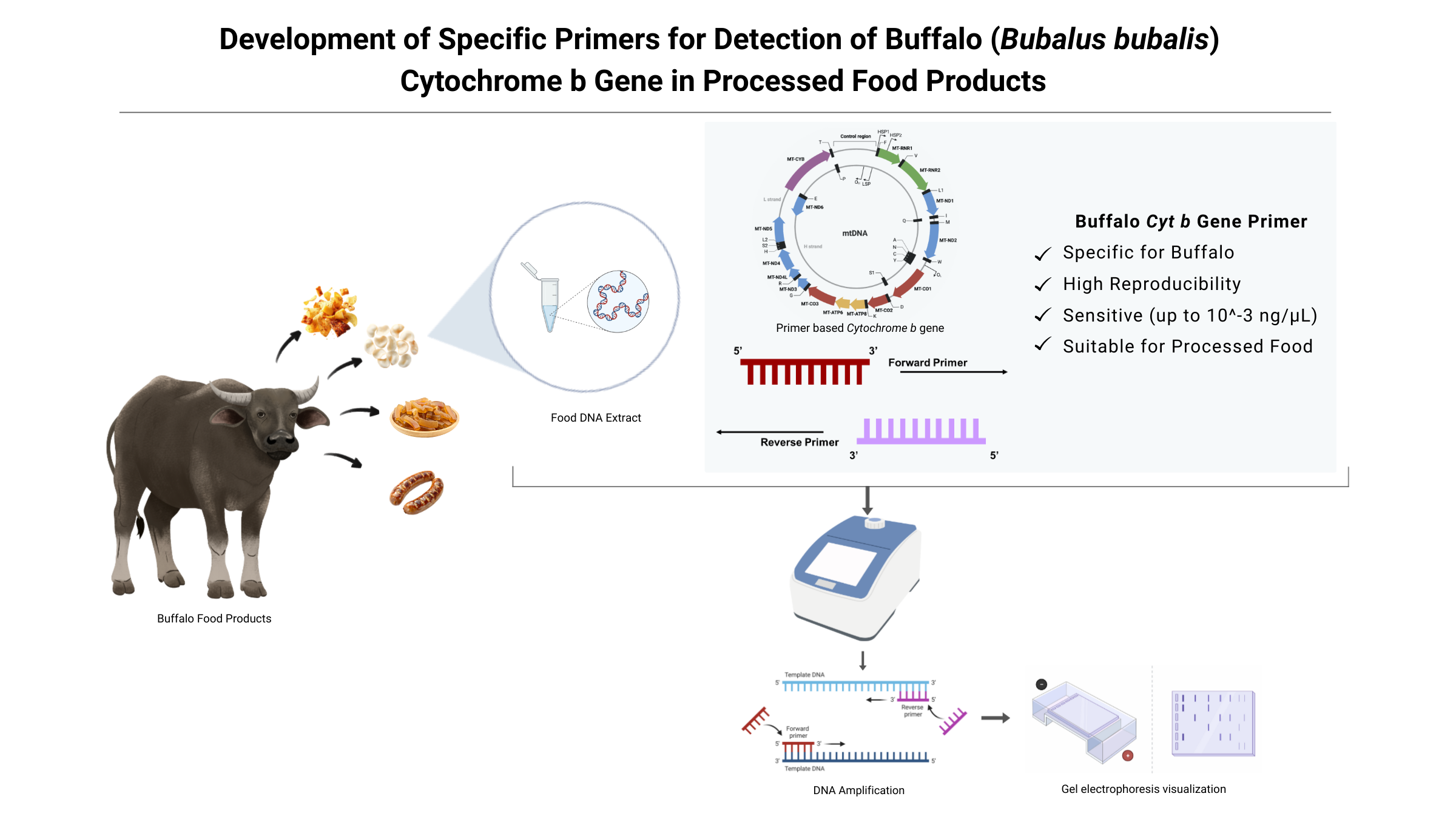
Background and Objective: Buffalo plays a role in providing animal protein in Indonesia. Their meat and skins are widely used as raw materials for processed foods. However, the high demand for buffalo products is not proportionate with the current supply; thus, creating chances for food fabricating. This practice is not only illegal but also causes serious risks to food safety and halal compliance. The detection of adulteration in food product can be carried out using polymerase chain reaction technique and specific primers that target buffalo DNA. This research aimed to develop primers that could accurately identify buffalo DNA.
Material and Methods: The primers were designed based on the sequence of the buffalo cytochrome b gene. The effectiveness of these primers in recognizing and amplifying buffalo DNA was assessed using polymerase chain reaction technique. Specificity assessments were carried out to assess the primer capability to detect buffalo DNA, with comparative controls including cattle, goat, chicken, pig, dog and mouse DNA. Sensitivity assessments were carried out to assess the minimum DNA concentration detectable by polymerase chain reaction. Then, the ability of these primers in identifying buffalo skin crackers was assessed against controls of cow skin crackers, goat skin crackers, and crispy chicken skin and pork skin crackers.
Results and Conclusion: The polymerase chain reaction results indicated that the Buffalo_5.1 primer pair (forward 5’-TTAGTACTATTCGCACCCGACCTC-3’ and reverse 5’-TCGTTGTTTGGATGTATGTAGCAG-3’) successfully amplified buffalo DNA specifically, with a detection limit of up to 10-3 ng μl-1 (assuming that the solution included a density of 1 g ml-1 equal to 10-⁷ % w/w), which could potentially increase to 10-5 ng μl-1 (10-⁷ % w/w) under optimal conditions. Furthermore, it was able to detect buffalo DNA in buffalo-skin cracker products even at low DNA purity levels. These results suggest that the Buffalo_5.1 primer includes the potential to serve as a reliable molecular marker in polymerase chain reaction-based food authentication studies.
Keywords: Buffalo, Food adulteration, Forward and reverse primers, PCR
- Introduction
Indonesia, the fourth most populous country in the world, faces a high demand for animal protein, including buffalo meat. However, domestic production is insufficient to meet national needs. In 2023, buffalo meat production reached only 22,110 tons, while the total national demand for beef and buffalo meat was 680,019 tons and is projected to increase to 724,188 tons in 2024 (1,2). To overcome this problem, in 2023, Indonesia imported large quantities of buffalo products, nearly 100,000 tons, majorly from India (3). Other than serving as a protein source, buffalo commodities support the tourism sector through the production of local delicacies such as rambak crackers made from buffalo (Bubalus bubalis) skin. The increasing demand and limited supply, however, create opportunities for food fraud that threaten food safety and halal compliance. Reliable authentication is therefore essential. Molecular methods based on nucleic acid analysis, particularly polymerase chain reaction (PCR), are widely used for species identification because of their high sensitivity and the inherent stability of DNA molecules. In various research, the PCR technique targeting mitochondrial DNA has commonly been used for species identification in food products (4–7); however, specific molecular biomarkers for detecting adulteration in buffalo-derived and processed products are underdeveloped.
Mitochondrial DNA offers greater effectiveness than nuclear DNA because it exists in thousands of copies per cell, enabling reliable detection even from limited or degraded samples. It yields higher amplification success in extensively processed food products where DNA fragmentation is severe (5). The mitochondrial cytochrome b (cytb) gene has long been used as a molecular marker for species identification in meat authentication (8). The cytb gene shows a lower mutation rate compared to other genes within mitochondrial DNA loci (9). In previous research, the cytb gene sequence has been used as a basis for designing species-specific primers for dogs, which have proven effective in detecting dog meat contamination in meatball products (10), verifying that the leather garment material is from cowhide (11), as well as for halal authentication (4,12–17).
Although previous studies have developed cytb-based primers for buffalo DNA detection, most studies were designed for raw or minimally processed meats, with reported amplicon sizes ranging from approximately 655 to 106 bp (18, 19). Amplicon size critically affects detection performance in processed foods, where DNA degradation is extensive—larger fragments often fail to amplify, while overly short targets may decrease specificity. Therefore, current primers are inappropriate for highly processed non-meat buffalo derivatives such as buffalo skin crackers (rambak), which include severe thermal and chemical treatments.
Advanced molecular approaches such as real-time PCR and loop-mediated isothermal amplification (LAMP) have improved the sensitivity of buffalo DNA detection, achieving detection limits nearly 1% (20, 21). However, these techniques need costly reagents and specialized instrumentation, limiting their practicality for routine food inspection or field assessing. Despite these developments, a significant research gap persists that the current cytb-based primers are not optimized for detecting buffalo DNA in highly processed non-meat derivatives such as buffalo skin crackers (rambak) that include intense thermal and chemical treatments leading to severe DNA degradation. To address this limitation, the present study aimed to design and assess species-specific cytb primers with moderate amplicon lengths optimized for degraded DNA. This study provided a foundation for reliable authentication of processed buffalo products and contributed to the broader goal of establishing standardized molecular protocols for food authenticity verification and halal certification.
- Materials and Methods
2.1. Primer Design Specific for Buffalo
The primer was designed based on the cytb coding sequence from the National Center for Biotechnology Information (NCBI) database
(https://www.ncbi.nlm.nih.gov/). The sequences were aligned with cytb nucleotide sequences from other species using BIOEDIT software to identify unique polymorphic sequences that are specific for the buffalo species. The selected polymorphic sequences were then used as references in the design of specific primers. The primer design process was facilitated by the Primer3Plus software (https://primer3plus.com/). Once appropriate primer candidates were identified, an in-silico assessment was carried out using basic local alignment search tool (BLAST), available on the NCBI website
(https://blast.ncbi.nlm.nih.gov/Blast.cgi) to verify that the primers specifically amplify buffalo DNA. Then, in-silico analysis was carried out using NetPrimer, available on the Premier Biosoft website
(https://www.premierbiosoft.com/netprimer/) to assess the melting temperature (Tm), GC percentage, GC clamp, potential secondary structure formation (hairpin, self-dimer, cross-dimer), repeats and runs. The primers were synthesized by Integrated DNA Technologies, Singapore.
2.2. Sample Preparation
The sample included buffalo meat, beef, goat, chicken, pork, dog, rat, buffalo skin crackers, beef skin crackers, goat skin crackers, crispy chicken skin and pork skin crackers from various stores. Each sample was packaged in plastic containers and stored in a freezer at -20 °C to preserve its freshness and prevent cross contaminations.
2.3. DNA Isolation using Chloroform-Isoamyl Alcohol (24:1) Method
Briefly, DNA isolation was carried out under aseptic condition using 20 mg of the sample. Then, 500 μl of salt-tris-EDTA (STE) buffer was added as the lysis buffer, with 40 µl of 10% SDS and 20 µl of proteinase-K at a concentration of 20 mg ml-1. The mixture was vortexed and incubated at 55 °C and 800 rpm overnight until the cell membranes were lysed using thermo shaker (Biosan TS-100, Latvia). Then, mixture was centrifuged (TOMY MDX-310, Japan) at 12,000 rpm for 10 min at 29 °C. The supernatant, which contained the crude DNA components, was collected at 500 μl and transferred to a fresh microtube. Then, 500 μl of chloroform-isoamyl alcohol solution (24:1) and 40 μl of 5 M NaCl were added to the supertnatant. The microtube was shaked until the solution was homogenized and then centrifuged at 12,000 rpm for 10 min at 29 °C. The pellet was discarded and 400 μl of the supernatant were transferred to a fresh microtube. The supernatant was mixed with 400 μl of chloroform-isoamyl alcohol (24:1) and shaked until the mixrure was homogenized. The mixture was centrifuged at 12,000 rpm for 10 min at 29 °C. The pellet was discarded and the supernatant was transferred to a fresh microtube. Then, 40 μl of 5 M NaCl and 800 μl of cold absolute ethanol were added to the supernatant, followed by incubation at -20 °C for 2.5 h to precipitate the DNA. The mixture was centrifuged at 12,000 rpm for 10 min at 4 °C to allow the DNA to settle into a pellet. The pellet was treated with 500 μl of 70% ethanol and recentrifuged at 12,000 rpm for 10 min at 4 °C. The supernatant was discarded and the pellet was dried at 55 °C for 30 min until the ethanol evaporated using thermomixer. Pellet was dissolved in 50 μl of TBE buffer at pH 7.6. This solution contained the DNA isolate from the sample, which could be analyzed for purity and concentration using nanodrop spectrophotometer. The concentration and purity of the DNA isolate were verifyed using Implen NanoPhotometer (Model NP 80, Germany) at 260/280 nm.
2.4. Reaction Components and PCR Program Settings
The PCR cocktails included 0.5 µl of forward and reverse primers (10 μM), 1 µl of 50 ng µl-1 DNA sample isolate, 5 µl of MyTaq HS red mix (Bioline BIO-25048, Germany) and 3 µl of nuclease-free water (Invitrogen AM9932, USA) (22). The amplification steps consisted of initial denaturation (95 °C for 60 s); followed by denaturation (95 °C for 15 s), annealing (63 °C for 15 s), elongation (72 °C for 10 s) and final elongation (72 °C for 60 s); as well as cooling (4 °C) (Bioline, 2014). The PCR instrument was PCR gradient thermocycler (SensoQuest, Germany). The PCR results were analyzed using gel electrophoresis system (Mupid-exU, Japan) with agarose gel concentration of 1.5% at 50 V for 55 min.
2.5. Primer Specificity Assay
The specificity assay was carried out using target DNA (buffalo) and non-target DNA (cattle, goats, chickens, pigs and rats) at a concentration of 50 ng µl-1. The assay was carried out in two repetitions. The specificity of the primers could be verifyed after analyzing the amplicon bands resulting from electrophoresis. A primer was considered specific if only the amplicon band from the target DNA was present; which in this research, context referred to the cytb gene fragment from the buffalo's mitochondria.
- Primer Sensitivity Assay
The primer sensitivity assay was carried out involving a gradient of buffalo DNA concentrations, which included 100, 10, 1, 10-1, 10-2, 10-3, 10-4 and 10-5 ng μl-1. The sensitivity of the primers was assessed based on the lowest concentration of buffalo mitochondrial DNA that could be amplified. The primer sensitivity assay was carried out in three repetitions.
- Primer Sampling Assay
The primer sampling assay was carried out using processed food products in the form of crackers made from animal skin. The positive sample consisted of buffalo skin crackers, while the negative samples included cattle skin crackers, goat skin crackers, crispy chicken skin and pig skin crackers. The positive control consisted of pig DNA with a concentration of 100 ng μl-1 and negative control consisted of the nuclease free water (Invitrogen AM9932, USA) were used in this step to assess the validity of the results. The primer sampling assay was carried out in two repetitions.
- Results and Discussion
3.1. Cytochrome b (cytb) Primer Development
The primer was designed using in-silico analysis. The designed primer candidates have met the ideal criteria for all parameters, with the exception of self-dimer formation. The Buffalo_5.1 reverse primer included a ∆G value of -8.76 kcal mol-1. Primers with a ∆G value less than -6 kcal/mol were still used, despite the potential for secondary structure formation. This shortcoming was addressed through the optimization of the PCR procedure, as is commonly practiced in studies involving PCR techniques (23). Primer development based on in-silico analysis provides a predictive result but may differ from actual PCR conditions. In-silico analysis of primer specificity often cannot be used as a reference for identifying good primer specificity (24). Therefore, primer validation using the PCR process is essential to identify primers that have been developed to include good quality.
3.2. Primer Specificity Validation
Primer specificity was assessed via its ability to hybridize specifically with target DNA without producing DNA amplicon products from non-target species using PCR method. The PCR amplification product visualization showed that the Buffalo_5.1 primer pair specifically amplified buffalo DNA and did not amplify DNA from other samples (cattle, goats and mice). This demonstrated that the designed primer was specific and complementary to the buffalo DNA. The results showed consistency upon repetition. In the first and the second trials, the visible DNA amplicon band was a single band that corresponded to the target size of 216 bp (Figure 1).
The specificity assay results for the Buffalo_5.1 primer pair verify that the 5.1 primer pair show good performance for specificity and amplification pattern consistency. The specificity of this primer is critical as it ensures reliability when used for assessment the presence of adulteration or the authentication of a material. Primer specificity is key in PCR-based adulteration assessment as it assesss the validity, accuracy and credibility of detection results. Specific primers accurately detect the target DNA because they only bind to the DNA sequence of the target species/product. This prevents the amplification of unwanted DNA from other organisms. Furthermore, the presence of specific primers helps avoid the generation of false positive data, as non-specific primers may bind to similar DNA from other species, leading to results that indicate adulteration when it does not actually exist. The level of specificity of Buffalo_5.1 primer pair was similar to that of cytb-based assay using duplex PCR by (18) that differentiated buffalo against cattle, which produced amplicons of 249 bp (buffalo) and 655 bp (cow) (18). In degraded or processed samples, universal cytb primers that produce shorter fragments (~148 bp) have been shown further effective in amplifying damaged or fragmented DNA (30). Similarly, primers developed from the cytb gene sequence successfully identified unprocessed ruminant skin (31). and could clearly separate four species (buffalo, cattle, sheep and goat) with various cytb fragment sizes (106–308 bp) for each species using blood samples (19). Compared with these primers, the primers developed in this study (single target 216 bp, buffalo specific) will complement the detection capabilities of the current primers.
The high primer specificity enables the identification of complex mixed materials. Processed meat products typically undergo various processes that cause DNA fragmentation such as grinding, cooking and drying. If adulteration assessment uses primers with great specificity, even small targeted DNA fragments are still detected. The cytb gene has widely been used as a marker for identifying specific species across mammals, birds and insects. The authentication of cattle leather has successfully been achieved using cytb gene sequence (12). Halal authentication using this gene has been reported by several researchers (12–17,32,33).
3.3. Primer Sensitivity Assay
Sensitivity assessment was carried out to assess the lowest concentration of buffalo DNA that could be detected by Buffalo_5.1 primer during the PCR reaction. Based on the analysis of the DNA amplicon bands (Figure 2), variation in sensitivity levels between the two repetitions was detected.
From the three trials, two trials showed that the primer was able to detect buffalo DNA down to the lowest concentration of 10-3 ng µl-1. One trial, however, the sensitivity reached to 10-5 ng µl-1. The distinct results between the trials might be attributed to the quality of the DNA (34). The DNA degradation is one of the factors leading to the failure of DNA analysis using PCR (35). This issue can increase when the primer fails to bind to the severely degraded target DNA sequence. The DNA concentration and volume may vary between PCR reagent manufacturers. Referring to the manufacturer's recommendation, the recommended DNA template included 200 ng per reaction with a total volume of 50 µl. Furthermore, suspected EDTA residue from the extraction might cause primer inconsistency in amplifying DNA at concentrations of 10-3 to 10⁻⁵ ng µl-1 (36). Nevertheless, the Buffalo_5.1 primer designed in this research was quite reliable in detecting DNA at least until a concentration of 10-3 ng µl-1. Assuming that the solution included a density of 1 g ml-1, 10-3 ng µl-1 equal to 10-7 % w/w and the potential to reach 10-5 ng µl-1 equal to 10-9 % w/w under optimal conditions.
The sensitivity level of Buffalo_5.1 primer was still considered good when viewed from the perspective of its use for food fraud detection. In comparison, detection of adulteration using primers based on mitochondrial D-loop capable in detecting the contamination down to 1% and very faint/inconsistent results at 1% in autoclaved meat emulsion (37). Discrimation of beef and buffalo in Malaysian meat curry and burger products using primers developed based on mitochondrial genes showed sensitivity down to 1% meat in mixtures of 0/0.01 ng DNA (38). Other research which developed a detection method for meat fraud using multiplex PCR and 12S rRNA showed sensitivity of 10-1 ng µl-1 for pig species and 10-2 ng µl-1 for cattle, chicken and donkey species (39). Another study that developed a detection method for pig DNA using real-time PCR indicated that the smallest concentration of pig DNA that could be detected is 10-3 ng µl-1 (40). The article also explained that the sensitivity of real-time PCR was higher than that of conventional PCR. Identification of buffalo skin using universal cytb amplification and RFLP (RsaI enzyme) distinguished buffalo aganst cattle in skins down to ~10% buffalo skin in mixed hide samples (31). This finding strengthened that the Buffalo_5.1 primer included a good sensitivity result.
3.4. The Efectivity Assay of The Primer in Processed Food Products
Assessments were carried out to assess the reliability of the Buffalo_5.1 primer pair using PCR technique in detecting buffalo DNA in processed food products. The potential challenge during the DNA preparation from processed food products is the possibility of DNA degradation during the food processing. In this study, DNA was successfully isolated from several animal skin crackers which are commonly consumed in the community. Several samples were identified having protein contamination, which could be resolved by adding proteinase-K enzyme into the DNA sample.
From the agarose gel electrophoresis visualization result (Figure 3), it was evident that the PCR amplicon band was only present in the positive control and the buffalo skin cracker sample.
Samples of cow skin crackers, goat skin crackers, crispy chicken skin and pork crackers did not show detectable amplicon bands. The positive control included DNA isolated from fresh meat of buffallo, while the negative control included nuclease-free water. Positive amplification indicated that Buffalo_5.1 primer was still capable of recognizing buffalo DNA sequences in the buffalo skin cracker sample, despite the potential for DNA degradation during food preparation process.
The similar results from the repetitions verified that Buffalo_5.1 primer pair was not only specific but also demonstrated good performance in detecting the presence of buffalo DNA in processed food products derived from skin. The skin crackers have been boiled, dried and fried. Study of the effectivity of primers targeting the cytb was used to amplify DNA isolated from the skins of cattle, buffalo, goats and pigs (41) after putrefaction, heating or processing of mixed meats (42), beef curries, burger products under boiling, autoclaving, microwave cooking (37), minced meat, frozen rolls, boiled meat, meat balls, jerky which processed in various ways (43), but none of them involved drying followed by frying The succes of Buffalo_5.1 primers to amplify DNA from skin crackers demonstrated that this primers were capable in identifying bufallo DNA sequences even from products that have undergone drying and frying processes.
The Buffalo_5.1 primer developed in this study combined moderate amplicon size and high species specificity, enabling reliable amplification of severely degraded DNA from processed buffalo products. Compared with previously reported Cyt b assays, this achieved a superior detection limit (10⁻³ ng μl⁻¹) while maintaining simplicity and cost-effectiveness for routine authentication and halal verification. The skin cracker products in the market generally include similar shapes and physical appearances, whether they made from cow, buffalo or pig skin. This morphological similarity makes it difficult for consumers to distinguish the source of the raw material, even though pork skin crackers are prohibited for consumption by the muslims community. With the largest muslim population worldwide, Indonesia includes a very high demand for reliable authentication methods to ensure the authenticity and halal status of these food products. In addition to being widely consumed as side dishes or snacks, the skin crackers are also popular as souvenir from various regions; thus, including important economic and cultural values. Therefore, several types of skin crackers were used in this study to assess the effectiveness of Buffalo_5.1 primer pair. The development of specific molecular markers such as primers for authenticating buffalo skin crackers includes great potential to support the halal certification process, strengthen the integrity of the food industry and protect consumers from food adulteration product.
Further research should focus on developing use of the Buffalo_5.1 primers to authenticate further complex and processed food matrices such as mixed meat products, cooked dishes or highly degraded DNA samples to assess their detection capabilities and meet real-world industry and market needs. Furthermore, integrating this primer system with emerging portable molecular technologies, including chip-based PCR with the recombinase polymerase amplification (RPA) LAMP technique, can enable the authentication of buffalo meat-derived products directly at the food production or distribution site. Such portable assessment increases the speed and accessibility of halal and authenticity verification, especially in regions with limited laboratory infrastructure. Furthermore, combining this approach with digital detection platforms or biosensor technologies can facilitate rapid quantitative readouts without the need of gel electrophoresis, supporting the development of easy-to-use and field-deployable diagnostic tools for further food authenticity monitoring.
- Conclusion
The Buffalo_5.1 primer was successfully developed from the buffalo cytochrome b gene sequence. This primer pair has demonstrated its reliability as a molecular marker for detecting species-specific buffalo DNA. Its consistent success across multiple assessments demonstrates its robustness and reproducibility in PCR-based assessment. The short amplicon size allows its widespread application in processed and degraded samples such as processed meat samples and skin crackers that include boiling, drying and frying processes. In addition to its uses in direct identification of ingredients derived from buffalo, this primer provides a valuable tool for food authentication, meat adulteration prevention, halal compliance assurance and conservation-linked studies. Thus, the Buffalo_5.1 primer pair represents a practical relevant contribution to molecular diagnostics in food safety, quality control and biodiversity monitoring.
- Acknowledgements
This research was financially supported by the Ministry of Education, Culture, Research and Technology through the Fundamental Research Grant
(contract no. 00665/UN10.A0501/B/PT.01.03.2/2025). The authors gratefully acknowledge the Integrated Research Laboratory, Universitas Brawijaya (LRT-UB), for providing experimental instrument facilities. The authors also thank their colleagues from Universitas Brawijaya, who provided ideas and expertise that greatly assisted the research.
- Declaration of competing interest
The authors report no conflict of interest.
- Authors’ Contributions
Conceptualization, E.L.A.; methodology, J.K.; validation, E.L.A. and J.K.; formal analysis, M.T.F.; investigation, A.S.Z.; resources, J.K.; data curation, G.A.; writing—original draft preparation, M.T.F.; writing—review and editing, E.L.A.; visualization, M.T.F.; supervision, E.L.A. and J.K.
- Using Artificial Intelligent Chatbots
This study was written and prepared with the assistance of AI chatbots.
- Ethical Consideration
The meat samples used in this study were obtained exclusively from commercially available products purchased from the local market. As the research did not involve live animals, human participants, or any procedures requiring ethical oversight, no ethical approval was necessary.
- Buffalo
- Food adulteration
- Forward and reverse primers
- PCR
How to Cite
References
1. Badan Pusat Statistik. Produksi Daging Buffalo menurut Provinsi (Ton), 2024 [Internet]. Jakarta: Badan Pusat Statistik; 2025. Available from: https://www.bps.go.id/id/statistics-table/2/NDgxIzI=/produksi-daging-Buffalo-menurut-provinsi.html
2. Darmawan R, Susanti AA, Putra RK, Chafid M, A E. Buku Outlook Komoditas Peternakan Daging Sapi [Internet]. Jakarta Selatan (ID): Pusat Data dan Sistem Informasi Pertanian, Sekretariat Jenderal Kementerian Pertanian; 2023. Available from: https://satudata.pertanian.go.id/assets/docs/publikasi/OutlookDaging_2023_FINAL.pdfhttps://satudata.pertanian.go.id/assets/docs/publikasi/Outlook_Daging_2023_FINAL.pdf
3. Perum BULOG. Dirut BULOG Pantau Langsung Kedatangan Daging Beku, Stok Aman [Internet]. 2023. Available from: https://www.bulog.co.id/2023/04/12/dirut-bulog-pantau-langsung-kedatangan-daging-beku-stok-aman-2
4. Kusnadi J, Ashari NA, Arumingtyas EL. Specificity of various mitochondrial DNA (mtDNA), ND5, D-Loop and Cty-b DNA primers in detecting pig (Sus scrofa) DNA fragments. Am J Mol Biol. 2020; 10(3): 141-147. http://dx.doi.org/10.4236/ajmb.2020.103010
5. Montiel-Sosa JF, Ruiz-Pesini E, Montoya J, Roncalés P, López-Pérez MJ, Pérez-Martos A. Direct and highly species-specific detection of pork meat and fat in meat products by PCR amplification of mitochondrial DNA. J Agric Food Chem. 2000; 48(7): 2829-2832. https://doi.org/10.1021/jf9907438
6. Kusnadi J, Natsir RF, Al Awwaly KU. Application of direct PCR technique using specified mitochondrial DNA-encoded ND4 and D-Loop genes on detecting pork DNA in processed meat products. Food Res. 2024; 8(3): 235-241. https://doi.org/10.26656/fr.2017.8(3).362
7. Viltrop T, Krjutškov Kaarel K, Palta P, Metspalu A. Comparison of DNA extraction methods for multiplex polymerase chain reaction. Anal Biochem. 2010; 398(2): 260-262. https://doi.org/10.1016/j.ab.2009.11.026
8. B F, D D, Raihana N. Deteksi kandungan gen sitokrom B (Cyt b) babi pada bakso yang beredar di kota Jambi menggunakan teknik polymerase chain reaction. Scientia Journal. 2017; 6(1): 21-25. Available from: https://media.neliti.com/media/publications/286380-deteksi-kandungan-gen-sitokrom-b-cyt-bba-70d3a440.pdf
9. Triesita NIP, Masruroh HI, Sulistiono, Santoso AM. Hubungan kekerabatan Rana berdasarkan gen Cyt b berbasis in silico sebagai bukti adanya evolusi molekuler [Internet]. In: Prosiding Seminar Nasional VI Hayati; 2018. Available from: https://proceeding.unpkediri.ac.id/index.php/hayati/article/view/643/570
10. Manalu HY, Sismindari, Rohman A. The use of primer-specific targeting on mitochondrial cytochrome b combined with real-time polymerase chain reaction for the analysis of dog meat in meatballs. Trop Life Sci Res. 2019; 30(3): 1-14. https://doi.org/10.21315/tlsr2019.30.3.1
11. Pavithra N, Chris Felshia S, John Sundar V, Gnanamani A. Cyt b gene as a valid molecular authentication marker of cow leathers. Mitochondrion. 2024;78. https://doi.org/10.1016/j.mito.2024.101944
12. Murugaiah C, Noor ZM, Mastakim M, Bilung LM, Selamat J, Radu S. Meat species identification and Halal authentication analysis using mitochondrial DNA. Meat Sci. 2009; 83(1): 57-61. https://doi.org/10.1016/j.meatsci.2009.03.015
13. Khayyira AS, Estepane VM, Malik A. Rapid PCR–based detection optimization of porcine DNA in gelatin capsule shell. Int J Appl Pharm. 2018; 10(6): 217-223. https://doi.org/10.22159/ijap.2018v10i6.29346
14. Rohman A, Pebriyanti NW, Sismindari, Windarsih A, Ramadhani D, Larasati R, et al. Real-time polymerase chain reaction for identification of dog meat in adulterated beef meatball using specific primer targeting on cytochrome-b for halal authentication. Int J Food Prop. 2020; 23(1): 2231-2241. https://doi.org/10.1080/10942912.2020.1844748
15. Akter K, Khandaker M, Aziz MdA, Mahmud S, Morshed MdN, Uddin GMS. Halal food safety: PCR-based detection of porcine DNA in imported chocolate. Asian Food Sci J. 2021; 61-71. https://doi.org/10.9734/afsj/2021/v20i330279
16. Cahyadi M, Fauziah NAD, Suwarto IT, Boonsupthip W. Detection of species substitution in raw, cooked and processed meats utilizing multiplex-PCR assay. Indones J Biotechnol. 2021; 26(3): 128-132. https://doi.org/10.22146/ijbiotech.63472
17. Rokhim S, Tyautari I, Firmansyah MA, Rachmawati Y. End point polymerase chain reaction for porcine detection on food product of UIN Sunan Ampel Surabaya canteen. Indones J Halal Res. 2021. 28; 3(1): 21-26. https://doi.org/10.15575/ijhar.v3i1.11149
18. Kumbhar VH, Kumar RR, Mendiratta SK, Choudhary A, Kumar D, Kumari S, et al. Duplex PCR assay for identification of tissue of cattle and buffalo origin targeting mitochondrial cytochrome b gene. Proc Natl Acad Sci India Sect B Biol Sci. 2020; 90(2): 287-291. https://doi.org/10.1007/s40011-019-01102-z
19. Bhole P, Charjan R, Banubakode S, Nandeshwar N, Mainde U, Singh A, et al. Species identification by PCR method using cytochrome b as a molecular marker. Int J Vet Sci Anim Husb. 2015; 9(4): 151-153. https://www.veterinarypaper.com/pdf/2024/vol9issue2/PartC/9-1-227-483.pdf
20. Dalsecco LS, Palhares RM, Oliveira PC, Teixeira LV, Drummond MG, de Oliveira DAA. A fast and reliable real-time PCR method for detection of ten animal species in meat products. J Food Sci. 2018; 83(2): 258-265. https://doi.org/10.1111/1750-3841.14001
21. Kumari S, Kumar RR, Mendiratta SK, Kumar D, Kumar A, Kumar D, et al. On-site detection of tissues of buffalo origin by loop-mediated isothermal amplification (LAMP) assay targeting mitochondrial gene sequences. Food Anal Methods. 2020; 13(5): 1060-1068. https://doi.org/10.1007/s12161-020-01718-2
22. Kusnadi J, Mahardita P, Al-Awwaly KU, Arumingtyas EL. Novel primer targeting the mitochondrial NADH dehydrogenase subunit 4 (ND4) and NADH dehydrogenase subunit 5 (ND5) for detection of porcine (Sus scrofa) DNA fragments in food products for halal authentication. In: IOP Conference Series: Earth and Environmental Science. Bristol (UK): IOP Publishing Ltd; 2021. http://dx.doi.org/10.1088/1755-1315/924/1/012004
23. Syafaat AP. Desain primer untuk amplifikasi secara in silico gen 16s rRNA pada kelinci belang (Nesolagus netscheri) asal Sumatera Selatan [Internet]. Sriwijaya University; 2024 [cited 2025 Dec 03]. Available from: http://repository.unsri.ac.id/144965/
24. Henriques A, Cereija T, MacHado A, Cerca N. In silico vs in vitro analysis of primer specificity for the detection of Gardnerella vaginalis, Atopobium vaginae and Lactobacillus spp. BMC Res Notes. 2012; 5. 637. https://doi.org/10.1186/1756-0500-5-637
25. Odhalia F. Deteksi DNA kambing (Capra hircus) dengan metode multiplex polymerase chain reaction menggunakan primer spesifik untuk uji pemalsuan pangan [Internet]. Malang: Brawijaya University; 2023. Available from: https://repository.ub.ac.id/id/eprint/210995/
26. Jennings WB. Phylogenomic Data Acquisition: Principles and Practice. U.S.: Taylor & Francis Group; 2017. https://doi.org/10.1201/9781315181431
27. Pradnyaniti DG, Yowani S. Desain primer secara in silico untuk amplifikasi fragmen gen rpoB Mycobacterium tuberculosis dengan polymerase chain reaction (PCR). Jurnal Farmasi Udayana. 2013; 3(2): 125-130. Available from: https://media.neliti.com/media/publications/279788-desain-primer-secara-in-silico-untuk-amp-418c442d.pdf
28. Sasmito DEK, Kurniawan R, Muhimmah I. Karakteristik primer pada polymerase chain reaction (PCR) untuk sekuensing DNA: Mini review. In: Seminar Nasional Informatika Medis. 2014. Available from: https://journal.uii.ac.id/snimed/article/view/6329
29. Mukhopadhyay CS, Choudhary RK, Iquebal MA. Basic Applied Bioinformatics. John Wiley & Sons; 2017. ISBN: 978-1-119-24433-2
30. Figura A, Gryzinska M, Jakubczak A. Comparison of universal mtDNA primers in species identification of animals in a sample with severely degraded DNA. Animals. 2024; 14(22). https://doi.org/10.3390/ani14223256
31. Dewi RR, Erwanto Y, Fitriyanto NA. Determination of cattle and buffalo skin crackers using polymerase chain reaction–restriction fragment length polymorphism. J Sain Vet. 2017; 2(35): 184-90. https://doi.org/10.22146/jsv.34667
32. Lim CAC. Development of polymerase chain reaction–restriction fragment length polymorphism (PCR-RFLP) based techniques for meat identification [Internet]. Universiti Malaysia Sabah; 2008. Available from: https://eprints.ums.edu.my/id/eprint/7137/
33. Kusnadi J, Ashari N. The sensitivity evaluation of mt-DNA genes; NADH dehydrogenase subunit 5 (ND5), D-loop and cytochrome-b (Cty-b) to detect pork (Sus scrofa) DNA isolate and DNA fragment in meatball using PCR technique. In: Proceedings of the 6th Food Ingredient Asia Conference (6th FiAC 2020) - Food Science, Nutrition and Health. Scitepress; 2022. p. 9-12. https://doi.org/10.5220/0010507000003108
34. Jafar S, Anjum KM, Zahoor MY, Shehzad W, Naseem A, Imran M. Development and validation of a universal primer pair for the taxonomic and phylogenetic studies of vertebrates. Mol Biol Rep. 2024; 51(1). https://doi.org/10.1007/s11033-023-09175-w
35. Saputro A, Yudianto A, Koesbardiati T. Pengaruh Lama Paparan Suhu Kamar terhadap Kualitas DNA pada Pemeriksaan Swab Earphone dalam Penentuan Jenis Kelamin. J Biosains Pascas. 2015;17(1). https://doi.org/10.20473/jbp.v17i1.2015.33-45
36. Asif, S., Khan, M., Arshad, M. W., & Shabbir, M. I. PCR optimization for beginners: A step by step guide. Res Mol Med. 2021; 9(2): 81-102. https://doi.org/10.32598/rmm.9.2.1189.1
37. Mane B, Mendiratta S, Tiwari A, Bhilegaokar K. Development and evaluation of polymerase chain reaction assay for identification of buffalo meat. Food Anal Methods. 2012; 5: 296-300. https://scholar.google.com/scholar?cluster=14507286782772767897&hl=en&oi=scholarr
38. Hossain MAM, Ali ME, Hamid SBA, Hossain SMA, Asing, Nizar NNA, et al. Tetraplex PCR assay involving double gene-sites discriminates beef and buffalo in Malaysian meat curry and burger products. Food Chem. 2017; 224: 97–104. https://doi.org/10.1016/j.foodchem.2016.12.062
39. Galal-Khallaf A. Multiplex PCR and 12S rRNA gene sequencing for detection of meat adulteration: A case study in the Egyptian markets. Gene. 2021; 5: 764. https://doi.org/10.1016/j.gene.2020.145062
40. Kusnadi J, Saraswati MA, Wardani AK, Arumingtyas EL, Al-awwaly KU. Development and validation of a direct qPCR method for the detection of pork adulteration in processed meat products. Appl Food Biotechnol. 2023; 10(3):165-176. https://doi.org/10.22037/afb.v10i3.41897
41. Triasih D, Riana Dewi R, Erwanto Y, Fitrianto NA. Perbandingan metode isolasi pada deteksi kulit sapi, buffalo, kambing, dan babi sebagai bahan baku rambak kulit. J Triton. 2020; 11(1): 37-44. https://doi.org/10.47687/jt.v11i1.100
42. Gupta R, Rank DN, Joshi CG. Duplex-PCR for identification and differentiation of cattle and buffalo processed meat. J Adv Vet Res. 2011; 6-13. https://www.researchgate.net/publication/216537600
43. Wang L, Hang X, Geng R. Molecular detection of adulteration in commercial buffalo meat products by multiplex PCR assay. Food Sci Technol. 2019; 39(2): 344-348. https://doi.org/10.1590/fst.28717
- Abstract Viewed: 146 times
- pdf Downloaded: 223 times