Characterization of a Probiotic Whey–apple Juice Fermented Beverage Enriched with Licorice Extract and Caffeine
Applied Food Biotechnology,
Vol. 13 No. 1 (2026),
7 Azar 2025
,
Page 1-11 (e4)
https://doi.org/10.22037/afb.v13i1.51080
Abstract
Abstract
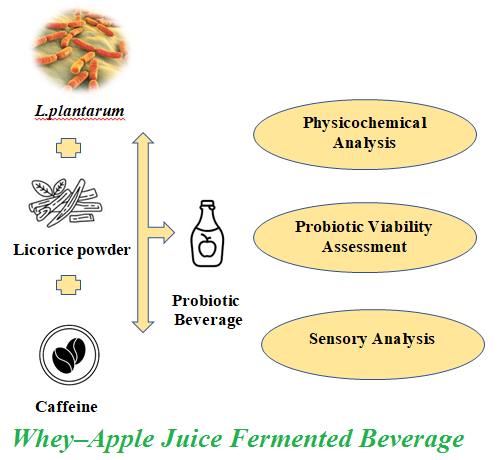
Background and Objective: Probiotic whey-apple juice fermented beverages are becoming popular for their health benefits and incorporating bioactive ingredients such as licorice extract and caffeine enhances their functionality and consumer appeal. This study aimed to assess the physicochemical, microbial and sensory characteristics of a whey-apple juice based probiotic fermented beverage enriched with licorice extract and caffeine during storage.
Material and Methods: A probiotic beverage was formulated with various licorice extract (0–0.6%) and caffeine (60–100 mg.100 ml-1) levels and stored for 1, 15 and 30 d. This was analyzed for pH, total soluble solids, viscosity, color, phenolic content, antioxidant activity, probiotic viability and sensory traits. A three-factor factorial design with statistical analysis was used for all experiments.
Results and Conclusion: Higher licorice extract and caffeine levels significantly increased Lactobacillus plantarum viability (from 6.27 to 7.79 CFU.ml-1), phenolic content (from 125.87 to 164.16 mg GAE·g⁻¹), antioxidant activity (IC50: from 145.46 to 112.26 μg.mg-1) and viscosity (from 142.62 to 168.36 mPa.s-1) while decreasing pH (from 4.26 to 4.17) and lightness (from 53.74 to 46.1) (p<0.05). The two additives altered color values, with a significant increase in redness only for licorice extract. The sample with 0.3% licorice extract and 80 mg caffeine included the highest sensory acceptability. Licorice extract and caffeine can improve the functional, physicochemical and sensory qualities of probiotic beverages during storage.
Keywords: Antioxidants, Caffeine, Fermented beverage, Glycyrrhiza, Lactobacillus plantarum, Probiotics
- Introduction
Whey, a by-product of global cheese and casein production, represents environmental pollutant and valuable nutritional resource due to its high production volume and organic load. Rich in essential amino acids, peptides and proteins, whey offers numerous health benefits, including antihypertensive, antioxidant, anti-inflammatory and antimicrobial effects. Efficient use of whey supports sustainable waste management and creation of value-added functional foods [1-3]. Apple juice is a nutrient-rich beverage containing natural sugars, vitamins particularly vitamin C, minerals such as potassium and antioxidants such as polyphenols. Combining whey protein with apple juice not only improves the beverage taste but also enhances its nutritional profile by adding natural sugars, vitamins and antioxidants. Additionally, whey serves as an excellent base for probiotic beverages, promoting gut health and overall wellness [4, 5].
Licorice (Glycyrrhiza uralensis) is a widely used medicinal herb characterized by a diverse array of bioactive compounds, including prominent flavonoids such as liquiritigenin and isoliquiritigenin. Liquiritigenin, a primary constituent, shows multiple pharmacological activities encompassing antioxidant, anti-inflammatory, antibacterial, antidepressant and anxiolytic effects. Caffeine, the principal active ingredient in energy beverages, acts as a central nervous system (CNS) stimulant, enhancing alertness and cognitive function. The incorporation of licorice extract and caffeine significantly augments the functional attributes of the beverage. Collectively, these ingredients exert a synergistic effect, enhancing health-promoting potential and sensory qualities of the formulation [6-8].
Previous studies have documented the development and quality assessment of apple-whey based herbal functional ready-to-serve beverages [4,9]. For example, Sharma et al. [4] formulated a low-calorie beverage by mixing 75% apple juice with 25% whey protein, achieving the desired protein content. Additionally, kombucha beverages incorporating licorice and ginger have demonstrated strong antioxidant capacities and increased phenolic content, enhancing their functional characteristics [6]. Moreover, a non-alcoholic mixed beverage, containing coconut water, cashew apple juice and caffeine, has successfully been developed [10]. Despite the growing interest in functional probiotic beverages, no study has investigated the integration of probiotic cultures into whey-apple juice systems enriched with licorice extract and caffeine. This gap creates unresolved questions regarding microbial stability, physicochemical characteristics, sensory acceptance and health-promoting potential. Conventional formulations often suffer from decreased probiotic viability due to acidic fruit components and lack of natural synergistic stabilizers. The present study addressed this challenge by developing a novel probiotic apple-whey beverage fortified with licorice extract (0, 0.3 and 0.6%) and caffeine (60, 80 and 100 mg). This innovative combination affected licorice polyphenols and caffeine stabilizing effects to enhance probiotic viability, while assessing physicochemical, microbial and sensory attributes during storage.
- Materials and Methods
2.1. Materials
Caffeine powder and carboxymethylcellulose (CMC) were purchased from Merck, Germany and licorice root was purchased from Shirin Darou, Shiraz, Iran. Lactobacillus plantarum (L. plantarum) PTCC 1058 cultures were provided by the Iranian Research Organization for Science and Technology (IROST, Tehran, Iran). The lyophilized strain (≥ 108 CFU.ml-1) was propagated in MRS broth for 24 h at 37 °C using CO₂ incubator (Memmert, Munich, Germany). Man, Rogosa and Sharpe (MRS) agar and broth were supplied by Merck, Darmstadt, Germany. All reagents in this study included analytical grade and were purchased from Merck, Germany.
2.2. Licorice Extract Processing
Licorice root was washed, dried and ground into powder, which was then extracted with 70% ethanol through a 72-h shaking process. The extract was filtered to remove residues, concentrated using rotary evaporation and dried to achieve the final extract [11].
2.3. Apple Juice Processing and Conservation
The apple juice was prepared by thoroughly washing and sorting the fruits, followed by cutting and grating. Apple juice was achieved using electric juicer and then passed through a muslin filter. The extracted juice was pasteurized in glass containers via heating and stored at room temperature (RM) until further use [9].
2.4. Whey Preparation from Cow Milk
Fresh cow milk was processed using method of Sharma et al. [9]. The milk was heated to 82 °C for 10 min, then cooled to 70 °C and acidified with 2% citric acid under continuous stirring to induce casein coagulation. The clotted mixture was passed through a double layer of muslin cloth and the achieved whey was centrifuged at 5000 rpm for 10 min to eliminate residual fat prior to its use in product formulation.
2.5. Production of Probiotic Beverage
Apple juice and whey were heated to 70 °C for 15 min and filtered and then mixed at 60:40 ratios. Carboxymethyl cellulose (0.5 g per 100 ml), caffeine (60, 80 and 100 mg per 100 ml) and licorice extract powder (0, 0.3 and 0.6%) were added to the mixture. The mixture was cooled to 37 °C and inoculated with a fresh L. plantarum probiotic culture at an initial level of approximately 109CFU.ml-1. Fermentation was carried out at 37 °C until the beverage reached a target pH of 4.5. The final pH after fermentation was assessed at 4.3 ±0.1. After fermentation, samples were stored at 4 °C. Experiments were carried out on Days 1, 15 and 30 to monitor physicochemical characteristics, microbial viability and sensory attributes of the beverage [12].
2.6. Physicochemical Analysis of Probiotic Beverage
During the storage time, probiotic beverage samples were analyzed for pH, total soluble solids (TSS) and viscosity. The pH and TSS were assessed using digital pH meter (AZ 86502, Taiwan) and digital refractometer (RX-7000α, India), respectively. The apparent viscosity was assessed using Brookfield viscometer (DV II + LV, Brookfield, Middleboro, MA, USA) equipped with an LV2 spindle. Viscosity was expressed in mPa·s-1 and assessed at 20 °C within fourteen spindle speeds ranging 1.5-2000 rpm; the primary reported values corresponded to 60 rpm. Assessments were carried out in triplicate to enhance reproducibility [9].
2.7. Color Assessment of Probiotic Beverage
The color characteristics of the probiotic beverage were assessed using HunterLab UltraScanvis US-Vis 1,310 device, USA, which assessed L*, a* and b* color values. The lightness parameter (L*) ranged from 0, representing black, to 100, representing white, a* scale assessed color on a spectrum from +127 (red) to -128 (green), while the b* scale ranged from +127 (yellow) to -128 (blue) [13].
2.8. Assessment of Phenolic Levels and Antioxidant Potential
Probiotic beverage samples were centrifuged and filtered prior to analyzing total phenolic content (TPC) using Folin-Ciocalteu method. The TPC was assessed using Folin-Ciocalteu method. A calibration curve was prepared with Gallic acid standards (0–200 mg.l-1) and results were expressed as Gallic acid equivalents (GAE) per liter. Each assessment was carried out in triplicate. Antioxidant activity was assessed using DPPH radical scavenging assay. Sample extracts at various concentrations were reacted with 0.1 mM DPPH solution and absorbance was assessed at 517 nm after 30 min incubation in dark. The inhibition percentage was calculated and IC₅₀ values were achieved from a dose-response curve generated by plotting inhibition percentages against sample concentrations. All assessments were carried out in triplicate to ensure reproducibility [9].
2.9. Assessment of Probiotic Bacterial Survival
For microbiological assessment, 10 ml of the sample was mixed with 90 ml of sterile saline to achieve a 10-1 dilution, followed by preparation of successive serial dilutions. Enumeration of L. plantarum was carried out by spreading the diluted samples onto MRS agar supplemented with vancomycin and incubating at 37 °C for 72 h using CO₂ incubator. The results were reported as logarithmic colony-forming units (Log CFU) per milliliter [14-15].
2.10. Sensory Analysis
A sensory analysis was carried out with a panel of 12 trained participants (six men and six women, aged 20–30 y) using five‑point hedonic scale ranging from 1 (“extremely dislike”) to 5 (“extremely like”). The panelists assessed the probiotic beverage samples for color, flavor, texture and overall acceptability during a 30‑d storage time. For each session, 20-ml portions of the beverage were present on coded plates, set at 4°C ±1 and panel members rinsed their mouths with water between the assessments [16].
2.11. Statistical Analysis
All experimental trials were carried out using completely randomized factorial design with three variables of caffeine concentration, licorice powder level and storage time to assess their individual and combined effects on the physicochemical, microbiological and sensory characteris-tics of the probiotic drink. Data analysis was carried out using SPSS software v.22 and significant variations within the treatments were identified using Duncan’s multiple range test at a 95% confidence threshold (p < 0.05).
- Results and Discussion
3.1. The pH and Probiotic Viability Assessment
Figure (1a, 1b) shows the pH levels and L. plantarum viability in probiotic beverages formulated with various quantities of licorice extract powder and caffeine through storage. The pH values of all samples ranged 4.13-4.32, which set within the acceptable range for apple juice (3.2–4.2) according to the Iranian National Standardization Organization (INSO) (ISIRI 14345, 2011), though the use of whey increased the highest pH. The ANOVA revealed significant major effects of licorice (p < 0.001) and caffeine (p < 0.001) on pH, as well as a significant interaction between the licorice and caffeine (p < 0.001). Similarly, L. plantarum viability was significantly affected by licorice (p < 0.001) and caffeine (p < 0.001), with a strong interaction effect (p < 0.001). The two parameters decreased significantly over the storage time (p < 0.05).
These results verified that licorice and caffeine acted synergistically to enhance probiotic viability while decreasing pH. Additionally, caffeine and associated phenolic compounds affected L. plantarum metabolic pathways through enzymatic activity, potentially increasing bacterial viability.
The observed decrease in pH with higher licorice and caffeine concentrations reflected intensified fermentation by L. plantarum, resulting in greater production of organic acids such as lactic acid that further promoted probiotic function. Caffeine positive effect might be linked to its potential degradation by these bacteria into methylxanthines, which could play an important role in cultivating beneficial gut microbiota such as Lactobacillus species. Methylxanthines might stimulate lactic acid bacteria (LAB) through nutritional enhancement, serving as possible carbon sources; thereby, creating a further favorable environment for bacterial proliferation. This combination of biochemical interactions suggested the potential beneficial effects of licorice extract and caffeine on probiotic viability and activity [14,17].Over the storage time, a significant decrease in L. plantarum viability and pH was typical for probiotic beverages. As nutrients decreased and metabolic waste accumulated, probiotic cell numbers decreased. Acid production might decrease or stabilize over time, affecting pH measurements. The initial pH decrease was linked to active bacterial metabolism during early storage, but extended time led to lower bacterial activity and viability; thereby, decreasing the two parameters significantly (p < 0.05). This decrease highlighted the importance of optimizing storage conditions and duration for maintaining probiotic efficacy in commercial products [18]. Similarly, a study on Iranian ultrafiltered white probiotic cheese containing caffeine detected that the addition of caffeine improved the survival of L. fermentum [19]. Tsirulnichenko and Kretova [14] reported that licorice root was a valuable source of probiotic-supporting substances, particularly fructans. They identified that a 1% concentration of licorice root extract represented the minimum effective dose needed to significantly stimulate the growth of probiotic microorganisms. In addition, Aleman et al. [20] studied the effects of functional ingredients on yogurt and detected that adding licorice root improved the viability of L. bulgaricus during storage.
3.2. Total soluble solids and Viscosity Assessment
Figure (2a, 2b) illustrate the TSS and viscosity of probiotic beverages formulated with varying concentrations of licorice extract powder and caffeine during storage. The TSS values of the samples ranged 10.3-11.85 °Brix, while viscosity values varied 141.21-171.43 mPa.s-1. The ANOVA results showed that caffeine concentration included no significant effect on TSS (p = 0.20) or viscosity (p = 0.11). Licorice extract concentration included a non-significant effect on TSS (p = 0.42), but significantly increased viscosity (p=0.004). Storage time significantly affected TSS (p = 0.002) and viscosity (p = 0.001). Importantly, the interaction between licorice and caffeine was not significant for TSS (p = 0.292) but was significant for viscosity (p = 0.018), indicating that higher licorice levels amplified the thickening effect of caffeine. These findings suggested that while variations in caffeine concentration might affect TSS and viscosity, the absence of statistical significance was likely attributed to the relatively low caffeine levels used in the formulation. The statistically significant increase (p < 0.05) in the viscosity of the probiotic beverage with increasing licorice extract concentration could be linked to several factors inherent to the licorice composition. Licorice extract is rich in soluble solids and crude fibers, which act as natural thickeners, enhancing the beverage viscosity. Additionally, these components improve the water-holding capacity, contributing to a thicker further stable texture [20]. The significant increase in TSS and viscosity of samples during storage could be attributed to several factors. Over time, the evaporation of water leads to a concentration effect, increasing TSS, which can contribute to higher viscosity. Additionally, licorice extract contains carbohydrates that may interact with other components in the beverage matrix, enhancing thickening and water retention during storage.
The presence of caffeine and bioactive compounds from licorice affects microbial activity and biochemical reactions during fermentation, potentially increasing the production of organic acids and other metabolites that modify the beverage rheological characteristics [17]. De Carvalho et al. [7], in their study on developing a mixed beverage made from coconut water and cashew apple juice with caffeine, detected that the TSS content of their samples ranged 10.6-11.6, closely similar to the current findings. Similarly, Mohamed et al. [22] reported that formulations containing licorice extract showed significantly greater viscosity than the control samples, suggesting that licorice extract enhanced the thickness and texture of health drinks. Additionally, Khoshdouni et al. [23] reported a slight increase in TSS values over time, corresponding to the results achieved in the current study.
3.3. Total Phenolic Content and Antioxidant Activity (IC50)
Fig. (3a, 3b) show the effect of licorice extract powder and caffeine on TPC (mg GAE·g⁻¹) and antioxidant activity (IC₅₀, µg·mL⁻¹) of probiotic beverages during storage. The TPC values ranged 116.12-171.53 mg GAE·g⁻¹, while IC₅₀ values varied 108.25-156.74 µg·ml⁻¹ within the treatments and storage times. Moreover, ANOVA results indicated that the licorice extract concentration significantly increased TPC (p < 0.001) and antioxidant activity (p< 0.001). Caffeine concentration included a non-significant effect on TPC (p = 0.27), but significantly improved antioxidant activity as assessed by IC₅₀ (p < 0.001). Importantly, the interaction between licorice and caffeine was significant for TPC (p= 0.031) and IC₅₀ (p = 0.024), indicating that higher licorice levels amplified the antioxidant-enhancing effect of caffeine. The TPC and antioxidant activity decreased significantly over the storage time (TPC, p < 0.001; IC₅₀, p < 0.001), reflecting the gradual degradation of phenolic compounds and decreased bioactivity during prolonged storage.
Licorice extract contains abundant phenolic compounds and flavonoids, which confer strong antioxidant potential. From its significant constituents are phenylflavonoids such as dehydroglyasperin C (DGC), recognized for their effectiveness in neutralizing free radicals and safeguarding cells against oxidative injuries. The antioxidant activity of licorice is primarily attributed to its ability to quench reactive oxygen species, limit lipid peroxidation and enhance the function of antioxidant enzymes. These mechanisms highlight licorice reported health-promoting characteristics, including anti-inflammatory and anti-aging effects and highlight its value as a natural ingredient for improving the antioxidant profile of foods and beverages. Collectively, the diverse bioactive molecules in licorice provide substantial protection against oxidative stress and may help decrease the risk of associated disorders [24]. Incorporation of caffeine into probiotic beverage formulations has been shown to progressively increase antioxidant activity. Caffeine shows antioxidant capacity through radical scavenging and moderation of oxidative stress. Within a probiotic system, caffeine can act synergistically with other bioactive compounds; thereby, enhancing the overall ability of the beverage to counteract reactive oxygen species. This gradual improvement is likely associated with interactions between caffeine, probiotic microorganisms and phenolic constituents, ultimately strengthening the functional attributes of the product over time [25]. A significant decrease in phenolic content and antioxidant activity during storage (p < 0.05) is commonly observed in probiotic beverages. Throughout storage, factors such as exposure to oxygen and light, fluctuations in temperature and changes in pH contribute to the breakdown of phenolic compounds. Additionally, biochemical reactions and interactions between phenolics and other components within the beverage can further destabilize these antioxidants, resulting in decreased antioxidant effectiveness over time [26]. Quintana et al. [27] reported that the TPC in licorice root extract ranged 48.47-180.06 mg GAE.g-1 while assessing its antioxidant activity. Similarly, Vieira et al. [25] demonstrated that caffeine effectively scavenged hydroxyl radicals and investigated the mechanisms behind its antioxidant potential. Fatima et al. [28] observed that antioxidant activity and free radical scavenging capacity gradually decreased during the storage of functional fruit and vegetable-based drinks containing herbal and spice extracts. Although licorice and caffeine significantly enhanced the phenolic profile and antioxidant activity of probiotic beverages, limitations should be addressed. The storage time was relatively short (30 d), which restricted conclusions on long-term stability; future studies should extend to 60 d to provide further comprehensive shelf-life data. Quantitatively, the TPC values observed in this study (116–171 mg GAE·g⁻¹) were within or slightly higher than the values reported by Quintana et al. (48–180 mg GAE·g⁻¹), highlighting the strong contribution of licorice extract. Importantly, published studies on probiotic beverages containing caffeine were limited, underscoring the novelty of this study and the need of further investigations in this area.
3.4. Color Assessment of the Probiotic Beverage
Figure (4a, 4b, 4c) shows the changes in the L*, b* and a* color indices of the probiotic beverage containing licorice extract and caffeine over the storage time. The L* values ranged 44.61-56.45, the a* values ranged 14.42-25.76 and the b* values ranged 17.23-26.4 within the treatments and storage times. The ANOVA results indicated that increasing licorice extract and caffeine concentrations significantly decreased L* (p = 0.012) and significantly increased b* (p = 0.008). The two factors increased a* values, but this increase was significant only for licorice extract (p = 0.021). Storage time significantly affected all three indices (p < 0.001). Importantly, the interaction between licorice and caffeine was significant for L (p = 0.033,) and b* (p = 0.027), but not for a* (p = 0.29). These findings verified that higher licorice levels amplified the color‑modifying effect of caffeine, leading to darker and further saturated.hues during the storage.
This decrease in lightness could be linked to the inherent color compounds present in licorice extract and caffeine such as polyphenols and alkaloids, which created a deeper color. Additionally, interactions between these compounds and the beverage matrix during storage might enhance pigment formation or aggregation, further decreasing brightness. The significant change at p < 0.05 verified that this effect was statistically robust, suggesting a clear effect of these ingredients on the visual appearance and potentially consumer perception of the product [29-30]. Increasing the quantities of licorice extract and caffeine causing significant increase in the b* (yellow-blue) value could be explained by the yellowish pigments naturally present in licorice, primarily flavonoids such as liquiritin and glabridin, which contributed to its characteristic yellow color. Studies indicate that licorice flavonoid content is responsible for this yellow hue, which can intensify as concentration increases, thus increasing the b* value towards yellow tones [31]. The significant increase in a* (red-green) values for licorice extract might be attributed to the presence of reddish-brown compounds such as melanoidins, which were formed during processing or storage through Maillard reactions. These polymeric brown pigments accumulated with heat treatment, contributing to darkening and shift towards red color. Additionally, heat treatment could increase the TPC and antioxidant activity of licorice extracts, affecting their color characteristics [32-33]. Kang et al. [31] demonstrated that during storage, licorice extract created the formation of brown melanoidin pigments, resulting from Maillard reaction between sugars and amino acids. Similarly, Ardalanian and Fadaei [33] observed that adding ginseng extract to doogh samples caused increases in a* and b* color values. In an associated study, Jooyandeh and Alizadeh Behbahani [32] reported that the inclusion of pepper extract in functional yogurt led to a decrease in L* (lightness) with increases in a* (red-green) and b* (yellow-blue) values.
3.5. Sensory Assessment of Probiotic Beverage
Figure (5) presents the sensory evaluation outcomes of probiotic beverage samples assessed by the panel on Day 30 of storage, considering attributes such as taste, aroma, color, texture and overall acceptability. Statistical analysis indicated that variations in licorice extract and caffeine levels significantly affected taste scores (p < 0.05). The combination of 0.3% licorice extract with 80 mg of caffeine improved taste perception, whereas higher concentrations resulted in decreased ratings. Caffeine content showed no significant effect on aroma or color, while 0.3% licorice extract enhanced color scores (p < 0.05). Texture was favorably affected by 0.6% licorice extract, with no significant effect from caffeine. The sample containing 0.3% licorice extract and 80 mg of caffeine achieved the highest overall acceptability.
Similarly, Azami et al. [34] developed a dairy beverage with licorice extract and cocoa powder and detected that moderate licorice levels improved taste and aroma, but excessive quantities led to decreased acceptability due to bitterness and off-flavors. Mahmoudi et al. [35] produced a functional non-dairy probiotic beverage containing fermented jujube extract, reporting that addition of extract enhanced aroma and taste, contributing to higher acceptability scores. Similarly, Ghosi Hoojaghan et al. [36] studied the effect of fennel extract in doogh, finding that low concentrations included insignificant effects on flavor, but higher concentrations decreased flavor scores.
- Conclusion
This research formulated a functional probiotic drink enriched with licorice extract and caffeine, which showed improvements in probiotic survival, antioxidant potential and sensory attributes. Licorice extract significantly enhanced phenolic content, viscosity and antioxidant capacity, whereas caffeine contributed to antioxidant activity and probiotic viability. Appropriate concentrations of these components optimized flavor, appearance, texture and overall consumer acceptance. Overall, the results indicate that licorice extract and caffeine act synergistically to strengthen the health-promoting characteristics and sensory quality of probiotic beverages, highlighting their promise as valuable functional ingredients.
- Declaration
5.1. Acknowledgements
Contribution of Islamic Azad University, Iran, Tehran, is deeply appreciated.
5.2. Declaration of competing interest
The authors declare no conflict of interest or finance.
5.3. Authors’ Contributions
Aydin Ali Bigelow: Writing original draft, Visualization, Validation, Methodology, Investigation, Formal analysis, Funding acquisition. Marjaneh Sedaghati: Writing–review and editing, Supervision, Methodology, Resources, Projected administration, Conceptualization. Mozhgan Emtyazjoo: Supervision, Resources, Projected administration, Conceptualization.
5.4. Using Artificial Intelligent Chatbots
AI chatbot was used only for grammar correction.
5.5. Ethical Consideration
No ethical approval was required for the conduct of this study.
- Antioxidants
- Caffeine
- Fermented beverage
- Glycyrrhiza, Lactobacillus plantarum
- Probiotics
How to Cite
References
1. Yigit A, Bielska P, Cais-Sokolinska D, Samur G. Whey proteins as a functional food: Health effects, functional properties and applications in food. J Am Nutraceut Ass. 2023; 42(4): 1-11. https://doi.org/10.1080/27697061.2023.2169208
2. Mehra R, Kumar H, Kumar N, Ranvir S, Jana A, Buttar HS, Telessy IG, Awuchi CG, Okpala COR, Korzeniowska M. Whey proteins processing and emergent derivatives: An insight perspective from constituents, bioactivities, functionalities to therapeutic applications. J Funct Foods. 2021; 87: 104760. https://doi.org/10.1016/j.jff.2021.104760
3. Tayeb S, Morsli A, Saadia L, Mohamed C, Khaled H, Salah-Abbes JB. Bacterial population kinetics and physicochemical profiles in fermented goat milks: Roles of Streptococcus thermophiles ATCC 19258 and Lactobacillus bulgaricus ATCC 11842. Appl Food Biotechnol. 2025; 12(1):e7. https://doi.org/10.22037/afb.v12i1.47532
4. Sharma R, Choudhary R, Thakur NS, Bishist R, Thakur A. Optimization of Fructooligosaccharide fortified low calorie apple-whey based RTS beverage and its quality evaluation during storage. Curr J Appl Sci Technol. 2020; 39(10): 17-28. https://doi.org/10.9734/cjast/2020/v39i1030625
5. Chockalingam N, Elangovan G, Govindaraj S, Sudhakar. Formulation and physicochemical study of a whey-based probiotic functional beverage. J. Food Sci. Technol. 2025. https://doi.org/10.1007/s13197-025-06448-z
6. Xiong RG, Zhou DD, Cheng J, Wu SX, Saimaiti A, Huang SY, Liu Q, Shang A, Li HB, Li S. Preparation and evaluation of liquorice (Glycyrrhiza uralensis) and ginger (Zingiber officinale) kombucha beverage based on antioxidant capacities, phenolic compounds and sensory qualities. Int J Gastron Food Sci. 2024; 35: 100869. https://doi.org/10.1016/j.ijgfs.2024.100869
7. Song X, Singh M, Lee KE, Vinayagam R, Kang SG. Caffeine: A multifunctional efficacious molecule with diverse health implications and emerging delivery systems. Int J Mol Sci. 2024; 25(22):12003. https://doi.org/10.3390/ijms252212003
8. Melones-Peña N, Gómez-Gómez B, Gracia-Lor E. How much consumed caffeine is actually absorbed? Bioaccessibility and bioavailability in energy drinks, infusions and soft drinks. Food Chem. 2025; 492: 145626. https://doi.org/10.1016/j.foodchem.2025.145626
9. Sharma R, Choudhary R, Thakur NS, Thakur A. Development and quality of apple-whey based herbal functional ready-to-serve beverage. J Appl Nat Sci. 2019; 11(2): 291-298. https://doi.org/10.31018/jans.v11i2.2047
10. De Carvalho JM, Maia GA, De Figueiredo RW, De Brito ES, Rodrigues S. Development of a mixed beverage consisting of coconut water and cashew apple juice containing caffeine. Int J Food Sci Technol. 2007; 42(10): 1195-1200. https://doi.org/10.1111/j.1365-2621.2006.01337.x
11. Ajagannanavar SL, Battur H, Shamarao S, Sivakumar V, Patil PU, Shanavas P. Effect of aqueous and alcoholic licorice (Glycyrrhiza glabra) root extract against Streptococcus mutans and Lactobacillus acidophilus in comparison to chlorhexidine: An in vitro study. Int J Oral Health Dent. 2014; 6(4): 29-34. https://doi.org/10.4103/2231-0762.146215
12. Patil S, Sahoo AK, Patil NJ, Lokhande SM. Development of whey-fruit-based energy drink premixes. J Post Harvest Technol. 2019; 7(4): 25-32.
13. Zonoubi R, Goli M. The effect of complete replacing sodium with potassium, calcium and magnesium brine on sodium-free ultrafiltration Feta cheese at the end of the 60-day ripening period: Physicochemical, proteolysis-lipolysis indices, microbial, colorimetric and sensory evaluation. Food Sci Nutr. 2019; 9(2): 866-874. https://doi.org/10.1002/fsn3.2050
14. Tsirulnichenko L, Kretova J. Prebiotic properties of licorice root extracts. Agron Res. 2020; 18(1): 301-306. https://doi.org/10.15159/ar.20.019
15. Nair AS, Syama A, Senan S, Prabhu RR. The era of plant-based probiotics: An overview of potential benefits and future aspects. Appl Food Biotechnol. 2025; 12(1):e18: 1-11. https://doi.org/10.22037/afb.v12i1.48298
16. Hosseiny M, Sedaghati M. Production and characterization of milk dessert supplemented with Date Seed Powder. Iran J Chem Chem Eng. 2023; 42(9): 2891-2898. https://doi.org/10.30492/ijcce.2023.560928.5551
17. Purwoko T, Suranto S, Setyaningsih R, Marliyana SD. Caffeine degradation by food microorganisms. Biodiversitas. 2023; 24(6): 3495-3502. https://doi.org/10.13057/biodiv/d240647
18. Torabi F, Jooyandeh H, Noshad M. Evaluation of physicochemical, rheological, microstructural and microbial characteristics of synbiotic ultrafiltrated white cheese treated with transglutaminase. J Food Process Preserv. 2021; 45(6): 1-11. https://doi.org/10.1111/jfpp.15572
19. Jooyandeh H, Behbahani BA. Investigation on some quality parameters of probiotic UF-Iranian white cheese containing caffeine. J Agric Food Res. 2025; 21: 101805. https://doi.org/10.1016/j.jafr.2025.101805
20. Aleman RS, Cedillos R, Page R, Olson D, Aryana K. Physico-chemical, microbiological and sensory characteristics of yogurt as affected by various ingredients. J Dairy Sci. 2023; 106(6): 3868-3883. https://doi.org/10.3168/jds.2022-22622
21. Nasiri L, Gavahian M, Majzoobi M, Farahnaky A. Rheological behavior of Glycyrrhiza glabra (Licorice) extract as a function of concentration and temperature: A critical reappraisal. Foods. 2020. 9(12): 1872. https://doi.org/10.3390/foods9121872
22. Mohamed Ali AR, Shahin AA, Abd El-Halim SE. Improving of sweet whey to produce healthy beverages incorporating with some plant extracts. Food Technol Res J. 2024; 5(2): 147-159. https://doi.org/10.21608/ftrj.2024.319325.1099
23. Khoshdouni Farahani Z. Halal edible biopolymers used in food encapsulation: A review. Human, Health Halal Metrics. 2021; 2(1): 52-62. https://doi.org/10.30502/jhhhm.2021.283062.1032
24. Hasan MK, Ara I, Mondal MSA, Kabir Y. Phytochemistry, pharmacological activity and potential health benefits of Glycyrrhiza glabra. Heliyon. 2021; 7: e07240. https://doi.org/10.1016/j.heliyon.2021.e07240
25. Vieira AJ, Gaspar EM, Santos PM. Mechanisms of potential antioxidant activity of caffeine. Radiat Phys Chem. 2020; 174: 108968. https://doi.org/10.1016/j.radphyschem.2020.108968
26. Mendez-Galarraga MP, Pirovani ME, Vinderola G, Van de Velde V. Bioaccessibility of phenolic compounds in fermented strawberry-orange-apple-banana smoothies with lactobacilli. Food Biosci. 2025; 65: 106074. https://doi.org/10.1016/j.fbio.2025.106074
27. Quintana SE, Cueva C, Villanueva-Bermejo D, Moreno-Arribas MV, Fornari T, García-Risco MR. Antioxidant and antimicrobial assessment of licorice supercritical extracts. Ind Crops Prod. 2019; 139: 111496. https://doi.org/10.1016/j.indcrop.2019.111496
28. Fatima K, Tehseen S, Ashfaq F, Bilal A, Zubair Khalid M, Khalid W, Madilo FK. Development and storage stability studies of functional fruit and vegetable-based drinks incorporated with polyphenols extracted from herbs and spices. Int J Food Prop. 2024; 27(1): 381-399. https://doi.org/10.1080/10942912.2024.2317740
29. Kandyliari A, Potsaki P, Bousdouni P, Kaloteraki C, Christofilea M, Almpounioti K, Moutsou A, Fasoulis CK, Polychronis LV, Gkalpinos VK, Tzakos AG, Koutelidakis AE. Development of Dairy Products Fortified with Plant Extracts: Antioxidant and Phenolic Content Characterization. Antioxidants. 2023; 12(2): 500. https://doi.org/10.3390/antiox12020500
30. Mbae J, Koskei R, Mugendi B. Effect of addition of coffee extract on physicochemical and sensory properties of yoghurt. E J Food. 2023; 5(1): 27-31. https://doi.org/10.24018/ejfood.2023.5.1.478
31. Kang MH, Jang GY, Ji YJ, Lee JH, Choi SJ, Hyun TK, Kim HD. Antioxidant and anti-melanogenic activities of heat-treated licorice (Wongam, Glycyrrhiza glabra × G. uralensis) extract. Curr Issues Mol Biol. 2021; 43(2): 1171-1187. https://doi.org/10.3390/cimb43020083
32. Jooyandeh H, Alizadeh Behbahani B. Evaluation of the physicochemical and color characteristics of functional set yogurt containing yellow, red and orange bell pepper extract. Food Res J. 2024; 34(2): 81-100. https://doi.org/10.22034/fr.2023.58062.1897
33. Ardalanian F, Fadaei V. Production of probiotic doogh enriched with red ginseng extract. J Agric Sci Technol. 2018; 20(2): 1-11.
34. Azami T, Niakousari M, Hashemi SMB, Torri L. A three-step sensory-based approach to maximize consumer acceptability for new low-sugar licorice-chocolate-flavored milk drink. LWT. 2018; 91: 375-381. https://doi.org/10.1016/j.lwt.2018.01.064
35. Mahmoudi B, Mousavi ZE, Khodaiyan F. A functional nondairy beverage produced from jujube extract using probiotic lactic acid bacteria. J Agric Sci Technol. 2021; 23(4): 813-824.
36. Ghosi Hoojaghan S, Sedaghati M, Mooraki N. Characterization of Iranian Doogh enriched with gum Tragacanth and fennel extract (Foeniculum Vulgare). J Agric Sci Technol. 2022; 24(6): 1345-1356. https://doi.org/10.52547/jast.24.6.1345
- Abstract Viewed: 267 times
- pdf Downloaded: 186 times